What is Philosophy? - Böcker
Visar alla böcker i serien What is Philosophy?. Handla med fri frakt och snabb leverans.
14 produkter
14 produkter
639 kr
Skickas inom 7-10 vardagar
Epistemology is the philosophical study of knowledge. Epistemologists seek to understand knowledge’s nature and availability. What is knowledge? There are competing theories. Can we really have knowledge? Challenges abound.In this lively book, Stephen Hetherington introduces us to epistemological theorizing. He builds a theory and tests it, refines it, and challenges it again. He explores such topics as evidence, truth and belief, different kinds of knowledge, and knowledge’s value, as well as sceptical views concerning knowledge of the physical world, one’s own mind and memory, and rational limits for observation and reason. This epistemological theorizing is then applied to some of life’s most pressing issues, such as how to live and how to understand ourselves and others.What is Epistemology? is a practical and student-friendly guide to one of the most dynamic areas of philosophy. It will be the go-to introductory epistemology text.
204 kr
Skickas inom 7-10 vardagar
Epistemology is the philosophical study of knowledge. Epistemologists seek to understand knowledge’s nature and availability. What is knowledge? There are competing theories. Can we really have knowledge? Challenges abound.In this lively book, Stephen Hetherington introduces us to epistemological theorizing. He builds a theory and tests it, refines it, and challenges it again. He explores such topics as evidence, truth and belief, different kinds of knowledge, and knowledge’s value, as well as sceptical views concerning knowledge of the physical world, one’s own mind and memory, and rational limits for observation and reason. This epistemological theorizing is then applied to some of life’s most pressing issues, such as how to live and how to understand ourselves and others.What is Epistemology? is a practical and student-friendly guide to one of the most dynamic areas of philosophy. It will be the go-to introductory epistemology text.
639 kr
Skickas inom 7-10 vardagar
An important part of philosophy is concerned with religious questions. What is the meaning of life, and how might religious faith or doubt impact such meaning? What is the evidence for the existence of God? Is evidence essential for religious faith? What is the relationship between science and religion? What is the relationship between religions? How can or should one assess virtues and vices, right and wrong, from a religious versus a secular point of view?In this beginner’s guide, Charles Taliaferro addresses these and other important questions involved in philosophy of religion. He challenges the negative, often complacent attitudes towards religion as being dangerous or merely superstitious, arguing instead for a healthy pluralism and respect between persons of faith and secular inquirers.What is Philosophy of Religion? takes a practical, question-based approach to the subject, inviting the reader to engage with this exciting area of philosophy in a down-to-earth way.
204 kr
Skickas inom 7-10 vardagar
An important part of philosophy is concerned with religious questions. What is the meaning of life, and how might religious faith or doubt impact such meaning? What is the evidence for the existence of God? Is evidence essential for religious faith? What is the relationship between science and religion? What is the relationship between religions? How can or should one assess virtues and vices, right and wrong, from a religious versus a secular point of view?In this beginner’s guide, Charles Taliaferro addresses these and other important questions involved in philosophy of religion. He challenges the negative, often complacent attitudes towards religion as being dangerous or merely superstitious, arguing instead for a healthy pluralism and respect between persons of faith and secular inquirers.What is Philosophy of Religion? takes a practical, question-based approach to the subject, inviting the reader to engage with this exciting area of philosophy in a down-to-earth way.
639 kr
Skickas inom 7-10 vardagar
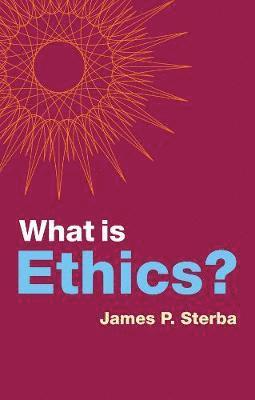
Ethics is a field of study that we all need. This is because we all make choices, and ethics is about the general norms that govern how we should make those choices. Not surprisingly, there is disagreement over what the “norms” are, but by working through such disagreement, we can learn how to make better choices. James P. Sterba presents a general overview of ethics, using relevant examples and accessible arguments. He takes up the question of why we should be ethical or moral, discusses competing ethical theories and proposes a way to reconcile them, and considers the relationship between ethics and religion. Ultimately, he reveals how the material discussed in the book can be used to make better ethical choices in our day-to-day lives. What is Ethics? is a book you can rely on to improve your ability to make ethical choices.
204 kr
Skickas inom 7-10 vardagar
Ethics is a field of study that we all need. This is because we all make choices, and ethics is about the general norms that govern how we should make those choices. Not surprisingly, there is disagreement over what the “norms” are, but by working through such disagreement, we can learn how to make better choices. James P. Sterba presents a general overview of ethics, using relevant examples and accessible arguments. He takes up the question of why we should be ethical or moral, discusses competing ethical theories and proposes a way to reconcile them, and considers the relationship between ethics and religion. Ultimately, he reveals how the material discussed in the book can be used to make better ethical choices in our day-to-day lives. What is Ethics? is a book you can rely on to improve your ability to make ethical choices.
639 kr
Skickas inom 7-10 vardagar
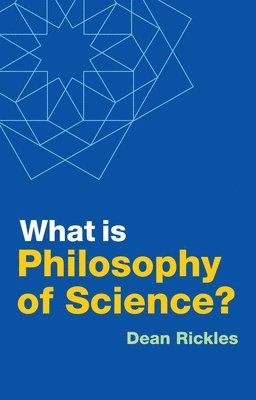
Philosophy of science puts science itself under the microscope: What exactly is science? How do its explanations of the world differ from those of other subjects, including so-called “pseudo-sciences”? How should we understand and evaluate scientific methods? What, if anything, can science tell us about the nature of physical reality?Dean Rickles guides beginners through the central topics in philosophy of science. He looks at the origins and evolution of the field, the issues that arise when distinguishing between science and non-science, the concepts of logic and associated problems, scientific realism and anti-realism, and the nature of scientific models and representing. Rickles brings the subject to sparkling life with a user-friendly tone and rich, real-world examples.What is Philosophy of Science? is the must-have primer for students getting to grips with this broad-ranging and important topic.
204 kr
Skickas inom 7-10 vardagar
Philosophy of science puts science itself under the microscope: What exactly is science? How do its explanations of the world differ from those of other subjects, including so-called “pseudo-sciences”? How should we understand and evaluate scientific methods? What, if anything, can science tell us about the nature of physical reality?Dean Rickles guides beginners through the central topics in philosophy of science. He looks at the origins and evolution of the field, the issues that arise when distinguishing between science and non-science, the concepts of logic and associated problems, scientific realism and anti-realism, and the nature of scientific models and representing. Rickles brings the subject to sparkling life with a user-friendly tone and rich, real-world examples.What is Philosophy of Science? is the must-have primer for students getting to grips with this broad-ranging and important topic.
621 kr
Skickas inom 7-10 vardagar
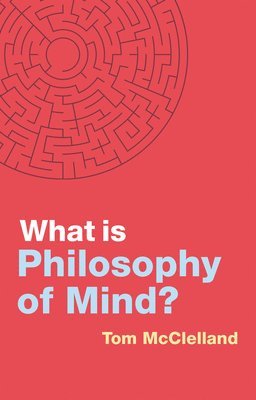
We all have minds, but what exactly is a mind? Is your mind the same thing as your brain? How does what’s happening in your mind cause your behaviour? Can you know what’s going on in other people’s minds? Can you even be sure what’s going on in your own? Are babies conscious? How about cats? Or self-driving cars?Philosophy of mind grapples with questions like these, exploring who we are and how we fit into the world. In this student-friendly guide, McClelland introduces the key ideas in philosophy of mind, showing why they matter and how philosophers have tried to answer them. He covers the major historical moments in philosophy of mind, from Descartes and his troubles with immaterial souls up to today’s ‘consciousness wars’. Additionally, he examines the implications that philosophy of mind has for psychology, artificial intelligence and even particle physics. McClelland lays out the centuries-long dialogue between philosophy and science, presenting a uniquely grounded, practical picture of the field for students.Rich with real-world examples and written for the absolute beginner, What is Philosophy of Mind? gives students the tools to delve deeper into this dynamic field of philosophy.
198 kr
Skickas inom 7-10 vardagar
We all have minds, but what exactly is a mind? Is your mind the same thing as your brain? How does what’s happening in your mind cause your behaviour? Can you know what’s going on in other people’s minds? Can you even be sure what’s going on in your own? Are babies conscious? How about cats? Or self-driving cars?Philosophy of mind grapples with questions like these, exploring who we are and how we fit into the world. In this student-friendly guide, McClelland introduces the key ideas in philosophy of mind, showing why they matter and how philosophers have tried to answer them. He covers the major historical moments in philosophy of mind, from Descartes and his troubles with immaterial souls up to today’s ‘consciousness wars’. Additionally, he examines the implications that philosophy of mind has for psychology, artificial intelligence and even particle physics. McClelland lays out the centuries-long dialogue between philosophy and science, presenting a uniquely grounded, practical picture of the field for students.Rich with real-world examples and written for the absolute beginner, What is Philosophy of Mind? gives students the tools to delve deeper into this dynamic field of philosophy.
639 kr
Skickas inom 7-10 vardagar
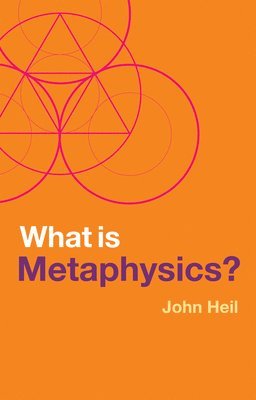
If we didn't possess certain beliefs about such things as time, appearance and reality, and how effect follows cause, we wouldn't be able to get out of bed in the morning, let alone read a book about metaphysics, which is the study of our experience and those ideas, or presuppositions, which allow us to make sense of it.Drawing on examples from art, science, and daily life, John Heil shows how metaphysics begins in questioning our everyday assumptions about how the world “works” and ends with speculation on the nature of the universe itself. In chapters that cover the major topics in the academic study of metaphysics, from free will and consciousness to time and objectivity, Heil explains how metaphysical questions underpin everything human beings do.This accessible book will show you how professional philosophers try to categorize and make sense of our world of perception and experience and explains why everyone should take metaphysics seriously.
217 kr
Skickas inom 7-10 vardagar
If we didn't possess certain beliefs about such things as time, appearance and reality, and how effect follows cause, we wouldn't be able to get out of bed in the morning, let alone read a book about metaphysics, which is the study of our experience and those ideas, or presuppositions, which allow us to make sense of it.Drawing on examples from art, science, and daily life, John Heil shows how metaphysics begins in questioning our everyday assumptions about how the world “works” and ends with speculation on the nature of the universe itself. In chapters that cover the major topics in the academic study of metaphysics, from free will and consciousness to time and objectivity, Heil explains how metaphysical questions underpin everything human beings do.This accessible book will show you how professional philosophers try to categorize and make sense of our world of perception and experience and explains why everyone should take metaphysics seriously.
685 kr
Kommande
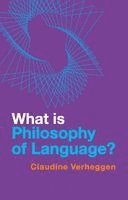
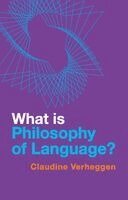
Language is a major part of what makes us human. We effortlessly attach meaning to sounds and marks, in themselves meaningless, to convey to one another our beliefs, desires, intentions, and other states of mind. How is this amazing feat possible?Claudine Verheggen introduces readers to the fascinating study of language from a philosophical perspective. She sheds light on the nature of linguistic meaning by investigating two broad categories of questions: one concerns the relation between meaning and the extra-linguistic reality language users talk about, the other concerns the relation between meaning and facts about language users themselves. Verheggen explores the views of prominent philosophers and lays the foundations that help us to address questions in an array of other subdisciplines to which philosophy of language is relevant, from psychology to political theory. Throughout, she pays special attention to the many different ways in which words are used, asking whether language is fundamentally a social phenomenon and whether conventions are essential to it.Lively and accessible, built on a strong narrative structure, What is Philosophy of Language? is a key resource for any philosophy student or philosophically minded person with a passion for language.
210 kr
Kommande
Language is a major part of what makes us human. We effortlessly attach meaning to sounds and marks, in themselves meaningless, to convey to one another our beliefs, desires, intentions, and other states of mind. How is this amazing feat possible?Claudine Verheggen introduces readers to the fascinating study of language from a philosophical perspective. She sheds light on the nature of linguistic meaning by investigating two broad categories of questions: one concerns the relation between meaning and the extra-linguistic reality language users talk about, the other concerns the relation between meaning and facts about language users themselves. Verheggen explores the views of prominent philosophers and lays the foundations that help us to address questions in an array of other subdisciplines to which philosophy of language is relevant, from psychology to political theory. Throughout, she pays special attention to the many different ways in which words are used, asking whether language is fundamentally a social phenomenon and whether conventions are essential to it.Lively and accessible, built on a strong narrative structure, What is Philosophy of Language? is a key resource for any philosophy student or philosophically minded person with a passion for language.