Wormsloe Foundation Nature Book Series – serie
442 kr
Läs direkt efter köp
Why do we preserve certain landscapes while developing others without restraint? Drew A. Swanson’s in-depth look at Wormsloe plantation, located on the salt marshes outside of Savannah, Georgia, explores that question while revealing the broad historical forces that have shaped the lowcountry South.Wormsloe is one of the most historic and ecologically significant stretches of the Georgia coast. It has remained in the hands of one family from 1736, when Georgia’s Trustees granted it to Noble Jones, through the 1970s, when much of Wormsloe was ceded to Georgia for the creation of a state historic site. It has served as a guard post against aggression from Spanish Florida; a node in an emerging cotton economy connected to far-flung places like Lancashire and India; a retreat for pleasure and leisure; and a carefully maintained historic site and green space. Like many lowcountry places, Wormsloe is inextricably tied to regional, national, and global environments and is the product of transatlantic exchanges.Swanson argues that while visitors to Wormsloe value what they perceive to be an “authentic,” undisturbed place, this landscape is actually the product of aggressive management over generations. He also finds that Wormsloe is an ideal place to get at hidden stories, such as African American environmental and agricultural knowledge, conceptions of health and disease, the relationship between manual labor and views of nature, and the ties between historic preservation and natural resource conservation. Remaking Wormsloe Plantation connects this distinct Georgia place to the broader world, adding depth and nuance to the understanding of our own conceptions of nature and history.
386 kr
Läs direkt efter köp
“This book,” writes marine biologist Evelyn B. Sherr, “is meant to give others an understanding of the fascinating life of the region, from the smallest creatures in marsh mud and estuarine water, to the mummichogs and multitudes of other animals that find food and shelter in the vast expanses of marsh grass, in the sounds, and along the beaches of the Georgia Isles.” Sherr not only spent years doing research in coastal Georgia, she began her family there. Although Sherr’s career would take her around the world, this special place stuck with her. Here she shares her deep knowledge of the remarkable environment that she, her scientist husband, and their two children explored time and again.Dr. Sherr is the ideal companion with whom to discover coastal Georgia. She points out its swimming, running, flying, drifting, and wriggling wildlife—and tells how it all exists in balance in a landscape subject to its own daily ebbs and flows, its own seasonal cycles. As we learn about Georgia’s distinctive intertidal salt marshes, subtidal estuaries, and open beaches and dunes, Sherr reveals the creatures that support—and are supported by—these habitats: the microbes in estuarine water and in marsh mud; the zooplankton swarming in the tidal rivers and sounds; and numerous fish, reptiles, birds, and mammals.This engaging and curiosity-rousing book blends scientific fact with a timely conservation message and anecdotes of a family’s encounters with nature.
575 kr
Läs direkt efter köp
Providence Canyon State Park, also known as Georgia’s “Little Grand Canyon,” preserves a network of massive erosion gullies allegedly caused by poor farming practices during the nineteenth century. It is a park that protects the scenic results of an environmental disaster. While little known today, Providence Canyon enjoyed a modicum of fame in the 1930s. During that decade, local boosters attempted to have Providence Canyon protected as a national park, insisting that it was natural. At the same time, national and international soil experts and other environmental reformers used Providence Canyon as the apotheosis of human, and particularly southern, land abuse.Let Us Now Praise Famous Gullies uses the unlikely story of Providence Canyon—and the 1930s contest over its origins and meaning—to recount the larger history of dramatic human-induced soil erosion across the South and to highlight the role that the region and its erosive agricultural history played in the rise of soil science and soil conservation in America. More than that, though, the book is a meditation on the ways in which our persistent mental habit of separating nature from culture has stunted our ability to appreciate places like Providence Canyon and to understand the larger history of American conservation.
315 kr
Läs direkt efter köp
One night, poet and environmental writer John Lane tuned in to a sound from behind his house that he had never heard before: the nearby eerie and captivating howls of coyotes. Since this was Spartanburg, South Carolina, and not Missoula, Montana, Lane set out to discover all he could about his new and unexpected neighbors.Coyote Settles the South is the story of his journey through the Southeast, as he visits coyote territories: swamps, nature preserves, old farm fields, suburbs, a tannery, and even city streets. On his travels he meets, interrogates, and observes those who interact with the animals—trappers, wildlife researchers, hunters, rattled pet owners, and even one devoted coyote hugger. Along the way, he encounters sensible, yet sometimes perplexing, insight concerning the migration into the Southeast of the American coyote, an animal that, in the end, surprises him with its intelligence, resilience, and amazing adaptability.
529 kr
Läs direkt efter köp
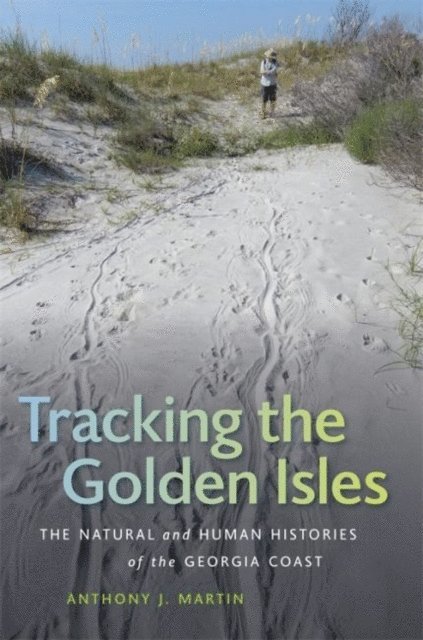
With this collection of essays, Anthony J. Martin invites us to investigate animal and human traces on the Georgia coast and the remarkable stories these traces, both modern and fossil, tell us. Readers will learn how these traces enabled geologists to discover that the remains of ancient barrier islands still exist on the lower coastal plain of Georgia, showing the recession of oceans millions of years ago.First, Martin details a solid but approachable overview of Georgia barrier island ecosystems—maritime forests, salt marshes, dunes, beaches—and how these ecosystems are as much a product of plant and animal behavior as they are of geology. Martin then describes animal tracks, burrows, nests, and other traces and what they tell us about their makers. He also explains how trace fossils can document the behaviors of animals from millions of years ago, including those no longer extant.Next, Martin discusses the relatively scant history—scarcely five thousand years—of humans on the Georgia coast. He takes us from the Native American shell rings on Sapelo Island to the cobbled streets of Savannah paved with the ballast stones of slave ships. He also describes the human introduction of invasive animals to the coast and their effects on native species.Finally, Martin’s epilogue introduces the sobering idea that climate change, with its resultant extreme weather and rising sea levels, is the ultimate human trace affecting the Georgia coast. Here he asks how the traces of the past and present help us to better predict and deal with our uncertain future.
355 kr
Läs direkt efter köp
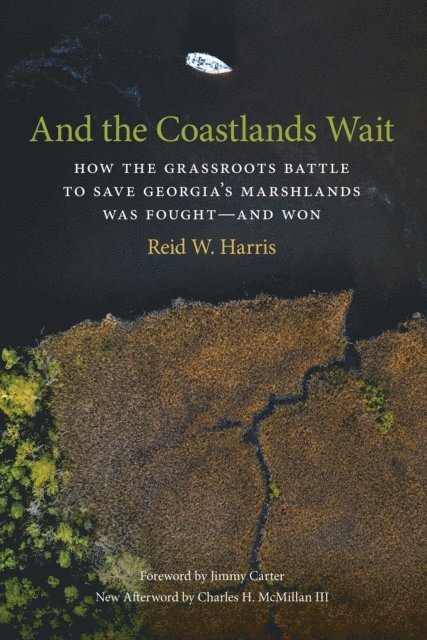
A broad-based coalition of conservative southern politicians, countercultural activists, environmental scientists, sportsmen, devout Christians, garden clubs in Atlanta, and others came together to push the Coastal Marshlands Protection Act of 1970 through the Georgia state legislature. The law was a first-in-the-nation bill to save the marshes of a state from mining and aggressive development and was a political watershed that reflected the changing nature of the state. It set a foundation that would lead to the thoughtful use of the state’s coastal resources still relevant today.And the Coastlands Wait is the history of this legislative act, as told by St. Simons lawyer and leader of the coalition, Reid Harris. Harris served as head of the environmental section of Governor Jimmy Carter’s Goals for Georgia program and later as chairman of the governor’s State Environmental Council. The coastlands coalition he led backed a groundbreaking act that, when instated, set up a permitting process to control development and to protect five hundred thousand acres of precious Georgia marshland. That coalition did not survive for long and is now seen as an unusual moment in the history of conservation, when allies as deeply diverse as conservative governor Lester Maddox and Atlanta liberals stood together.
329 kr
Läs direkt efter köp
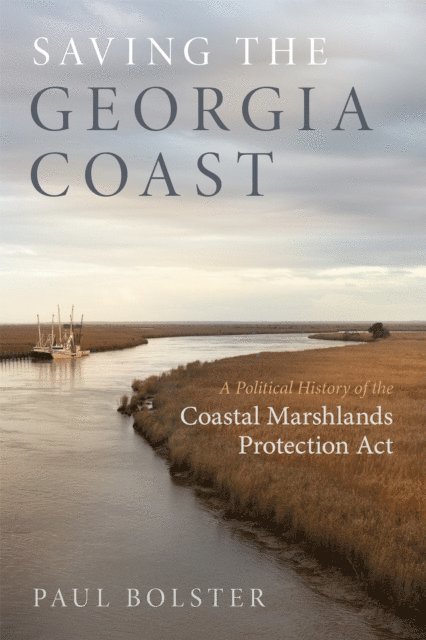
Fifty years ago Georgia chose how it would use the natural environment of its coast. The General Assembly passed the Coastal Marshlands Protection Act in 1970, and, surprisingly, Lester Maddox, a governor who had built a conservative reputation by defending segregation, signed it into law. With this book, Paul Bolster narrates the politics of the times and brings to life the political leaders and the coalition of advocates who led Georgia to pass the most comprehensive protection of marshlands along the Atlantic seaboard.Saving the Georgia Coast brings to light the intriguing and colorful characters who formed that coalition: wealthy island owners, hunters and fishermen, people who made their home on the coast, courageous political leaders, garden-club members, clean-water protectors, and journalists. It explores how that political coalition came together behind governmental leaders and traces the origins of environmental organizations that continue to impact policy today. Saving the Georgia Coast enhances the reader’s understanding of the many steps it takes for a bill to become a law.Bolster’s account reviews state policy toward the coast today, giving the reader an opportunity to compare yesterday to the present. Current demands on the coastal environment are different—including spaceports and sea rise from climate change—but the political pressures to generate new wealth and new jobs, or to perch a home on the edge of the sea, are no different than fifty years ago. Saving the Georgia Coast spotlights the past and present decisions needed to balance human desires with the limits of what nature has to offer.