YSEC Yearbook of Socio-Economic Constitutions – serie
Visar alla böcker i serien YSEC Yearbook of Socio-Economic Constitutions. Handla med fri frakt och snabb leverans.
9 produkter
9 produkter
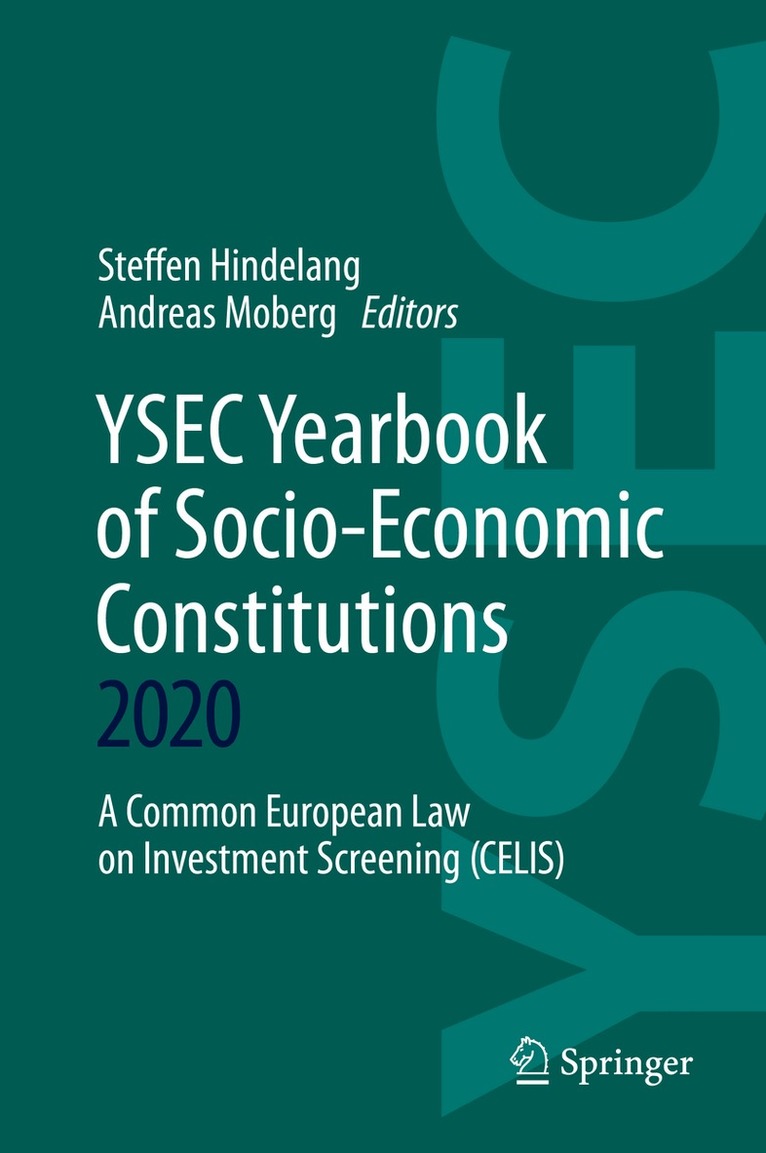
YSEC Yearbook of Socio-Economic Constitutions 2020
A Common European Law on Investment Screening (CELIS)
Inbunden, Engelska, 2021
1 753 kr
Skickas inom 10-15 vardagar
This book presents the very first, interdisciplinarily grounded, comprehensive appraisal of a future “Common European Law on Investment Screening”.
YSEC Yearbook of Socio-Economic Constitutions 2020
A Common European Law on Investment Screening (CELIS)
Häftad, Engelska, 2022
1 753 kr
Skickas inom 10-15 vardagar
This book presents the very first, interdisciplinarily grounded, comprehensive appraisal of a future “Common European Law on Investment Screening”.
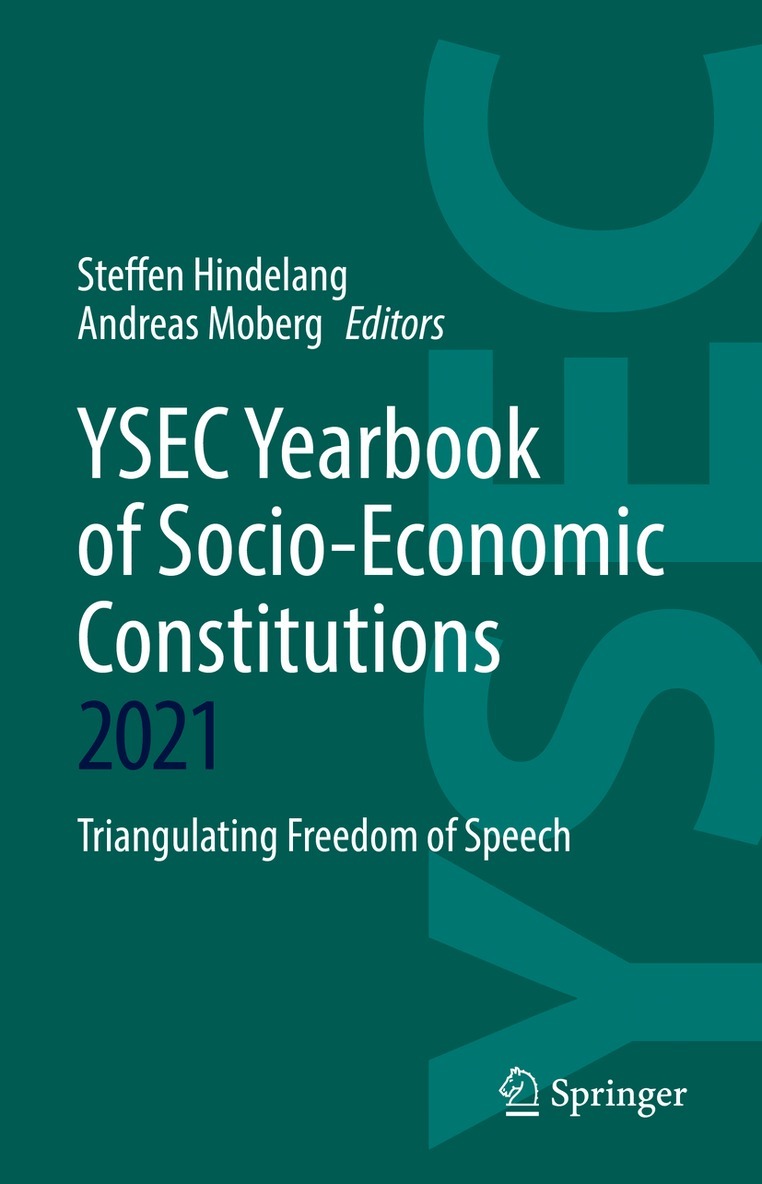
YSEC Yearbook of Socio-Economic Constitutions 2021
Triangulating Freedom of Speech
Inbunden, Engelska, 2022
1 753 kr
Skickas inom 10-15 vardagar
This volume addresses contemporary challenges, enabled by modern technology, that concern upholding freedom of speech where it conflicts with social rights, such as respect for private and family life, and with economic rights, such as the freedom to conduct business or the right to free movement.In today’s networked world, technological shifts happen faster than most people even realize. Some of these shifts have made us all potentially powerful: media powerful. We used to sit in silence in front of newspapers and TV screens, and the world was explained to us by just a few sources. Today, thanks to the Internet, social media, and Web 2.0, we can not only share our own thoughts with everyone in a more self-determined way, but we can also take part in public debate and even co-shape it ourselves. Of course, the Internet is not a counter-design to the communication (power) structures of the past. Gains in communicative self-determination are threatened due to algorithmisation, platformisation, and value extraction from self-created private markets.At the same time, the empowerment of the individual challenges the old “grand speakers” who are suddenly detecting “fake news”, echo chambers, and filter bubbles everywhere on the Internet. Internet-based communication allegedly hinders us from the “one truth”; as if newspaper hoaxes, propaganda, and narrow-mindedness were an invention of the Internet. The current heated debate over “fake news”, copyright, and “upload filters” shows that we are unsure of how to deal with the newer and more complex phenomena of Internet-based speech. This is due in no small part to the fact that an important benchmark – our constitutional compass – is still firmly rooted in the past. Constitutions change far more slowly than technologies. Societal changes can drive constitutional changes; but what about normative content control?Today, there are already demands for “old-school clarity”: truth filters on social media platforms, horrendous sums of liability for platforms that encourage (overly)thorough cleaning up. However, it is equally true that private individuals “regulate”: they decide what is found on the Internet and who may post on a given platform. Accounting for all interests at play and striking a “fair” balance that avoids both a public and private over- and under-regulation is a complex matter. The authors of this volume not only provide reflections in their highly topical contributions, but also share their understanding of what constitutes a fair balance within the larger frame of freedom of speech in a digital age.
YSEC Yearbook of Socio-Economic Constitutions 2021
Triangulating Freedom of Speech
Häftad, Engelska, 2023
1 753 kr
Skickas inom 10-15 vardagar
This volume addresses contemporary challenges, enabled by modern technology, that concern upholding freedom of speech where it conflicts with social rights, such as respect for private and family life, and with economic rights, such as the freedom to conduct business or the right to free movement.In today’s networked world, technological shifts happen faster than most people even realize. Some of these shifts have made us all potentially powerful: media powerful. We used to sit in silence in front of newspapers and TV screens, and the world was explained to us by just a few sources. Today, thanks to the Internet, social media, and Web 2.0, we can not only share our own thoughts with everyone in a more self-determined way, but we can also take part in public debate and even co-shape it ourselves. Of course, the Internet is not a counter-design to the communication (power) structures of the past. Gains in communicative self-determination are threatened due to algorithmisation, platformisation, and value extraction from self-created private markets.At the same time, the empowerment of the individual challenges the old “grand speakers” who are suddenly detecting “fake news”, echo chambers, and filter bubbles everywhere on the Internet. Internet-based communication allegedly hinders us from the “one truth”; as if newspaper hoaxes, propaganda, and narrow-mindedness were an invention of the Internet. The current heated debate over “fake news”, copyright, and “upload filters” shows that we are unsure of how to deal with the newer and more complex phenomena of Internet-based speech. This is due in no small part to the fact that an important benchmark – our constitutional compass – is still firmly rooted in the past. Constitutions change far more slowly than technologies. Societal changes can drive constitutional changes; but what about normative content control?Today, there are already demands for “old-school clarity”: truth filters on social media platforms, horrendous sums of liability for platforms that encourage (overly)thorough cleaning up. However, it is equally true that private individuals “regulate”: they decide what is found on the Internet and who may post on a given platform. Accounting for all interests at play and striking a “fair” balance that avoids both a public and private over- and under-regulation is a complex matter. The authors of this volume not only provide reflections in their highly topical contributions, but also share their understanding of what constitutes a fair balance within the larger frame of freedom of speech in a digital age.
1 656 kr
Skickas inom 10-15 vardagar
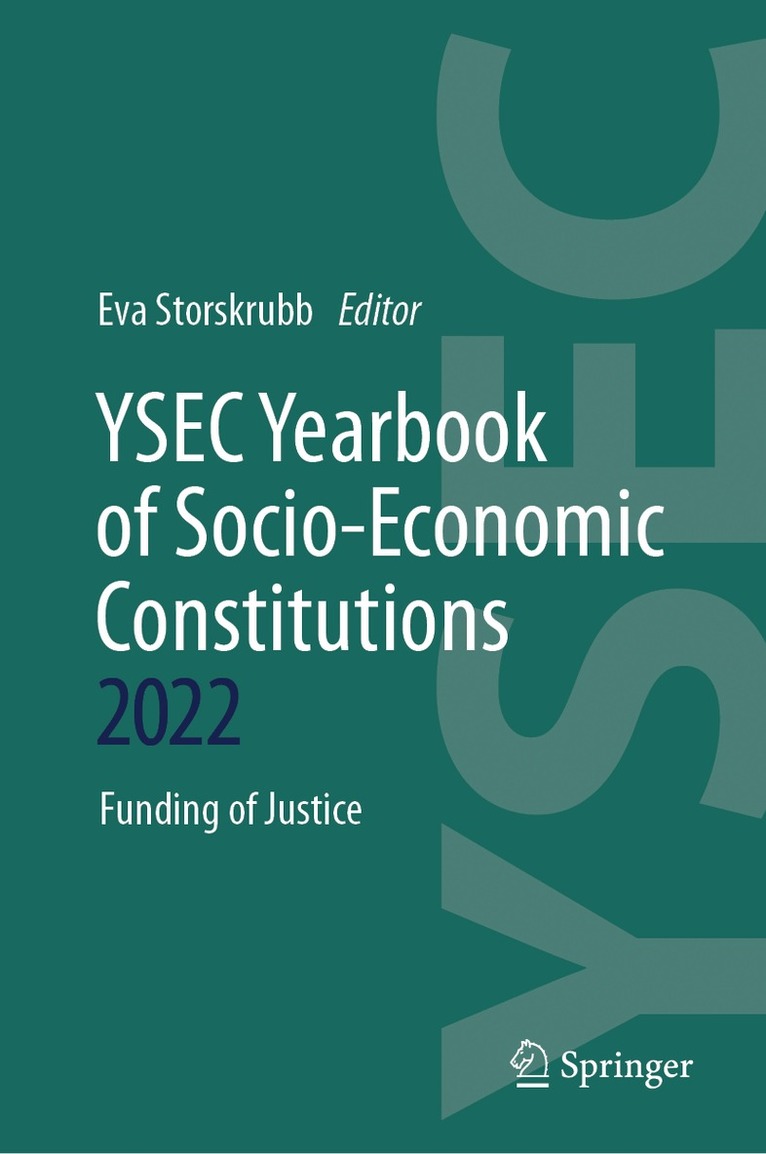
Funding of justice has significant consequences for the enforcement of rights and impacts directly on access to justice and the right to a fair trial as constitutional rights. Access to justice in turn essentially impacts on the effective enjoyment of any other constitutional right, since having the actual means to access a court in case of a potential breach strengthens that right. Public funding, such as legal aid, has come under pressure due to the reality of financial austerity measures and the tightening public budgets in many countries. This has contributed to privatization and marketisation of funding in ever more jurisdictions. Private forms of funding include inter alia litigation insurance, third-party litigation finance and crowdfunding, as well as different forms of assigning or selling claims. As public funding is in decline and as market liberalization in the field of justice increases, crucial questions related to the rule of law, access to justice and social and economic development, in the intersection between states, citizens and business are raised. For example, potential questions of conflict of interest and how to ensure a basic level of equality of access to funding, whilst at the same time protecting market freedom. Some of the contributions in the volume deal with the consequences of privatization of funding of justice on access to justice from a general, principled and theoretical perspective. Other contributions deal with specific regulatory developments or issues at the EU level, alternatively at the local level in specific jurisdictions. Further contributions deal with crucial issues of funding of justice in environmental matters, that are increasingly relevant and topical in practice.
1 656 kr
Skickas inom 10-15 vardagar
Funding of justice has significant consequences for the enforcement of rights and impacts directly on access to justice and the right to a fair trial as constitutional rights.
YSEC Yearbook of Socio-Economic Constitutions 2023
Law and the Governance of Artificial Intelligence
Inbunden, Engelska, 2024
1 559 kr
Skickas inom 10-15 vardagar
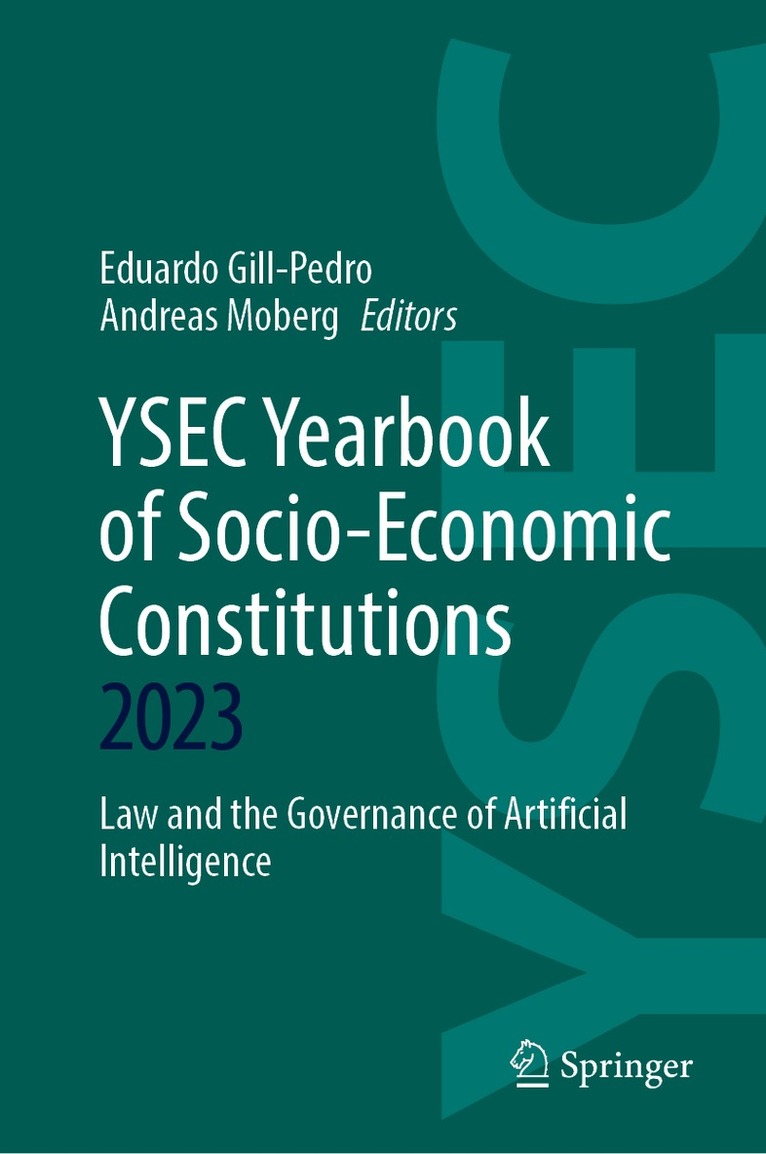
Artificial intelligence (AI) has the potential to radically transform our society. It may lead to a massive increase in the capabilities of humankind and allow us to address some of our most intractable challenges. It may also entail profound disruption to structures and processes that have sustained our society over centuries. These developments present a unique challenge to the socio-economic constitutional arrangements which govern our world at national, regional and international level. The deployment of increasingly powerful AI systems, able to function with increasing degree of autonomy, has led to concerns over loss of human control of important societal processes, over the disruption of existing economic, social and legal relationships, and over the empowerment of some societal actors at the expense of others, together with the entrenchment of situations of domination or discrimination. It has also made increasingly clear how tremendous the potential benefits, that these technologies may bring, are to those who successfully develop and deploy them. There is therefore great pressure on governments, international institutions, public authorities, civil society organisations, industry bodies and individual firms to introduce or adapt mechanisms and structures that will avoid the potentially negative outcomes of AI and achieve the positive ones. These mechanisms and structures, which have been given the umbrella term ‘AI governance’, cover a wide range of approaches, from individual firms introducing ethical principles which they volunteer to abide by, to the European Union legislating an AI Act, which will prohibit certain types of AI applications and impose binding obligations on AI developers and deployers. The fast pace of innovation in the development of AI technologies is mirrored by the fast pace of development of the emerging field of AI governance, where traditional legislation by public bodies is complemented with more innovative approaches, such ashybrid and adaptive governance, ethical alignment, governance by design and the creation of regulatory sandboxes. The chapter “AI and Sensitive Personal Data Under the Law Enforcement Directive: Between Operational Efficiency and Legal Necessity” is available open access under a Creative Commons Attribution 4.0 International License via link.springer.com.
YSEC Yearbook of Socio-Economic Constitutions 2023
Law and the Governance of Artificial Intelligence
Häftad, Engelska, 2025
1 559 kr
Skickas inom 10-15 vardagar
Artificial intelligence (AI) has the potential to radically transform our society. It may lead to a massive increase in the capabilities of humankind and allow us to address some of our most intractable challenges. It may also entail profound disruption to structures and processes that have sustained our society over centuries. These developments present a unique challenge to the socio-economic constitutional arrangements which govern our world at national, regional and international level. The deployment of increasingly powerful AI systems, able to function with increasing degree of autonomy, has led to concerns over loss of human control of important societal processes, over the disruption of existing economic, social and legal relationships, and over the empowerment of some societal actors at the expense of others, together with the entrenchment of situations of domination or discrimination. It has also made increasingly clear how tremendous the potential benefits, that these technologies may bring, are to those who successfully develop and deploy them. There is therefore great pressure on governments, international institutions, public authorities, civil society organisations, industry bodies and individual firms to introduce or adapt mechanisms and structures that will avoid the potentially negative outcomes of AI and achieve the positive ones. These mechanisms and structures, which have been given the umbrella term ‘AI governance’, cover a wide range of approaches, from individual firms introducing ethical principles which they volunteer to abide by, to the European Union legislating an AI Act, which will prohibit certain types of AI applications and impose binding obligations on AI developers and deployers. The fast pace of innovation in the development of AI technologies is mirrored by the fast pace of development of the emerging field of AI governance, where traditional legislation by public bodies is complemented with more innovative approaches, such ashybrid and adaptive governance, ethical alignment, governance by design and the creation of regulatory sandboxes. The chapter “AI and Sensitive Personal Data Under the Law Enforcement Directive: Between Operational Efficiency and Legal Necessity” is available open access under a Creative Commons Attribution 4.0 International License via link.springer.com.
Del 2024 - YSEC Yearbook of Socio-Economic Constitutions
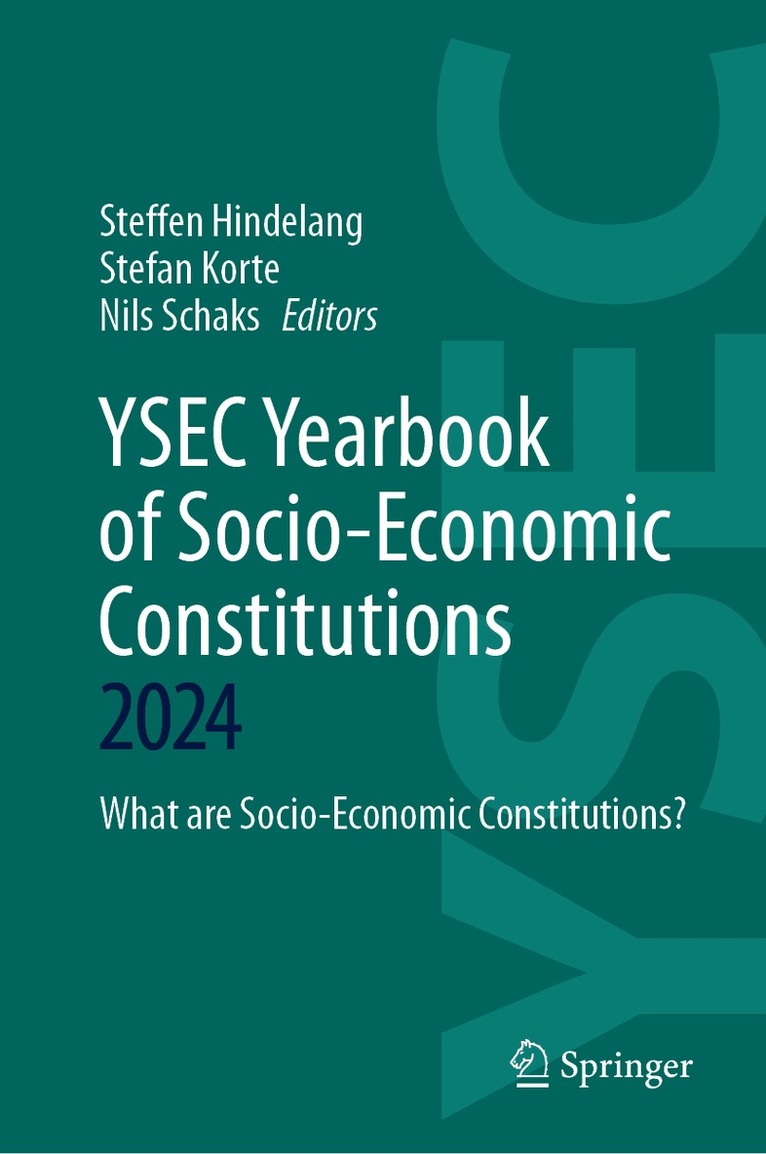
YSEC Yearbook of Socio-Economic Constitutions 2024
What are Socio-Economic Constitutions?
Inbunden, Engelska, 2025
1 656 kr
Skickas inom 10-15 vardagar
The fifth volume of the Yearbook of Socio-Economic Constitutions (YSEC Yearbook) offers an in-depth exploration of socio-economic constitutionalism, a field gaining rapidly in importance as global economies shift.