• Fri frakt över 249 kr
  • •
  • Snabba leveranser
  • •
  • Billiga böcker
Kundservice

Du är på sajten för privatpersoner.

Företag, bibliotek eller offentlig verksamhet?

Du handlar på classic.bokus.com, där alla dina funktioner finns intakta.
Till classic.bokus.com
Bokus logotyp. Gå till startsidan.
  • Erbjudanden
  • Nyheter
  • Student
  • Topplistor
  • Barn & ungdom
  • Bokus Play
  • E-böcker
  • Pocketböcker
  • Spel & pussel

10% rabatt på allt med kod: NYSTART10 →

Sidfot

Mina sidor

    Hjälp

    • Kundservice
    • Vanliga frågor och svar
    • Frakt och leverans
    • Retur vid ångerrätt
    • Reklamera vara
    • Betalning
    • Köpvillkor
    • Allmänna villkor
    • Information om webbplatsens tillgänglighet

    Om Bokus

    • Om oss
    • Pressrum
    • För studenter
    • För företag
    • För bibliotek och offentlig verksamhet
    • För leverantörer
    • Hållbarhet

    Populärt

    • Aktuella erbjudanden
    • Presentkort
    • Studentlitteratur
    • Nya böcker
    • Topplistor
    • Signerade böcker
    • Engelska böcker

    Inspiration

    • Boktips
    • BookTok
    • Populära bokserier
    • Barnbokskaraktärer
    • Populära författare
    Logotyp för Bokus
    Följ oss på Facebook (extern länk)Följ oss på Instagram (extern länk)Följ oss på YouTube (extern länk)Följ oss på TikTok (extern länk)
    bokus @ CookiesAnpassa cookiesIntegritetspolicyKöpvillkor
    Till Citymail hemsida (extern länk)Till Budbee hemsida (extern länk)Till Postnord hemsida (extern länk)Till Schenker hemsida (extern länk)Till Early Bird hemsida (extern länk)Till Walleys hemsida (extern länk)
    1. Naturvetenskap och teknik
    2. Teknik och industri
    3. Maskinteknik och material

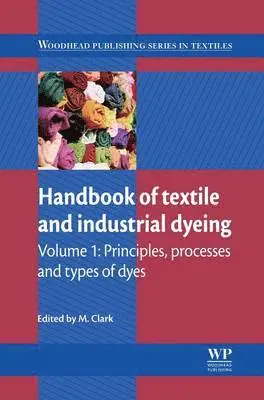
    Handbook of Textile and Industrial Dyeing

    Principles, Processes and Types of Dyes

    AvM Clark

    Häftad, Engelska, 2016

    Del i serien Woodhead Publishing Series in Textiles

    2 437 kr

    Beställningsvara. Skickas inom 10-15 vardagar. Fri frakt över 249 kr.

    Beskrivning

    Dyeing is one of the most effective and popular methods used for colouring textiles and other materials. Dyes are employed in a variety of industries, from cosmetic production to the medical sector. The two volumes of the Handbook of textile and industrial dyeing provide a detailed review of the latest techniques and equipment used in the dyeing industry, as well as examining dyes and their application in a number of different industrial sectors.

    Volume 1 deals with the principles of dyeing and techniques used in the dyeing process, and looks at the different types of dyes currently available. Part one begins with a general introduction to dyeing, which is followed by chapters that examine various aspects of the dyeing process, from the pre-treatment of textiles to the machinery employed. Chapters in part two then review the main types of dyes used today, including disperse dyes, acid dyes, fluorescent dyes, and many others for a diverse range of applications.

    With its distinguished editor and contributions from some of the world's leading authorities, the Handbook of textile and industrial dyeing is an essential reference for designers, colour technologists and product developers working in a variety of sectors, and will also be suitable for academic use.

    • Examines dyeing and its application in a number of different industrial sectors
    • Deals with the principles of dyeing and techniques used in the dyeing process, as well as types of dyes currently available
    • Chapters review various dye types right through to modelling and predicting dye properties and the chemistry of dyeing

    Produktinformation

    • Utgivningsdatum:2016-08-19
    • Mått:156 x 234 x 35 mm
    • Vikt:930 g
    • Format:Häftad
    • Språk:Engelska
    • Serie:Woodhead Publishing Series in Textiles
    • Antal sidor:680
    • Förlag:Elsevier Science
    • ISBN:9780081016510

    Utforska kategorier

    • Maskinteknik och material inom Naturvetenskap och teknik
    • Tillverkningsteknik inom Naturvetenskap och teknik

    Mer om författaren

    Dr Matthew Clark is a lecturer in the Department of Colour Science at the University of Leeds.

    Innehållsförteckning

    • Contributor contact detailsWoodhead Publishing Series in TextilesPart I: General aspects of dyeingChapter 1: Fundamental principles of dyeing1.1 Introduction1.2 Principles of dyeing1.3 Exhaust dyeing1.4 Continuous dyeing1.5 Printing1.6 Classification systems for dyes1.7 Classification of dyes by dye class1.8 ConclusionChapter 2: Structure and properties of textile materialsAbstract:2.1 Introduction2.2 Classification and properties of textile fibres2.3 Fibre properties related to textile technology2.4 Classification and properties of basic textile products2.5 Physical chemistry of fibre polymers2.6 Cellulosic fibres2.7 Protein fibres2.8 Man-made fibresChapter 3: Pre-treatment and preparation of textile materials prior to dyeingAbstract:3.1 Introduction3.2 Impurities in textile fibres3.3 Aims of preparatory processes3.4 Preparation of cotton materials3.5 Inspection and mending3.6 Shearing and cropping3.7 Singeing3.8 Enzymatic processing3.9 Desizing process3.10 Scouring of cotton and other cellulosic fibres3.11 Mercerisation3.12 Preparation of proteineous materials3.13 Carbonisation and scouring of wool3.14 Shrink-resist treatment for wool3.15 Degumming of silk3.16 Preparation of synthetic materials3.17 Bleaching3.18 Improvement of whitenessChapter 4: Chemistry of dyeingAbstract:4.1 Fundamental principles of direct dyeing4.2 Fundamental principles of reactive dyeing4.3 Fundamental principles of disperse dyeing4.4 Fundamental principles of acid dyeing4.5 Fundamental principles of azoic dyeing4.6 Fundamental principles of vat dyeing4.7 Fundamental principles of sulphur dyeing4.8 ConclusionsChapter 5: Thermodynamics and kinetics of dyeing and dyebath monitoring systemsAbstract:5.1 Introduction5.2 Thermodynamics of dyeing5.3 Kinetics of dyeing5.4 Dyebath monitoring systems5.7 Appendix: mathematical symbolsChapter 6: An overview of dye fastness testingAbstract:6.1 Introduction6.2 Overview of dye fastness testing6.3 Grading of fastness properties6.4 Factors influencing dye fastness6.5 Application6.6 ConclusionsChapter 7: Molecular modeling and predicting dye propertiesAbstract:7.1 Introduction7.2 Prediction of wavelength of maximum absorption7.3 Effect of crystal packing on λmax7.4 Ab initio calculations of crystal structures7.5 Quantitative-structure activity relationship in dye–fiber affinity predictionChapter 8: Methods and machinery for the dyeing processAbstract:8.1 Introduction8.2 Jiggers8.3 Beam dyeing machines8.4 Winches8.5 Jet dyeing machines with hydraulic flow system8.6 Airflow dyeing machines with aerodynamic flow system8.7 Atmospheric softflow/overflow dyeing machines8.8 HT softflow/overflow dyeing machines8.9 Machines to dye fabric in rope/open-width form8.10 Semi-continuous and continuous open-width dyeing machines8.11 Future trends8.13 Appendix: list of machinery manufacturersPart II: Dye types and processesChapter 9: The chemistry of reactive dyes and their application processesAbstract:9.1 Introduction9.2 The history of reactive dye development9.3 Chemistry of commercially available reactive dyes9.4 The application of reactive dyes to cellulosic fibres9.5 The application of reactive dyes to natural and synthetic polyamide fibres9.6 Miscellaneous methods to covalently bond dyes to fibres9.7 ConclusionsChapter 10: Disperse dyesAbstract:10.1 Introduction10.2 Developments in disperse dyes10.3 Types of disperse dye10.4 Properties of disperse dyes10.5 Future trendsChapter 11: Natural dyesAbstract:11.1 Introduction11.2 Classification of natural dyes11.3 Chemistry of natural dyes11.4 Chemistry and types of mordants11.5 Application of mordants to textiles11.6 Application of natural dyes to textiles11.7 Fastness properties of natural dyes11.8 Future trendsChapter 12: Direct dyesAbstract:12.1 Introduction12.2 Classification of direct dyes according to dyeing characteristics12.3 Classification based on chemical structure12.4 Bisazine dyes and copper phthalocyanine dyes12.5 Future trendsChapter 13: Metal-complex dyesAbstract:13.1 Introduction13.2 General properties13.3 Chemistry of dyes13.4 Classification and nomenclature13.5 Mordant dyes13.6 Premetallised dyes13.7 Fastness of dyed fabrics13.8 The problem of waste water13.9 Future trendsChapter 14: Sulphur dyesAbstract:14.1 Introduction14.2 Properties of sulphur dyes14.3 Chemistry of sulphur dyes14.4 Synthesis14.5 Classification of sulphur dyes14.6 Practical application14.7 Reducing systems14.8 Oxidising agents14.9 Bronzing of dyeing14.10 Fastness of dyed textiles14.11 Tendering effect on cellulose14.12 Waste-water load from sulphur dyebath14.13 Strengths and limitations14.14 Stripping of sulphur dyes14.15 Future trendsChapter 15: Acid dyesAbstract:15.1 Introduction15.2 Classification of acid dyes15.3 Azo acid dyes15.4 Anthraquinone dyes15.5 Acid nitro dyes15.6 Triphenylmethane acid dyes15.7 Water-repellent dyes15.8 Acid dyes with inherent light fastness15.9 Acid dyes free from 1-naphthylamine15.10 Future trendsChapter 16: Environmentally friendly dyesAbstract:16.1 Introduction16.2 Classification of dyes16.3 Environmental issues in dyeing16.4 Environmentally friendly dyeing of cotton with reactive dyes16.5 Alternative reducing systems for the dyeing of cotton with vat and sulphur dyes16.6 Environmentally friendly dyeing of wool16.7 Environmentally friendly dyeing of polyester16.8 Future trendsChapter 17: Fluorescent dyesAbstract:17.1 Introduction17.2 Fluorescence17.3 Chemical types of fluorescent dye17.4 Textile applications of fluorescent dyes17.5 Other applications of fluorescent dyes17.6 Future trends17.7 Sources of further informationChapter 18: Near-infrared dyesAbstract:18.1 Introduction18.2 Properties of near-infrared (NIR) dyes18.3 Types of NIR dyes18.4 Applications18.5 Future trendsChapter 19: Azoic dyeingAbstract:19.1 Introduction19.2 Advantages and disadvantages of azoic dyeing19.3 Chemistry of azoic dyeing19.4 Colours obtainable using azoic components19.5 Methods for dissolution of naphthol19.6 Naphtholation and dyeing of cotton19.7 Intermediate treatments19.8 Development19.9 After-treatment19.10 Dyeing of silk19.11 Dyeing of polyester19.12 Dyeing of nylon19.13 Fastness properties19.14 Stripping of azoic colours19.15 Environmental issues associated with azoic colours19.16 ConclusionIndex