• Fri frakt över 249 kr
  • •
  • Snabba leveranser
  • •
  • Billiga böcker
Kundservice

Du är på sajten för privatpersoner.

Företag, bibliotek eller offentlig verksamhet?

Du handlar på classic.bokus.com, där alla dina funktioner finns intakta.
Till classic.bokus.com
Bokus logotyp. Gå till startsidan.
  • Erbjudanden
  • Nyheter
  • Student
  • Topplistor
  • Barn & ungdom
  • Bokus Play
  • E-böcker
  • Pocketböcker
  • Spel & pussel

10% rabatt på allt med kod: NYSTART10 →

Sidfot

Mina sidor

    Hjälp

    • Kundservice
    • Vanliga frågor och svar
    • Frakt och leverans
    • Retur vid ångerrätt
    • Reklamera vara
    • Betalning
    • Köpvillkor
    • Allmänna villkor
    • Information om webbplatsens tillgänglighet

    Om Bokus

    • Om oss
    • Pressrum
    • För studenter
    • För företag
    • För bibliotek och offentlig verksamhet
    • För leverantörer
    • Hållbarhet

    Populärt

    • Aktuella erbjudanden
    • Presentkort
    • Studentlitteratur
    • Nya böcker
    • Topplistor
    • Signerade böcker
    • Engelska böcker

    Inspiration

    • Boktips
    • BookTok
    • Populära bokserier
    • Barnbokskaraktärer
    • Populära författare
    Logotyp för Bokus
    Följ oss på Facebook (extern länk)Följ oss på Instagram (extern länk)Följ oss på YouTube (extern länk)Följ oss på TikTok (extern länk)
    bokus @ CookiesAnpassa cookiesIntegritetspolicyKöpvillkor
    Till Citymail hemsida (extern länk)Till Budbee hemsida (extern länk)Till Postnord hemsida (extern länk)Till Schenker hemsida (extern länk)Till Early Bird hemsida (extern länk)Till Walleys hemsida (extern länk)
    1. Ekonomi och Ledarskap
    2. Industrier och branscher
    3. Arbetsmarknaden

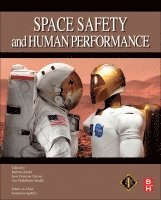
    Space Safety and Human Performance

    AvBarbara G. Kanki,Jean-Francois Clervoy

    Inbunden, Engelska, 2017

    2 182 kr

    Beställningsvara. Skickas inom 10-15 vardagar. Fri frakt över 249 kr.

    Beskrivning

    Space Safety and Human Performance provides a comprehensive reference for engineers and technical managers within aerospace and high technology companies, space agencies, operators, and consulting firms. The book draws upon the expertise of the world's leading experts in the field and focuses primarily on humans in spaceflight, but also covers operators of control centers on the ground and behavior aspects of complex organizations, thus addressing the entire spectrum of space actors.

    During spaceflight, human performance can be deeply affected by physical, psychological and psychosocial stressors. Strict selection, intensive training and adequate operational rules are used to fight performance degradation and prepare individuals and teams to effectively manage systems failures and challenging emergencies. The book is endorsed by the International Association for the Advancement of Space Safety (IAASS).


    • 2019 PROSE Awards - Winner: Category: Engineering and Technology: Association of American Publishers
    • Provides information on critical aspects of human performance in space missions
    • Addresses the issue of human performance, from physical and psychosocial stressors that can degrade performance, to selection and training principles and techniques to enhance performance
    • Brings together essential material on: cognition and human error; advanced analysis methods such as human reliability analysis; environmental challenges and human performance in space missions; critical human factors and man/machine interfaces in space systems design; crew selection and training; and organizational behavior and safety culture
    • Includes an endorsement by the International Association for the Advancement of Space Safety (IAASS)

    Produktinformation

    • Utgivningsdatum:2017-11-10
    • Mått:191 x 235 x 53 mm
    • Vikt:1 470 g
    • Format:Inbunden
    • Språk:Engelska
    • Antal sidor:944
    • Förlag:Elsevier Science
    • ISBN:9780081018699

    Utforska kategorier

    • Arbetsmarknaden inom Ekonomi och Ledarskap
    • Flyg- och rymdteknik inom Naturvetenskap och teknik
    • Rymdforskning inom Naturvetenskap och teknik

    Mer om författaren

    Tommaso Sgobba is Executive Director and Board Secretary of IAASS (International Association for the Advancement of Space Safety). Tommaso Sgobba has been IAASS first President in the period 2005-2013. Until June 2013 Tommaso Sgobba has been responsible for flight safety at the European Space Agency (ESA), including human-rated systems, spacecraft re-entries, space debris, use of nuclear power sources, and planetary protection. He joined the European Space Agency in 1989, after 13 years in the aeronautical industry. Initially he supported the developments of the Ariane 5 launcher, several earth observation and meteorological satellites, and the early phase of the European Hermes spaceplane. Later he became _Product Assurance and Safety Manager for all European manned missions on Shuttle, MIR station, and for the European research facilities of the International Space Station. He chaired for 10 years the ESA ISS Payload Safety Review Panel. He was also instrumental in setting up the ESA Re-entry Safety Review Panel. Tommaso Sgobba holds an M.S. in Aeronautical Engineering from the Polytechnic of Turin (Italy), where he was also professor of space system safety (1999-2001). He has published several articles and papers on space safety, and co-edited the text book “Safety Design for Space Systems”, published in 2009 by Elsevier, that was also published later in Chinese. He was the Editor-in-Chief of the books “Safety Design for Space Operations” (2013) and “Space Safety and Human Performance” (2017) also published by Elsevier. He is Managing Editor of the Journal of Space Safety Engineering and member of the editorial board of the Space Safety Magazine. Tommaso Sgobba is the inventor (patent pending) of the R-DBAS (Re-entry, Direct Broadcasting Alert System), to alert the air traffic of falling fragments from uncontrolled space system re-entry. Tommaso Sgobba received the NASA recognition for outstanding contribution to the International Space Station in 2004, and the prestigious NASA Space Flight Awareness (SFA) Award in 2007. Dr. Barbara Kanki served as a Research Scientist at the National Aeronautics and Space Administration (NASA), Ames Research Center (Moffett Field, California) in the Human Systems Integration Division. Over her tenure of more than 25 years, she conducted human performance research in support of NASA Aviation Safety Programs, Human Factors and Performance for Space Safety, and a variety of Human Factors programs for the Federal Aviation Administration (FAA). In a consulting role she worked with other high risk industries such as the medical and nuclear power fields. Dr. Kanki’s research activities have ranged across human factors topics such as crew communication and coordination, organizational factors, information and workload management for aviation operations including flight crews, ground control, and technical operations. Her research interests include human-centered procedure and document design, integration and training for new technologies as well as safety topics such as voluntary reporting and event investigation. She has supported the space side of NASA in human and socio-technical risk factors, team training, and procedure design primarily for the space shuttle program at Kennedy Space Center and has participated on NASA mishap boards, safety assessments and National Transportation Safety Board human performance investigations. After retiring from NASA in 2014, Dr. Kanki continues to contribute to NASA projects and FAA/industry groups, and is the current chair of the Human Performance working group of the International Association for the Advancement of Space Safety. Dr. Kanki received her doctorate in Behavioral Sciences from the University of Chicago, where she specialized in the areas of communication and group dynamics. She continues to author, edit, and review books, journals, and papers on human factors topics. Jean –Francois Clervoy, is an ESA (European Space Agency) astronaut from France and brigadier general from DGA (French Defense Procurement Agency), served as a mission specialist twice aboard the Space Shuttle Atlantis on mission STS-66 to study the atmosphere, and on mission STS-84 to re-supply the Russian space station Mir, and as a flight engineer aboard the Space Shuttle Discovery on mission STS-103 to repair the Hubble Space Telescope. He has logged 28 days and 3 hours in 439 earth orbits. Since 2001 he has worked as a senior advisor astronaut for the ESA human space flight programs including the ATV Jules Verne project to re-supply the International Space Station. Still active in the European astronaut corps, he works also as Chairman of Novespace, a company which organizes parabolic flights with its Airbus ZERO-G for microgravity research and for public weightlessness discovery flights. Dr. Sandal is a professor of psychology at the Faculty of Psychology, University of Bergen in Norway where she is a leader of a unit, the Society and Workplace Diversity Research Group. Her fields of expertise are work and organizational psychology, stress and coping, and cross-cultural psychology. Since the early 1990s, Gro Mjeldheim Sandal has been the Principal Investigator of large scales research projects funded by the European Space Agency focusing on psychological reactions during human spaceflights. The projects have included a number of simulation studies of multicultural crews isolated in hyperbaric chambers and personnel operating in other extreme environments (Antarctic research stations, polar expeditions, military settings, oil and gas-platforms). She is currently leading a psychological experiment on the ISS in collaboration with colleagues working for the Russian Space Agency. Her recent research has focused on the implications of individual and cultural differences in values for efficient co-working among crews in space as well as among ground-based personnel. A major aim of her research in space and analogue environments is to gain knowledge that can be applied for selection, training, and in-flight support.

    Innehållsförteckning

    • 1. Introduction2. Cognition Functions and Human Errors3. Workload and Fatigue4. Space Flight Environment5. Physiological Performance and Capabilities6. Physiological Resilience7. Human Factors Research Methods and Tools8. System Safety and Accidents Prevention9. Human-System Interfaces Design10. Human Automation Interaction11. Human Factors and Safety in EVA12. Human Reliability Analysis Methods and Tools13. Human Factors in Mission Control Center14. Organizational Factors and Safety Culture15. Habitability and Habitat Design16. Selection andTraining17. Medical and Psychological Mission Support18. Human Factors Mishap InvestigationAppendixA: Habitat Volumetric Dimensions AllocationB: NASA Human Capability LimitsC: Appendix C for Chapter 14D: Quiet Fan Acoustic Benefits in the ISS Russian SegmentE: Human Factors in the SpaceShip Two Investigation