• Fri frakt över 249 kr
  • •
  • Snabba leveranser
  • •
  • Billiga böcker
Kundservice

Du är på sajten för privatpersoner.

Företag, bibliotek eller offentlig verksamhet?

Du handlar på classic.bokus.com, där alla dina funktioner finns intakta.
Till classic.bokus.com
Bokus logotyp. Gå till startsidan.
  • Erbjudanden
  • Nyheter
  • Student
  • Topplistor
  • Barn & ungdom
  • Bokus Play
  • E-böcker
  • Pocketböcker
  • Spel & pussel

10% rabatt på allt med kod NYSTART10 →

Sidfot

Mina sidor

    Hjälp

    • Kundservice
    • Vanliga frågor och svar
    • Frakt och leverans
    • Retur vid ångerrätt
    • Reklamera vara
    • Betalning
    • Köpvillkor
    • Allmänna villkor
    • Information om webbplatsens tillgänglighet

    Om Bokus

    • Om oss
    • Pressrum
    • För studenter
    • För företag
    • För bibliotek och offentlig verksamhet
    • För leverantörer
    • Hållbarhet

    Populärt

    • Aktuella erbjudanden
    • Presentkort
    • Studentlitteratur
    • Nya böcker
    • Topplistor
    • Signerade böcker
    • Engelska böcker

    Inspiration

    • Boktips
    • BookTok
    • Populära bokserier
    • Barnbokskaraktärer
    • Populära författare
    Logotyp för Bokus
    Följ oss på Facebook (extern länk)Följ oss på Instagram (extern länk)Följ oss på YouTube (extern länk)Följ oss på TikTok (extern länk)
    bokus @ CookiesAnpassa cookiesIntegritetspolicyKöpvillkor
    Till Citymail hemsida (extern länk)Till Budbee hemsida (extern länk)Till Postnord hemsida (extern länk)Till Schenker hemsida (extern länk)Till Early Bird hemsida (extern länk)Till Walleys hemsida (extern länk)
    1. Naturvetenskap och teknik
    2. Matematik och naturvetenskap
    3. Matematik
    4. Tillämpad matematik

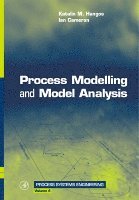
    Process Modelling and Model Analysis

    AvIan T. Cameron,Katalin Hangos

    Inbunden, Engelska, 2001

    Del 4 i serien Process Systems Engineering

    1 763 kr

    Beställningsvara. Skickas inom 10-15 vardagar. Fri frakt över 249 kr.

    Beskrivning

    Process Modelling and Model Analysis describes the use of models in process engineering. Process engineering is all about manufacturing--of just about anything! To manage processing and manufacturing systematically, the engineer has to bring together many different techniques and analyses of the interaction between various aspects of the process. For example, process engineers would apply models to perform feasibility analyses of novel process designs, assess environmental impact, and detect potential hazards or accidents.

    To manage complex systems and enable process design, the behavior of systems is reduced to simple mathematical forms. This book provides a systematic approach to the mathematical development of process models and explains how to analyze those models. Additionally, there is a comprehensive bibliography for further reading, a question and answer section, and an accompanying Web site developed by the authors with additional data and exercises.


    • Introduces a structured modeling methodology emphasizing the importance of the modeling goal and including key steps such as model verification, calibration, and validation
    • Focuses on novel and advanced modeling techniques such as discrete, hybrid, hierarchical, and empirical modeling
    • Illustrates the notions, tools, and techniques of process modeling with examples and advances applications

    Produktinformation

    • Utgivningsdatum:2001-05-23
    • Mått:171 x 252 x undefined mm
    • Vikt:1 270 g
    • Format:Inbunden
    • Språk:Engelska
    • Serie:Process Systems Engineering
    • Antal sidor:543
    • Förlag:Elsevier Science
    • ISBN:9780121569310

    Utforska kategorier

    • Tillämpad matematik inom Naturvetenskap och teknik
    • Tillverkningsteknik inom Naturvetenskap och teknik

    Mer om författaren

    Ian Cameron is Professor in Chemical Engineering at the University of Queensland with teaching, research, and consulting activities in process systems engineering. He has a particular interest in process modelling, dynamic simulation, and the application of functional systems perspectives to risk management, having extensive industrial experience in these areas. He continues to work closely with industry and government on systems approaches to process and risk management issues. He received his BE from the University of New South Wales (Australia) and his PhD from imperial College London. He is a Fellow of IChemE. Katalin Hangos is currently a research professor at the Computer and Automation Research Institute, Hungary. She is one of the few woman professors in process systems engineering with a strong background in systems and control theory and computer science. Dr. Hangos's main interest is dynamic process modeling for control and diagnosis purposes. She is co-author of more than 100 papers on various aspects of modeling and its control applications including nonlinear and stochastic process system models, Petri nets, qualitative, and graph-theoretical models. Gregory Stephanopoulos is a Professor of Chemical Engineering at MIT. He received his B.S. from the National Technical University of Athens, his M.S. from the University of Florida and his Ph.D. from the University of Minnesota, all in Chemical Engineering. Upon graduation, he joined the Chemical Engineering Faculty of the California Institute of Technology, where he served as Assistant and Associate Professor until 1985. In 1985 he was appointed Professor of Chemical Engineering at MIT where he has been ever since.Stephanopoulos' work has appeared in more than 150 publications and 7 patents. He has been recognized with the Dreyfus Foundation Teacher Scholar Award (1982), Excellence in Teaching Award (1984), and Technical Achievement Award of the AIChE (1984). He has been a Presidential Young Investigator and the Chairman of the Food Pharmaceutical & Bioengineering Division of the American Institute of Chemical Engineers (1992). In 1992 he was a Visiting Professor at the International Research Center for Biotechnology at Osaka University and was elected a Founding Fellow of the American Institute for Medical and Biological Engineering. In 1996 he chaired the first Conference on Metabolic Engineering and gave the inaugural Bayer Lecture on Biochemical Engineering at the University of California at Berkeley. He was honored with the FPBE Division Award at AIChE in 1997.

    Innehållsförteckning

    • IntroductionFUNDAMENTAL PRINCIPLES AND PROCESS MODEL DEVELOPMENTThe Role of Models in Process Systems Engineering; A Systematic Approach to Model Building; Conservation Principles; Constitutive Relations; Dynamic Models - Lumped Parameter Systems; Solution Strategies for Lumped Parameter Models; Dynamic Models - Distributed Parameter SystemsSolution Strategies for Distributed Parameter Systems; Process Model HierarchiesADVANCED PROCESS MODELING AND MODEL ANALYSIS Basic Tools for Process Model Analysis; Data Acquisition and Analysis; Statistical Model Calibration and Validation; Analysis of Dynamic Process Models; Process Modeling for Control and Diagnostic Purposes; Modeling Discrete Event Systems; Modeling Hybrid Systems; Modeling Applications in Process Systems; Computer Aided Process Modeling; Empirical Model Building; Appendix: Basic Mathematic Tools; Bibliography; Index