• Fri frakt över 249 kr
  • •
  • Snabba leveranser
  • •
  • Billiga böcker
Kundservice

Du är på sajten för privatpersoner.

Företag, bibliotek eller offentlig verksamhet?

Du handlar på classic.bokus.com, där alla dina funktioner finns intakta.
Till classic.bokus.com
Bokus logotyp. Gå till startsidan.
  • Erbjudanden
  • Nyheter
  • Student
  • Topplistor
  • Barn & ungdom
  • Bokus Play
  • E-böcker
  • Pocketböcker
  • Spel & pussel

10% rabatt på allt med kod NYSTART10 →

Sidfot

Mina sidor

    Hjälp

    • Kundservice
    • Vanliga frågor och svar
    • Frakt och leverans
    • Retur vid ångerrätt
    • Reklamera vara
    • Betalning
    • Köpvillkor
    • Allmänna villkor
    • Information om webbplatsens tillgänglighet

    Om Bokus

    • Om oss
    • Pressrum
    • För studenter
    • För företag
    • För bibliotek och offentlig verksamhet
    • För leverantörer
    • Hållbarhet

    Populärt

    • Aktuella erbjudanden
    • Presentkort
    • Studentlitteratur
    • Nya böcker
    • Topplistor
    • Signerade böcker
    • Engelska böcker

    Inspiration

    • Boktips
    • BookTok
    • Populära bokserier
    • Barnbokskaraktärer
    • Populära författare
    Logotyp för Bokus
    Följ oss på Facebook (extern länk)Följ oss på Instagram (extern länk)Följ oss på YouTube (extern länk)Följ oss på TikTok (extern länk)
    bokus @ CookiesAnpassa cookiesIntegritetspolicyKöpvillkor
    Till Citymail hemsida (extern länk)Till Budbee hemsida (extern länk)Till Postnord hemsida (extern länk)Till Schenker hemsida (extern länk)Till Early Bird hemsida (extern länk)Till Walleys hemsida (extern länk)
    1. Naturvetenskap och teknik
    2. Matematik och naturvetenskap
    3. Biologi
    4. Däggdjur

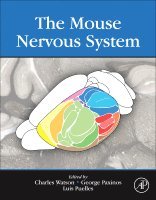
    The Mouse Nervous System

    AvCharles Watson,George Paxinos

    Inbunden, Engelska, 2011

    2 430 kr

    Beställningsvara. Skickas inom 10-15 vardagar. Fri frakt över 249 kr.

    Beskrivning

    The Mouse Nervous System provides a comprehensive account of the central nervous system of the mouse. The book is aimed at molecular biologists who need a book that introduces them to the anatomy of the mouse brain and spinal cord, but also takes them into the relevant details of development and organization of the area they have chosen to study. The Mouse Nervous System offers a wealth of new information for experienced anatomists who work on mice. The book serves as a valuable resource for researchers and graduate students in neuroscience.


    • Systematic consideration of the anatomy and connections of all regions of the brain and spinal cord by the authors of the most cited rodent brain atlases
    • A major section (12 chapters) on functional systems related to motor control, sensation, and behavioral and emotional states
    • A detailed analysis of gene expression during development of the forebrain by Luis Puelles, the leading researcher in this area
    • Full coverage of the role of gene expression during development and the new field of genetic neuroanatomy using site-specific recombinases
    • Examples of the use of mouse models in the study of neurological illness

    Produktinformation

    • Utgivningsdatum:2011-11-23
    • Mått:216 x 276 x 46 mm
    • Vikt:2 640 g
    • Format:Inbunden
    • Språk:Engelska
    • Antal sidor:814
    • Förlag:Elsevier Science
    • ISBN:9780123694973

    Utforska kategorier

    • Däggdjur inom Naturvetenskap och teknik
    • Däggdjur inom Djur och Natur

    Mer om författaren

    Charles Watson is a neuroscientist and public health physician. His qualifications included a medical degree (MBBS) and two research doctorates (MD and DSc). He is Professor Emeritus at Curtin University, and holds adjunct professorial research positions at the University of New South Wales, the University of Queensland, and the University of Western Australia. He has published over 100 refereed journal articles and 40 book chapters, and has co-authored over 25 books on brain and spinal cord anatomy. The Paxinos Watson rat brain atlas has been cited over 80,000 times. His current research is focused on the comparative anatomy of the hippocampus and the claustrum.He was awarded the degree of Doctor of Science by the University of Sydney in 2012 and received the Distinguished Achievement Award of the Australasian Society for Neuroscience in 2018. George Paxinos has written 62 books on the brain of humans, monkeys, rodents and birds. His first atlas, The Rat Brain in Stereotaxic Coordinates, is the most cited neuroscience publication. His Atlas of the Human Brain received The Award for Excellence in Publishing in Medical Science (Assoc American Publishers, 1997) and The British Medical Association Illustrated Book Award (2016). Dr. Puelles has held various positions teaching human anatomy and conducting research in neuroembryology and comparative neuroanatomy at the Universities of Granada, Sevilla, Badajoz, Cadiz and Murcia in Spain. Since 1983 he has been Full professor of Neuroanatomy at the University of Murcia. He is author of several works, notably the first edition of Chick Brain in Stereotaxic Coordinates, and co-editor of Elsevier’s The Mouse Nervous System.

    Recensioner i media

    A mouse may appear insignificant due to its small size, but its complex nervous system has played a significant role in neuroscience studies. Such a system is intricate enough for a book, the thickness of 4 adult mice lying on top of one another, to be written about it. There were three main reasons for such a book: it would serve as an introductory guide to neuroscience for molecular biologists, provide insight on the new discoveries of gene expression, and highlight that mice are unique as compared to the more commonly studied rats. The Mouse Nervous System, edited by Charles Watson, George Paxinos, and Luis Puelles, does just that by thoroughly venturing through the crevices of the central nervous system of the mouse.To the general public, the mouse brain may appear to be a simple chunk of mass, but neurologists and anatomists would beg to differ. This book, having been composed by professionals in the fields of neurology and anatomy, shows how complicated the mouse brain actually is. Of the 33 chapters devoted to the anatomy of the mouse brain, the first three are about its stages of development. These earlier chapters also include past experiments which provide support for the facts about development. For more than half of the book, from chapter four until chapter fifteen, the structure of the brain is presented as a whole and then as individual parts. Thus, the text and real life anatomy figures both serve as dissections of the mouse brain. Furthermore, images throughout the book are useful and relevant not only to those who learn from viewing pictures but also serve as supplemental information for those who learn from reading text.After introducing the reader to the fundamentals of the mouse brain, the systems and their respective functions are presented in chapters 16 through 27. With most important information already provided in the first half of the book, these later chapters serve to assist the reader in connecting the dots on how all those structures function together. In addition to providing background knowledge about the nervous system of the mouse, this book is also user-friendly because a table of contents that is chapter-specific is present at the beginning of each respective chapter. The helpfulness continues at the conclusion of chapters where a list of references is presented so the reader can read more about an intriguing subject. Perhaps the most unique feature of this book is the abbreviations list which is located near the end of certain chapters. This list is beneficial to both the writers and readers; the writers can provide the intended definitions which will lessen the likelihood that the reader searches and finds an inaccurate abbreviation.A textbook of this size is expected to contain an abundance of information about the nervous system of the mouse, which it does. Although its content is focused on an audience of molecular biologists and neuroscientists, the cleverly organized layout offers enough background knowledge for any reader to be able to understand the later chapters when human diseases, using the mouse brain as a model, are discussed. This book is highly recommended for someone striving to learn about the mouse nervous system in great detail.—Katalina J. Sher, Jack W. TsaoDepartment of Neurology, Uniformed Services University of the Health Services

    Innehållsförteckning

    • Section A - Development Genetic regionalisation morphogenesisGene targetingGenetic neuoanatomySection B - StructureNeocortexHippocampusPiriform cortexSubpallial structuresHypothalamusDiencephalonMidbrainCerebellumHindbrainSpinal cordVascular supplyImaging techniquesSection C - Motor and Sensory SystemsMotor nuclei of the cranial nervesVisceral motoneuronsNeurosecretory nuclei of the hypothalamus and preoptic areaCortical structures in motor controlHypothalamic goal directed behaviorSubpallial structuresSomatosensoryGustatoryPainAuditoryVisualOlefactoryVestibularSection D - Behavioral StatesBasal nucleus of MeynertSection E - Emotional StatesIntroduction to emotional statesOrbitofrontal coretexSection F - Mouse Models of Mental Illness and Neurological DiseaseOverview of mouse modelsHuntington'sDrug addictions