• Fri frakt över 249 kr
  • •
  • Snabba leveranser
  • •
  • Billiga böcker
Kundservice

Du är på sajten för privatpersoner.

Företag, bibliotek eller offentlig verksamhet?

Du handlar på classic.bokus.com, där alla dina funktioner finns intakta.
Till classic.bokus.com
Bokus logotyp. Gå till startsidan.
  • Erbjudanden
  • Student
  • Topplistor
  • Barn & ungdom
  • Bokus Play
  • E-böcker
  • Ljudböcker
  • Pocketböcker
  • Spel och pussel

5% studentrabatt – använd koden KURSBOK27 →

Sidfot

Mina sidor

    Hjälp

    • Kundservice
    • Vanliga frågor och svar
    • Frakt och leverans
    • Retur vid ångerrätt
    • Reklamera vara
    • Betalning
    • Köpvillkor
    • Allmänna villkor
    • Information om webbplatsens tillgänglighet

    Om Bokus

    • Om oss
    • Pressrum
    • För studenter
    • För företag
    • För bibliotek och offentlig verksamhet
    • För leverantörer
    • Hållbarhet

    Populärt

    • Aktuella erbjudanden
    • Presentkort
    • Studentlitteratur
    • Nya böcker
    • Topplistor
    • Signerade böcker
    • Engelska böcker

    Inspiration

    • Boktips
    • BookTok
    • Barnbokskaraktärer
    • Populära författare
    Logotyp för Bokus
    Följ oss på Facebook (extern länk)Följ oss på Instagram (extern länk)Följ oss på YouTube (extern länk)Följ oss på TikTok (extern länk)
    bokus @ CookiesAnpassa cookiesIntegritetspolicyKöpvillkor
    Till Citymail hemsida (extern länk)Till Budbee hemsida (extern länk)Till Postnord hemsida (extern länk)Till Schenker hemsida (extern länk)Till Early Bird hemsida (extern länk)Till Walleys hemsida (extern länk)
    1. Naturvetenskap och teknik
    2. Matematik och naturvetenskap
    3. Biologi
    4. Biokemi

    Bio-nanoimaging

    Protein Misfolding and Aggregation

    AvVladimir N. Uversky,Yuri Lyubchenko

    Inbunden, Engelska, 2014

    1 727 kr

    Beställningsvara. Skickas inom 10-15 vardagar. Fri frakt över 249 kr.

    Beskrivning

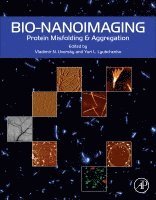
    Bio-Nanoimaging: Protein Misfolding & Aggregation provides a unique introduction to both novel and established nanoimaging techniques for visualization and characterization of misfolded and aggregated protein species. The book is divided into three sections covering:
    - Nanotechnology and nanoimaging technology, including cryoelectron microscopy of beta(2)-microglobulin, studying amyloidogensis by FRET; and scanning tunneling microscopy of protein deposits
    - Polymorphisms of protein misfolded and aggregated species, including fibrillar polymorphism, amyloid-like protofibrils, and insulin oligomers
    - Polymorphisms of misfolding and aggregation processes, including multiple pathways of lysozyme aggregation, misfolded intermediate of a PDZ domain, and micelle formation by human islet amyloid polypeptide

    Protein misfolding and aggregation is a fast-growing frontier in molecular medicine and protein chemistry. Related disorders include cataracts, arthritis, cystic fibrosis, late-onset diabetes mellitus, and numerous neurodegenerative diseases like Alzheimer's and Parkinson's. Nanoimaging technology has proved crucial in understanding protein-misfolding pathologies and in potential drug design aimed at the inhibition or reversal of protein aggregation. Using these technologies, researchers can monitor the aggregation process, visualize protein aggregates and analyze their properties.


    • Provides practical examples of nanoimaging research from leading molecular biology, cell biology, protein chemistry, biotechnology, genetics, and pharmaceutical labs
    • Includes over 200 color images to illustrate the power of various nanoimaging technologies
    • Focuses on nanoimaging techniques applied to protein misfolding and aggregation in molecular medicine

    Produktinformation

    • Utgivningsdatum:2014-01-07
    • Mått:216 x 276 x 32 mm
    • Vikt:1 710 g
    • Format:Inbunden
    • Språk:Engelska
    • Antal sidor:552
    • Förlag:Elsevier Science
    • ISBN:9780123944313

    Utforska kategorier

    • Biokemi inom Naturvetenskap och teknik

    Mer om författaren

    Prof. Vladimir N. Uversky, PhD, DSc, FRSB, FRSC, F.A.I.M.B.E., Professor at the Department of Molecular Medicine, Morsani College of Medicine, University of South Florida (USF), is a pioneer in the field of protein intrinsic disorder. He has made a number of groundbreaking contributions in the field of protein folding, misfolding, and intrinsic disorder. He obtained his PhD from Moscow Institute of Physics and Technology and D.Sc. from the Institute of Experimental and Theoretical Biophysics, Russian Academy of Sciences. Since 2010, Professor Uversky has worked at University of South Florida, where he works on various aspects of protein intrinsic disorder phenomenon and analysis of protein folding and misfolding processes. He has authored over 1250 scientific publications and edited several books and book series on protein structure, function, folding, misfolding, and intrinsic disorder. He also servs as an editor in a number of scientific journals.

    Recensioner i media

    "Among the topics are conformation-dependent antibodies as tools for characterizing amyloid protein aggregates, studying the molecular determinants of protein oligomerization in neurodegenerative disorders by bimolecular fluorence complimentation, possible function and toxicity of multiple oligomeric/conformational states of the globular protein human stefin B…" --ProtoView.com, February 2014

    Innehållsförteckning

    • Part 1. Nanotechnology and nanoimaging of aggregating proteinsNanoimaging of aggregated proteins; Cryoelectron microscopy of beta(2)-microglobulin; Amyloid fibril length quantification by AFM; Seeing fibril formation in real time; Studying amyloidogensis by FRET; Structure, growth and assembly of amyloid-like fibrils using high-speed atomic force microscopy; Analyzing amyloid fibril structure by scanning transmission electron microscopy; Magic angle spinning NMR of amyloid fibrils; Analyzing protein deposits in vivo by confocal laser multiphoton laser scanning microscopy; Amyloid imaging agents; Reporters of amyloid structure; Immunohistochemical detection of amyloid components; Scanning tunneling microscopy of protein deposits; Probing of protein misfolding with single molecule force spectroscopy; Single molecule characterization of α-synuclein in aggregation-prone statesPart 2. Polymorphism of protein misfolded and aggregated species Fibrillar polymorphism; Ab fibril polymorphism; Prefibrillar Ab oligomers; Structural heterogeneity of in vitro and ex vivo amyloid assemblies; Polymorphism of tau fibrils; Amyloid-like protofibrils with different physical properties; Micelle-Like Architecture of the Amyloid-β Peptide; Insulin oligomers; Worm-like amyloid fibrils of mouse prion protein; Apolipoprotein C-II Amyloid Fibrils; Amylin oligomers and fibrils; Amyloid fibrils of human stefins; Fibrillar structure of Sup35 in vivo; Dopamine-induced α-synuclein oligomers ; Amyloid spherulites; A stable lipid-induced aggregate of alpha-synuclein Part 3. Polymorphism of protein misfolding and aggregation processesMultiple pathways of lysozyme aggregation; Structure-function study of amyloid ion channels in neurodegenerative diseases; Amyloid β-protein assembly; Molecular mechanisms underlying alpha synucelin misassembly; Multiple pathways of amyloid assembly /disassembly studied by AFM; Sequestering of metastable proteins with essential cellular functions by amyloid-like aggregates; Misfolded intermediate of a PDZ domain; Structural characterization of the amyloidogenic state of human lysozyme; Landscape Model of Filamentous Protein Aggregation; Micelle formation by human islet amyloid polypeptide; Effect of anionic polysaccharide on β-lactoglobulin fibrillation