• Fri frakt över 249 kr
  • •
  • Snabba leveranser
  • •
  • Billiga böcker
Kundservice

Du är på sajten för privatpersoner.

Företag, bibliotek eller offentlig verksamhet?

Du handlar på classic.bokus.com, där alla dina funktioner finns intakta.
Till classic.bokus.com
Bokus logotyp. Gå till startsidan.
  • Erbjudanden
  • Nyheter
  • Student
  • Topplistor
  • Barn & ungdom
  • Bokus Play
  • E-böcker
  • Pocketböcker
  • Spel & pussel

10% rabatt på allt med kod NYSTART10 →

Sidfot

Mina sidor

    Hjälp

    • Kundservice
    • Vanliga frågor och svar
    • Frakt och leverans
    • Retur vid ångerrätt
    • Reklamera vara
    • Betalning
    • Köpvillkor
    • Allmänna villkor
    • Information om webbplatsens tillgänglighet

    Om Bokus

    • Om oss
    • Pressrum
    • För studenter
    • För företag
    • För bibliotek och offentlig verksamhet
    • För leverantörer
    • Hållbarhet

    Populärt

    • Aktuella erbjudanden
    • Presentkort
    • Studentlitteratur
    • Nya böcker
    • Topplistor
    • Signerade böcker
    • Engelska böcker

    Inspiration

    • Boktips
    • BookTok
    • Populära bokserier
    • Barnbokskaraktärer
    • Populära författare
    Logotyp för Bokus
    Följ oss på Facebook (extern länk)Följ oss på Instagram (extern länk)Följ oss på YouTube (extern länk)Följ oss på TikTok (extern länk)
    bokus @ CookiesAnpassa cookiesIntegritetspolicyKöpvillkor
    Till Citymail hemsida (extern länk)Till Budbee hemsida (extern länk)Till Postnord hemsida (extern länk)Till Schenker hemsida (extern länk)Till Early Bird hemsida (extern länk)Till Walleys hemsida (extern länk)
    1. Naturvetenskap och teknik
    2. Teknik och industri
    3. Agronomi och lantbruk
    4. Djurhållning

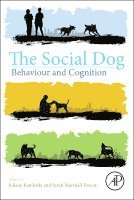
    The Social Dog

    Behavior and Cognition

    AvJuliane Kaminski,Sarah Marshall-Pescini

    Häftad, Engelska, 2014

    555 kr

    Beställningsvara. Skickas inom 10-15 vardagar. Fri frakt över 249 kr.

    Beskrivning

    Dogs have become the subject of increasing scientific study over the past two decades, chiefly due to their development of specialized social skills, seemingly a result of selection pressures during domestication to help them adapt to the human environment. The Social Dog: Behaviour and�Cognition includes chapters from leading researchers in the fields of social cognition and behavior, vocalization, evolution, and more, focusing on topics including dog-dog and dog-human interaction, bonding with humans, social behavior and learning, and more.

    Dogs are being studied in comparative cognitive sciences as well as genetics, ethology, and many more areas. As the number of published studies increases, this book aims to give the reader an overview of the state of the art on dog research, with an emphasis on social behavior and socio-cognitive skills. It represents a valuable resource for students, veterinarians, dog specialists, or anyone who wants deeper knowledge of his or her canine companion.


    • Reviews the state of the art of research on dog social interactions and cognition
    • Includes topics on dog-dog as well as dog-human interactions
    • Features contributions from leading experts in the field, which examine current studies while highlighting the potential for future research

    Produktinformation

    • Utgivningsdatum:2014-05-12
    • Mått:152 x 230 x 20 mm
    • Vikt:658 g
    • Format:Häftad
    • Språk:Engelska
    • Antal sidor:418
    • Förlag:Elsevier Science
    • ISBN:9780124078185

    Utforska kategorier

    • Djurhållning inom Naturvetenskap och teknik
    • Social välfärd och brottslighet inom Samhälle och politik
    • Zoologi inom Naturvetenskap och teknik

    Mer om författaren

    Dr. Juliane Kaminski is an Associate Professor in Comparative Psychology and director of the dog cognition centre at the University of Portsmouth. Before that she was the group leader of the research group “Evolutionary Roots of Human Social Interaction” at the Max Planck Institute for evolutionary Anthropology in Leipzig/ Germany where she also completed her PhD in 2005. Her research focuses on the social cognition of different animal species including dogs and chimpanzees. Dr. Sarah Marshall-Pescini is a senior scientist in the Domestication Lab, Konrad Lorenz Institute of Ethology, of the Veterinary Medicine University of Vienna. Her main research specialisation is the behaviour and cognition of wolves and dogs in a comparative framework, with a particular attention to the domestication process. She has worked with pets and working dogs, dogs and wolves similarly raised in a captive pack setting (at the Wolf Science Centre), free-ranging dogs and more recently wolves in the wild. She is currently a PI on two international projects looking at the effects of urbanization and domestication on wolves and free-ranging dogs, and Co-PI on two other projects, one of which focuses on the human attitudes and interactions with wolves and dogs.

    Recensioner i media

    "... an excellent job distilling a vast amount of information into a highly readable synopsis that will appeal to students and general readers alike... Summing Up: Highly recommended. All levels/libraries." --Choice Reviews Online, January 2015"...an outstanding review of the scientific literature and current research regarding canine cognition and social behavior...an intelligent read and likely requires a strong scientific background for full comprehension." --Journal of the American Veterinary Medical Association, December 2014"...provides a much-needed overview of...the role that research on dogs is playing in increasing our understanding of behavior and cognition more broadly...an excellent resource for researchers...as well as for trainers or veterinarians..." --The Quarterly Review of Biology

    Innehållsförteckning

    • 1. Introduction: Why dogsJuliane Kaminski and Sarah Marshall-Pescini2. Social cognition: The dog-wolf comparison.Friederike Range and Zsofi Viranyi3. The social organization of a population of free-ranging dogs in a suburban area of Rome: A reassessment of the effects of domestication on dogs’ behaviorRoberto Bonanni and Simona Cafazzo4. Social behavior among companion dogs with an emphasis on playBarbara Smuts5. Auditory communication in domestic dogs: Vocal signalling in the extended social environment of a companion animalAnna Magdalena Taylor, Victoria Frances Ratcliffe, Karen McComb, David Reby6. The immaterial cord: The dog-human attachment bondEmanuela Prato Previde and Paola Valsecchi7. The personality of dogsÁdám Miklósi, Borbála Turcsán, Enikő Kubinyi8. When the bond goes wrong: Problem behaviours in the social contextDaniel Mills, Emile van der Zee, and Helen Zulch9. Social learning in dogsPéter Pongrácz10. What dogs understand about humansJuliane Bräuer11. Dogs’ sensitivity to human ostensive cues: A unique adaptation?Topál József, Kis Anna, Oláh Katalin12. Do dogs show an optimistic or pessimistic attitude to life? A review of studies using the ‘cognitive bias’ paradigmOliver Burman13. Wagging to the right or to the left: Lateralization and what it tells of the dog’s social brainMarcello Siniscalchi and Angelo Quaranta