• Fri frakt över 249 kr
  • •
  • Snabba leveranser
  • •
  • Billiga böcker
Kundservice

Du är på sajten för privatpersoner.

Företag, bibliotek eller offentlig verksamhet?

Du handlar på classic.bokus.com, där alla dina funktioner finns intakta.
Till classic.bokus.com
Bokus logotyp. Gå till startsidan.
  • Erbjudanden
  • Nyheter
  • Student
  • Topplistor
  • Barn & ungdom
  • Bokus Play
  • E-böcker
  • Pocketböcker
  • Spel & pussel

10% rabatt på allt med kod: NYSTART10 →

Sidfot

Mina sidor

    Hjälp

    • Kundservice
    • Vanliga frågor och svar
    • Frakt och leverans
    • Retur vid ångerrätt
    • Reklamera vara
    • Betalning
    • Köpvillkor
    • Allmänna villkor
    • Information om webbplatsens tillgänglighet

    Om Bokus

    • Om oss
    • Pressrum
    • För studenter
    • För företag
    • För bibliotek och offentlig verksamhet
    • För leverantörer
    • Hållbarhet

    Populärt

    • Aktuella erbjudanden
    • Presentkort
    • Studentlitteratur
    • Nya böcker
    • Topplistor
    • Signerade böcker
    • Engelska böcker

    Inspiration

    • Boktips
    • BookTok
    • Populära bokserier
    • Barnbokskaraktärer
    • Populära författare
    Logotyp för Bokus
    Följ oss på Facebook (extern länk)Följ oss på Instagram (extern länk)Följ oss på YouTube (extern länk)Följ oss på TikTok (extern länk)
    bokus @ CookiesAnpassa cookiesIntegritetspolicyKöpvillkor
    Till Citymail hemsida (extern länk)Till Budbee hemsida (extern länk)Till Postnord hemsida (extern länk)Till Schenker hemsida (extern länk)Till Early Bird hemsida (extern länk)Till Walleys hemsida (extern länk)
    1. Naturvetenskap och teknik
    2. Matematik och naturvetenskap
    3. Biologi
    4. Zoologi

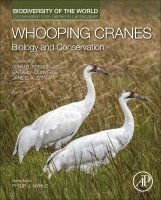
    Whooping Cranes: Biology and Conservation

    Biodiversity of the World: Conservation from Genes to Landscapes

    AvPhilip J. Nyhus

    Inbunden, Engelska, 2018

    Del i serien Biodiversity of the World: Conservation from Genes to Landscapes

    991 kr

    Beställningsvara. Skickas inom 10-15 vardagar. Fri frakt över 249 kr.

    Beskrivning

    Whooping Cranes: Biology and Conservation covers one of the most endangered birds in North America, and the subject of intense research and highly visible conservation activity. The volume summarizes current biological information on Whooping Cranes and provides the basis for future research necessary for conservation of this species.

    This edited volume concentrates on work completed in the past 20 years in the areas of population biology, behavior and social structure, habitat use, disease and health, captive breeding, and Whooping Crane conservation. Much of the information presented comes from the study and management of remnant and reintroduced populations of Whooping Cranes in the field; some information is from experimentation and breeding of captive Whooping Cranes.

    Whooping Cranes: Biology and Conservation seeks to inform and galvanize action dedicated to meeting the challenges faced by Whooping Crane managers and conservationists. Thus, it describes one model of endangered species conservation and restoration that will interest a wide audience: professionals that work on cranes; researchers in the fields of small population biology, endangered species, and avian ecology; wildlife veterinarians and those involved in avian husbandry; administrators of management agencies or conservation organizations; conservationists in other fields; teachers of conservation biology or ornithology and their students; and the educated general public.


    • Presents a comprehensive treatment of the biology and ecology of Whooping Cranes, including biology of both remnant and reintroduced populations of Whooping Cranes
    • Describes efforts over the past 45 years on conservation and the challenges of reintroducing an endangered species
    • Includes chapters from a variety of disciplinary and scale perspectives, ranging from evolution, to population ecology, behavior, habitat use, large landscape conservation, conflict, and conservation efforts
    • Features contributions that are readable, yet technically complete and fully referenced
    • Provides an example of partnership and collegial action that integrates information produced by scientific research and operational wildlife management
    • Edited and written by the leading Whooping Crane scholars and practitioners focused on this high-profile species of conservation concern

    Produktinformation

    • Utgivningsdatum:2018-10-11
    • Mått:191 x 235 x 33 mm
    • Vikt:1 290 g
    • Format:Inbunden
    • Språk:Engelska
    • Serie:Biodiversity of the World: Conservation from Genes to Landscapes
    • Antal sidor:538
    • Förlag:Elsevier Science
    • ISBN:9780128035559

    Utforska kategorier

    • Zoologi inom Naturvetenskap och teknik
    • Djurböcker inom Djur och Natur

    Mer om författaren

    Philip Nyhus is the Director of the Environmental Studies Program at Colby College in Maine, Maine, US. His interdisciplinary research bridges the natural and social sciences to address human interactions with the environment, including endangered species conservation and recovery, human-wildlife conflict, large landscape conservation, and spatial modelling. He is co-editor of Tigers of the World: The Science, Politics and Conservation of Panthera tigris (2010). John is the Center Director of the Patuxent Wildlife Research Center, and oversees research on a wide variety of topics including Wildlife Toxicology, Coastal Ecology, Population modeling and Decision Science, and a variety of monitoring programs including the N. American Bird Banding Lab and the Breeding Bird Survey. Patuxent also has responsibility for the North American vertebrate collections at the National Museum of Natural History, Smithsonian Institution. John sits on the US-Canada Whooping Crane Recovery Team, and has been involved in whooping crane conservation for many years. John’s scientific training was in vertebrate ecology and physiology at the University of Wisconsin, and was hired initially at Patuxent to undertake research on wildlife toxicology. Sarah J. Converse is a Research Ecologist with the U.S. Geological Survey, the Unit Leader of the Washington Cooperative Fish and Wildlife Research Unit, and an Associate Professor in the School of Environmental and Forest Sciences (SEFS) & the School of Aquatic and Fishery Sciences (SAFS) at the University of Washington, Seattle. Prior to taking this position in early 2017, Sarah spent 10 years as a Research Ecologist at the U.S. Geological Survey Patuxent Wildlife Research Center, where among other research projects, she was deeply involved in research on the population ecology and conservation of reintroduced Whooping Cranes. Sarah’s research program is built around two themes – quantitative population ecology of endangered species and decision analysis applications in endangered species management. Dr. Jane Austin is a Research Wildlife Biologist with the U.S. Geological Survey’s Northern Prairie Wildlife Research Center. Her research and writing have focused on the ecology and management of cranes, waterfowl, and other waterbirds in the northern U.S. Her interest in cranes developed during a study of the crane breeding ecology and population management of greater Sandhill Cranes in southeast Idaho. She became actively involved in the North American Crane Working Group, which led to work with the International Crane Foundation on international crane conservation issue. Jane served on the external review team for the Whooping Crane Eastern Partnership and has been involved with other projects focusing on ecology, habitat use, and management of North America’s cranes.

    Innehållsförteckning

    • 1. Whooping Cranes Past and Present2. Phylogenetic Taxonomy of Cranes and the Evolutionary Origin of the Whooping Crane3. Revisiting the Historic Distribution and Habitats of the Whooping Crane4. Population and Breeding Range Dynamics in the Aransas-Wood Buffalo Whooping Crane Population5. Monitoring Recruitment and Abundance of the Aransas-Wood Buffalo Population of Whooping Cranes: 1950–20156. Mortality in Aransas-Wood Buffalo Whooping Cranes: Timing, Location, and Causes7. Population Dynamics of Reintroduced Whooping Cranes8. Reproductive Failure in the Eastern Migratory Population: The Interaction of Research and Management9. Florida’s Nonmigratory Whooping Cranes10. Pairing Dynamics of Reintroduced Migratory Whooping Cranes11. Movement Ecology of Reintroduced Migratory Whooping Cranes12. Ecological Energetics of Whooping Cranes in the Eastern Migratory Population13. Winter Habitat Ecology, Use, and Availability for the Aransas wood Buffalo Population of Whooping Cranes14. Habitat Use by the Reintroduced Eastern Migratory Population of Whooping Cranes15. Ecological Implications of Habitat Use by Reintroduced and Remnant Whooping Crane Populations16. Advances in Conservation Breeding and Management of Whooping Cranes (Grus americana)17. Reproduction and Reproductive Strategies Relevant to Management of Whooping Cranes Ex Situ18. Health of Whooping Cranes in the Central Flyway19. Health and Disease Treatment in Captive and Reintroduced Whooping Cranes20. Rearing and Release Methods for Reintroduction of Captive-Reared Whooping Cranes21. The Operation of an Aircraft-led Migration: Goals, Successes, Challenges 2001-201522. Louisiana Non-migratory Whooping Crane Reintroduction23.  Whooping Crane Shootings since 196724. Future of Whooping Crane Conservation and Science