• Fri frakt över 249 kr
  • •
  • Snabba leveranser
  • •
  • Billiga böcker
Kundservice

Du är på sajten för privatpersoner.

Företag, bibliotek eller offentlig verksamhet?

Du handlar på classic.bokus.com, där alla dina funktioner finns intakta.
Till classic.bokus.com
Bokus logotyp. Gå till startsidan.
  • Erbjudanden
  • Nyheter
  • Student
  • Topplistor
  • Barn & ungdom
  • Bokus Play
  • E-böcker
  • Pocketböcker
  • Spel & pussel

10% rabatt på allt med kod: NYSTART10 →

Sidfot

Mina sidor

    Hjälp

    • Kundservice
    • Vanliga frågor och svar
    • Frakt och leverans
    • Retur vid ångerrätt
    • Reklamera vara
    • Betalning
    • Köpvillkor
    • Allmänna villkor
    • Information om webbplatsens tillgänglighet

    Om Bokus

    • Om oss
    • Pressrum
    • För studenter
    • För företag
    • För bibliotek och offentlig verksamhet
    • För leverantörer
    • Hållbarhet

    Populärt

    • Aktuella erbjudanden
    • Presentkort
    • Studentlitteratur
    • Nya böcker
    • Topplistor
    • Signerade böcker
    • Engelska böcker

    Inspiration

    • Boktips
    • BookTok
    • Populära bokserier
    • Barnbokskaraktärer
    • Populära författare
    Logotyp för Bokus
    Följ oss på Facebook (extern länk)Följ oss på Instagram (extern länk)Följ oss på YouTube (extern länk)Följ oss på TikTok (extern länk)
    bokus @ CookiesAnpassa cookiesIntegritetspolicyKöpvillkor
    Till Citymail hemsida (extern länk)Till Budbee hemsida (extern länk)Till Postnord hemsida (extern länk)Till Schenker hemsida (extern länk)Till Early Bird hemsida (extern länk)Till Walleys hemsida (extern länk)
    1. Ekonomi och Ledarskap
    2. Nationalekonomi

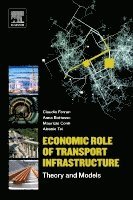
    Economic Role of Transport Infrastructure

    Theory and Models

    AvClaudio Ferrari,Anna Bottasso

    Häftad, Engelska, 2018

    1 225 kr

    Beställningsvara. Skickas inom 10-15 vardagar. Fri frakt över 249 kr.

    Beskrivning

    Economic Role of Transport Infrastructure: Theory and�Models�helps evaluate the economic effects of transport infrastructure investments within a cost-benefit framework for maximum economic impact. The book analyzes the primary empirical approaches used to gauge the economic effects of transport infrastructures, providing in-depth discussions on data issues, input-output techniques, and econometric methodologies. Users will find empirical evidence organized from a transport mode point-of-view, inspiring researchers to conduct comparative analysis for various infrastructure projects. Topics cover infrastructure's impact on economic growth using theoretical frameworks, including exogenous growth models, endogenous growth models, and new economic geography models.

    In addition, readers will also learn tips for conducting infrastructure impact studies and how to improve the effectiveness of infrastructural investments design.


    • Explains and evaluates the economic effects of transport infrastructure investments, including direct and indirect, short and long run impact, and local and spillover outcomes
    • Provides up-to-date coverage of quantitative techniques and empirical results for transportation and economic impact issues
    • Explains the steps for conducting impact studies for proposed infrastructure projects
    • Analyzes infrastructure's role on economic growth through theoretical, methodological and empirical perspectives
    • Features case studies describing real-world methods

    Produktinformation

    • Utgivningsdatum:2018-10-29
    • Mått:152 x 229 x 20 mm
    • Vikt:500 g
    • Format:Häftad
    • Språk:Engelska
    • Antal sidor:310
    • Förlag:Elsevier Science
    • ISBN:9780128130964

    Utforska kategorier

    • Nationalekonomi inom Ekonomi och Ledarskap
    • Flyg- och rymdteknik inom Naturvetenskap och teknik
    • Transportindustri inom Ekonomi och Ledarskap

    Mer om författaren

    Claudio Ferrari is Associate Professor of Applied Economics at the University of Genoa, Genoa, Italy, and member of the scientific board of the Italian Centre of Excellence for Integrated Logistics. He is also General Secretary of the Italian Society of Transport Economics and Logistics. His research focuses on transport economics, transport planning and regional economics, namely with regards to ports, and transport infrastructures. He has been published in top journals, including Elsevier’s Transport Policy, Research in Transportation Business and Management, Research in Transportation Economics, and Transportation Research Part A: Policy and Practice. Anna Bottasso is a Professor in the Department of Economics at the University of Genoa, and is a member of the Italian Centre of Excellence for Integrated Logistics. Her expertise includes industrial organization, regulation, transport, and applied economics. She has been published on various topics, such as efficiency and productivity measurement, economics of local public services and network industries, such as water and transport, in journals, including Elsevier’s Transport Policy, and Transportation Research Part A: Policy and Practice. Maurizio Conti is Associate Professor in the Department of Economics at the University of Genoa, and is a member of the Italian Centre of Excellence for Integrated Logistics. His expertise includes labor economics, industrial organization, regulation, transport and applied economics. He has been published on various topics, such as efficiency and productivity measurement, economics of local public services and network industries, such as water and transport, in journals, including Elsevier’s Transport Policy, and Transportation Research Part A: Policy and Practice. Alessio Tei is a Lecturer in Maritime Economics at Newcastle University, Newcastle upon Tyne, United Kingdom. His research has focused on the relationship between transport systems and economic growth, including the role of specific transport Policy tools in promoting economic development. He has been published in several journals, including Elsevier’s Transport Policy, and Transportation Research Part A: Policy and Practice.

    Innehållsförteckning

    • 1. Introduction2. Theoretical framework3. Empirical Approaches4. Empirical Evidence5. Current issues and conclusions