• Fri frakt över 249 kr
  • •
  • Snabba leveranser
  • •
  • Billiga böcker
Kundservice

Du är på sajten för privatpersoner.

Företag, bibliotek eller offentlig verksamhet?

Du handlar på classic.bokus.com, där alla dina funktioner finns intakta.
Till classic.bokus.com
Bokus logotyp. Gå till startsidan.
  • Erbjudanden
  • Student
  • Topplistor
  • Barn & ungdom
  • Bokus Play
  • E-böcker
  • Ljudböcker
  • Pocketböcker
  • Spel och pussel

5% studentrabatt – använd koden KURSBOK27 →

Sidfot

Mina sidor

    Hjälp

    • Kundservice
    • Vanliga frågor och svar
    • Frakt och leverans
    • Retur vid ångerrätt
    • Reklamera vara
    • Betalning
    • Köpvillkor
    • Allmänna villkor
    • Information om webbplatsens tillgänglighet

    Om Bokus

    • Om oss
    • Pressrum
    • För studenter
    • För företag
    • För bibliotek och offentlig verksamhet
    • För leverantörer
    • Hållbarhet

    Populärt

    • Aktuella erbjudanden
    • Presentkort
    • Studentlitteratur
    • Nya böcker
    • Topplistor
    • Signerade böcker
    • Engelska böcker

    Inspiration

    • Boktips
    • BookTok
    • Barnbokskaraktärer
    • Populära författare
    Logotyp för Bokus
    Följ oss på Facebook (extern länk)Följ oss på Instagram (extern länk)Följ oss på YouTube (extern länk)Följ oss på TikTok (extern länk)
    bokus @ CookiesAnpassa cookiesIntegritetspolicyKöpvillkor
    Till Citymail hemsida (extern länk)Till Budbee hemsida (extern länk)Till Postnord hemsida (extern länk)Till Schenker hemsida (extern länk)Till Early Bird hemsida (extern länk)Till Walleys hemsida (extern länk)
    1. Psykologi och pedagogik
    2. Psykologi
    3. Biologisk psykologi och neuropsykologi

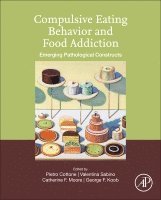
    Compulsive Eating Behavior and Food Addiction

    Emerging Pathological Constructs

    AvPietro Cottone,Catherine F Moore

    Inbunden, Engelska, 2019

    1 517 kr

    Beställningsvara. Skickas inom 10-15 vardagar. Fri frakt över 249 kr.

    Beskrivning

    Compulsive Eating Behavior and Food Addiction: Emerging Pathological Constructs is the first book of its kind to emphasize food addiction as an addictive disorder. This book focuses on the preclinical aspects of food addiction research, shifting the focus towards a more complex behavioral expression of pathological feeding and combining it with current research on neurobiological substrates. This book will become an invaluable reference for researchers in food addiction and compulsive eating constructs.

    Compulsive eating behavior is a pathological form of feeding that phenotypically and neurobiologically resembles the compulsive-like behaviors associated with both drug abuse and behavioral addictions. Compulsive eating behavior, including Binge Eating Disorder (BED), certain forms of obesity, and 'food addiction' affect an estimated 70 million individuals worldwide.


    • Synthesizes clinical and preclinical perspectives on addictive eating behavior
    • Identifies how food addiction is similar and/or different from other addictions
    • Focuses on the underlying neurobiological mechanisms
    • Provides information on therapeutic interventions for patients with food addiction

    Produktinformation

    • Utgivningsdatum:2019-07-24
    • Mått:191 x 235 x 30 mm
    • Vikt:1 200 g
    • Format:Inbunden
    • Språk:Engelska
    • Antal sidor:496
    • Förlag:Elsevier Science
    • ISBN:9780128162071

    Utforska kategorier

    • Biologisk psykologi och neuropsykologi inom Psykologi och pedagogik
    • Ätstörningar inom Medicin
    • Biovetenskap inom Naturvetenskap och teknik

    Mer om författaren

    Dr. Cottone is co-director of the Laboratory of Addictive Disorders. Dr. Cottone’s research interests focus on the neurobiological substrates of motivated behaviors including feeding and addiction. The major goal of Dr. Cottone’s research is identifying the biological bases of and potential treatments for eating disorders and obesity. Current studies concern the role of stress in compulsive eating and palatable food dependence. Areas of focused research include the investigation of the neurobiological bases of stress-related disorders such as anxiety and depression. Dr. Cottone’s studies are carried out on environmental and genetic animal models, using behavioral, biochemical, and molecular approaches. Dr. Cottone co-directs a graduate course in neuropsychopharmacology offered for the first time in Fall 2010 which examines the interaction between behavior and classes of drugs that affect the central nervous system. Catherine Moore received her PhD in Neuroscience with a specialization in Biomolecular Pharmacology at Boston University in 2019, where she worked under the advisement of Dr. Pietro Cottone. Her doctoral research focused on addictive behaviors and compulsivity, and during graduate school she published numerous original and review articles investigating and delineating the underlying causes of food addiction and compulsive eating. She was awarded the Ruth L. Kirschstein National Research Service Award (NRSA) from the National Institute on Drug Abuse for her research in this area. Catherine was also a fellow of Boston University’s Transformative Training Program in Addiction Science, a program built upon cross-disciplinary and co-mentoring training of scientists to bridge the gaps present in the varying addiction research disciplines and public health. She is currently a Postdoctoral Fellow at Johns Hopkins University School of Medicine. Dr. Sabino is co-director of the Laboratory of Addictive Disorders, and is currently researching the neurobiology of addiction and stress-related disorders. Studies on addiction aim to understand the neurobiological substrates of alcohol abuse and dependence by exploring the role of neurochemical systems in excessive alcohol drinking. Dr. Sabino is working toward the development of new therapeutic agents to alleviate alcohol addiction. Animal models for excessive drinking are studied in order to identify compounds for potential clinical development. Research is also conducted on the neurobiology of stress-related disorders such as anxiety and depression. The approach of the laboratory is interdisciplinary, involving behavioral neuroscience, neuropharmacology, neuroanatomy, biochemistry and molecular biology. Dr. Sabino co-directs a graduate course in neuropsychopharmacology offered for the first time in Fall 2010 which examines the interaction between behavior and classes of drugs that affect the central nervous system giving emphasis on how behavioral studies can assist in our understanding of mental disorders. Dr. Koob is an internationally-recognized expert on alcohol and stress, and the neurobiology of alcohol and drug addiction. He is the Director of the National Institute on Alcohol Abuse and Alcoholism (NIAAA), overseeing a broad portfolio of alcohol research ranging from basic science to epidemiology, diagnostics, prevention, and treatment. Dr. Koob earned his doctorate in Behavioral Physiology from Johns Hopkins University in 1972. Prior to taking the helm at NIAAA, he served as Professor and Chair of the Scripps’ Committee on the Neurobiology of Addictive Disorders and Director of the Alcohol Research Center at the Scripps Research Institute. Early in his career, Dr. Koob conducted research in the Department of Neurophysiology at the Walter Reed Army Institute of Research and in the Arthur Vining Davis Center for Behavioral Neurobiology at the Salk Institute for Biological Studies. He was a post-doctoral fellow in the Department of Experimental Psychology and the MRC Neuropharmacology Unit at the University of Cambridge. Dr. Koob began his career investigating the neurobiology of emotion, particularly how the brain processes reward and stress. He subsequently applied basic research on emotions, including on the anatomical and neurochemical underpinnings of emotional function, to alcohol and drug addiction, significantly broadening knowledge of the adaptations within reward and stress neurocircuits that lead to addiction. Dr. Koob has authored more than 650 peer-reviewed scientific papers and is a co-author of The Neurobiology of Addiction.

    Innehållsförteckning

    • 1. A history of “food addiction”2. Food addiction prevalence: development and validation of diagnostic tools3. Dissecting compulsive eating behavior into three elements4. Habitual overeating5. Reward deficits in compulsive eating6. The dark side of compulsive eating and food addiction: affective dysregulation, negative reinforcement, and negative urgency7. Food addiction and self-regulation8. Reward processing in food addiction and overeating9. Interactions of hedonic and homeostatic systems in compulsive overeating10. Genetics and epigenetics of food addiction11. Neuroimaging of compulsive disorders: similarities of food addiction with drug addiction12. Modeling and testing compulsive eating behaviors in animals13. Sex and gender differences in compulsive overeating14. Addressing controversies surrounding food addiction15. Food addiction and its associations to trauma, severity of illness, and comorbidity