• Fri frakt över 249 kr
  • •
  • Snabba leveranser
  • •
  • Billiga böcker
Kundservice

Du är på sajten för privatpersoner.

Företag, bibliotek eller offentlig verksamhet?

Du handlar på classic.bokus.com, där alla dina funktioner finns intakta.
Till classic.bokus.com
Bokus logotyp. Gå till startsidan.
  • Erbjudanden
  • Nyheter
  • Student
  • Topplistor
  • Barn & ungdom
  • Bokus Play
  • E-böcker
  • Pocketböcker
  • Spel & pussel

10% rabatt på allt med kod: NYSTART10 →

Sidfot

Mina sidor

    Hjälp

    • Kundservice
    • Vanliga frågor och svar
    • Frakt och leverans
    • Retur vid ångerrätt
    • Reklamera vara
    • Betalning
    • Köpvillkor
    • Allmänna villkor
    • Information om webbplatsens tillgänglighet

    Om Bokus

    • Om oss
    • Pressrum
    • För studenter
    • För företag
    • För bibliotek och offentlig verksamhet
    • För leverantörer
    • Hållbarhet

    Populärt

    • Aktuella erbjudanden
    • Presentkort
    • Studentlitteratur
    • Nya böcker
    • Topplistor
    • Signerade böcker
    • Engelska böcker

    Inspiration

    • Boktips
    • BookTok
    • Populära bokserier
    • Barnbokskaraktärer
    • Populära författare
    Logotyp för Bokus
    Följ oss på Facebook (extern länk)Följ oss på Instagram (extern länk)Följ oss på YouTube (extern länk)Följ oss på TikTok (extern länk)
    bokus @ CookiesAnpassa cookiesIntegritetspolicyKöpvillkor
    Till Citymail hemsida (extern länk)Till Budbee hemsida (extern länk)Till Postnord hemsida (extern länk)Till Schenker hemsida (extern länk)Till Early Bird hemsida (extern länk)Till Walleys hemsida (extern länk)
    1. Medicin
    2. Medicin: allmänt
    3. Hälsoinformatik

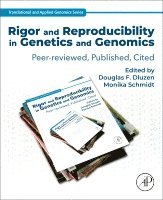
    Rigor and Reproducibility in Genetics and Genomics

    Peer-reviewed, Published, Cited

    AvGeorge P. Patrinos

    Häftad, Engelska, 2023

    Del i serien Translational and Applied Genomics

    1 714 kr

    Beställningsvara. Skickas inom 10-15 vardagar. Fri frakt över 249 kr.

    Beskrivning

    Rigor and Reproducibility in Genetics and Genomics: Peer-reviewed, Published, Cited provides a full methodological and statistical overview for researchers, clinicians, students, and post-doctoral fellows conducting genetic and genomic research.

    Here, active geneticists, clinicians, and bioinformaticists offer practical solutions for a variety of challenges associated with several modern approaches in genetics and genomics, including genotyping, gene expression analysis, epigenetic analysis, GWAS, EWAS, genomic sequencing, and gene editing. Emphasis is placed on rigor and reproducibility throughout, with each section containing laboratory case-studies and classroom activities covering step-by-step protocols, best practices, and common pitfalls. Specific genetic and genomic technologies discussed include microarray analysis, DNA-seq, RNA-seq, Chip-Seq, methyl-seq, CRISPR gene editing, and CRISPR-based genetic analysis. Training exercises, supporting data, and in-depth discussions of rigor, reproducibility, and ethics in research together deliver a solid foundation in research standards for the next generation of genetic and genomic scientists.


    • Provides practical approaches and step-by-step protocols to strengthen genetic and genomic research conducted in the lab or classroom
    • Presents illustrative case studies and training exercises and discusses common pitfalls and solutions for genotyping, gene expression analysis, epigenetic analysis, GWAS, EWAS, genomic sequencing, and gene editing, among other genetic and genomic approaches
    • Examines best practices for microarray analysis, DNA-seq, RNA-seq, gene expression validation, Chip-Seq, methyl-seq, CRISPR gene editing, and CRISPR-based genetic analysis
    • Written to provide trainees and educators approachable and useful tools and strategies to employ in their research, whether for the first time or to troubleshoot current methodologies

    Produktinformation

    • Utgivningsdatum:2023-11-09
    • Mått:191 x 235 x 30 mm
    • Vikt:1 000 g
    • Format:Häftad
    • Språk:Engelska
    • Serie:Translational and Applied Genomics
    • Antal sidor:502
    • Förlag:Elsevier Science
    • ISBN:9780128172186

    Utforska kategorier

    • Hälsoinformatik inom Medicin
    • Biovetenskap inom Naturvetenskap och teknik

    Mer om författaren

    George P. Patrinos is a Professor of Pharmacogenomics and Pharmaceutical Biotechnology in the University of Patras (Greece), Department of Pharmacy, and Head of Division of Pharmacology and Biosciences of the same department and holds adjunct Full Professorships at Erasmus MC, Faculty of Medicine, and Health Sciences, Rotterdam (the Netherlands), and the United Arab Emirates University, College of Medicine, Department of Genetics and Genomics, Al-Ain (UAE). Also, from 2018 until the end of 2024, he was Chair of the Global Genomic Medicine Collaborative (G2MC). He served 12.5 years as a full member and Greece’s National representative in the CHMP Pharmacogenomics Working Party of the European Medicines Agency (EMA). George has more than 340 publications in peer-reviewed scientific journals, some of them in leading scientific journals, such as The Lancet, Nature Genetics, Nature Reviews Genetic, Nucleic Acids Research, Genes & Development. He has also coauthored and coedited more than 15 textbooks, among which the renowned textbook Molecular Diagnostics, published by Academic Press, now in its 3rd edition, while he is the editor of Translational and Applied Genomics book series, published by Elsevier. Furthermore, he serves as the Editor-In-Chief of the prestigious Pharmacogenomics Journal (TPJ), published by Nature Publishing Group, Associate Editor, and member of the editorial board of several scientific journals, and advisory and evaluation committees. Apart from that, George is the main coorganizer of the Golden Helix Conferences, an international meeting series on Pharmacogenomics and Genomic Medicine with more than 50 conferences organized in more than 25 countries worldwide.Douglas F. Dluzen is a geneticist and has previously studied the genetic contributors to aging, drug metabolism, hypertension, and inflammation. Dluzen is particularly interested in how social determinants of health influence gene expression in the immune system. Currently, he is the director of the Professional Development and Career Office at the Johns Hopkins University School of Medicine and has worked previously at the National Institutes of Health and Morgan State University. He enjoys writing science fiction and hiking with his family.Monika Schmidt completed her doctoral work in the realm of tandem repeat-associated neuromuscular/neurodegenerative diseases, with a focus upon fragile X syndrome, amyotrophic lateral sclerosis, and DNA metabolism. Monika has a particular interest in wet lab validation of in silico findings, with a penchant for Southern blotting of structurally complex repetitive DNA sequences. Currently, she is a freelance scientific editor, private healthcare liaison, and event organizer. Monika enjoys traveling on a shoestring, working with her hands on home or cottage improvements, and spending time with her spouse and children.

    Innehållsförteckning

    • SECTION 1 Introduction1. Rigor and reproducibility in genetic research and the effects on scientific reporting and public discourse2. Unveiling the hidden curriculum: Developing rigor and reproducibility values through teaching and mentorship SECTION 2 Genotyping3. Genome-wide association studies (GWAS): hat are they, when to use them?4. GWAS in the learning environment5. Polygenic risk scores and comparative genomics: Best practices and statistical considerations6. DNA sequencing and genotyping in the classroom7. Classroom to career: Implementation considerations for engaging students with meaningful DNA sequencing learning opportunities SECTION 3 Next-generation sequencing & gene expression8. Review of gene expression using microarray and RNA-seq9. Guidelines and important considerations for ‘omics-level studies10. Best practices for statistical analysis of omics data11. Validation of gene expression by quantitative PCRSECTION 4 Epigenetic analyses12. Best practices for epigenome-wide DNA modification data collection and analysis13. Best practices for the ATAC-seq assay and its data analysis14. Best practice for ChIP-seq and its data analysis15. A practical guide for essential analyses of Hi-C data16. Epigenetics in the classroomSECTION 5 Gene editing technologies17. Genome editing technologies18. Genetic modification of mice using CRISPR-Cas9: Best practices and practical concepts explained19. CRISPR classroom activities and case studies