• Fri frakt över 249 kr
  • •
  • Snabba leveranser
  • •
  • Billiga böcker
Kundservice

Du är på sajten för privatpersoner.

Företag, bibliotek eller offentlig verksamhet?

Du handlar på classic.bokus.com, där alla dina funktioner finns intakta.
Till classic.bokus.com
Bokus logotyp. Gå till startsidan.
  • Erbjudanden
  • Nyheter
  • Student
  • Topplistor
  • Barn & ungdom
  • Bokus Play
  • E-böcker
  • Pocketböcker
  • Spel & pussel

10% rabatt på allt med kod: NYSTART10 →

Sidfot

Mina sidor

    Hjälp

    • Kundservice
    • Vanliga frågor och svar
    • Frakt och leverans
    • Retur vid ångerrätt
    • Reklamera vara
    • Betalning
    • Köpvillkor
    • Allmänna villkor
    • Information om webbplatsens tillgänglighet

    Om Bokus

    • Om oss
    • Pressrum
    • För studenter
    • För företag
    • För bibliotek och offentlig verksamhet
    • För leverantörer
    • Hållbarhet

    Populärt

    • Aktuella erbjudanden
    • Presentkort
    • Studentlitteratur
    • Nya böcker
    • Topplistor
    • Signerade böcker
    • Engelska böcker

    Inspiration

    • Boktips
    • BookTok
    • Populära bokserier
    • Barnbokskaraktärer
    • Populära författare
    Logotyp för Bokus
    Följ oss på Facebook (extern länk)Följ oss på Instagram (extern länk)Följ oss på YouTube (extern länk)Följ oss på TikTok (extern länk)
    bokus @ CookiesAnpassa cookiesIntegritetspolicyKöpvillkor
    Till Citymail hemsida (extern länk)Till Budbee hemsida (extern länk)Till Postnord hemsida (extern länk)Till Schenker hemsida (extern länk)Till Early Bird hemsida (extern länk)Till Walleys hemsida (extern länk)
    1. Naturvetenskap och teknik
    2. Matematik och naturvetenskap
    3. Biologi
    4. Biovetenskap

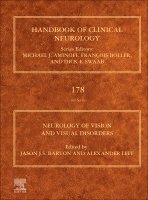
    Neurology of Vision and Visual Disorders

    Inbunden, Engelska, 2021

    Del 178 i serien Handbook of Clinical Neurology

    2 686 kr

    Beställningsvara. Skickas inom 10-15 vardagar. Fri frakt över 249 kr.

    Beskrivning

    Neurology of Vision and Visual Disorders, Volume 178 in the Handbooks of Neurology series provides comprehensive summaries of recent research on the brain and nervous system. This volume reviews alterations in vision that stem from the retina to the cortex. Coverage includes content on vision and driving derived from the large amount of time devoted in clinics to determining who is safe to drive, along with research on the interplay between visual loss, attention and strategic compensations that may determine driving suitability. The title concludes with vision therapies and the evidence behind these approaches.

    Each chapter is co-written by a basic scientist collaborating with a clinician to provide a solid underpinning of the mechanisms behind the clinical syndromes.


    • Reviews the neurological underpinnings of visual perception disorders
    • Encompasses the cortex to the retina
    • Covers functional organization, electrophysiology and subcortical visual pathways
    • Discusses assessment, diagnosis and management of visual perception disorders
    • Includes international experts from Australia, Canada, Denmark, Germany, Singapore, and the UK and US

    Produktinformation

    • Utgivningsdatum:2021-06-28
    • Mått:184 x 260 x undefined mm
    • Vikt:1 140 g
    • Format:Inbunden
    • Språk:Engelska
    • Serie:Handbook of Clinical Neurology
    • Antal sidor:410
    • Förlag:Elsevier Science
    • ISBN:9780128213773

    Utforska kategorier

    • Biovetenskap inom Naturvetenskap och teknik

    Mer om författaren

    Jason Barton obtained his MD from the University of British Columbia in 1984, where he completed a neurology residency in 1990. He was a fellow in neuro-ophthalmology at the University of Iowa from 1990 to 1991 and the University of Toronto from 1991 to 1995, and obtained his PhD from the University of Toronto in 1996. He was assistant and then associate professor of neurology at Harvard Medical School, and director of neuro-ophthalmology at the Beth Israel Deaconess Medical Center from 1996 to 2004. Since 2004 he has been director of clinical neuro-ophthalmology at Vancouver General Hospital. He is currently professor, Canada Research Chair and Marianne Koerner Chair in Brain Diseases, in neurology, ophthalmology and visual sciences, and psychology at the University of British Columbia. His research is focused on cortical processing of vision, in particular high-level object perception, such as face and word recognition, and also on the use of saccadic eye movements to explore issues of cognitive control. I am Professor of Cognitive Neurology and a Consultant Neurologist at the UCL Queen Square Institute of Neurology. My main clinical and academic interest is in cognitive rehabilitation, especially in the field of acquired language disorders and vision. I am developing mechanistic accounts of how cognitive disorders can be improved by different types of therapy -mainly behavioural- using functional and structural brain imaging.I have developed three web-based rehabilitation tools that can be used to by therapists and patients with hemianopia or reading problems, and am working on four other electronic therapy projects sponsored by the MRC, NIHR and The Stroke Association. I think that web-based applications are a good way to make scientifically proven behavioural therapies available to suitable patients and their therapists.At the UCLH National Hospital for Neurology and Neurosurgery I have a specialist out-patient MDT assessment clinic for patients with hemianopia and/or higher disorders of vision. I also help run the Queen Square Intensive Comprehensive Aphasia Programme.Publicationshttp://scholar.google.com/citations?user=uwZaCzQAAAAJ&hl=enAcademic websitehttps://www.ucl.ac.uk/icn/research/research-groups/neurotherapeutics

    Innehållsförteckning

    • 1. A review of diseases of the retina for neurologists 2. Amblyopia 3. Retinal ganglion cells and the magnocellular, parvocellular, and koniocellular subcortical visual pathways from the eye to the brain4. Perimetry and visual field defects 5. Electrophysiology in neuro-ophthalmology 6. The role of optical coherence tomography in the diagnosis of afferent visual pathway problems: A neuroophthalmic perspective 7. The striate cortex and hemianopia8. Color vision 11. Object recognition and visual object agnosia 10. Prosopagnosia and disorders of face processing 11. The relationship between mental and physical space and its impact on topographical disorientation 12. Reading and alexia 13. Bálint syndrome 14. Motion perception and its disorders 15. Aphantasia: The science of visual imagery extremes16. Blindsight 17. Illusions, hallucinations, and visual snow18. Vision, attention, and driving 19. Rehabilitation of visual disorders