• Fri frakt över 249 kr
  • •
  • Snabba leveranser
  • •
  • Billiga böcker
Kundservice

Du är på sajten för privatpersoner.

Företag, bibliotek eller offentlig verksamhet?

Du handlar på classic.bokus.com, där alla dina funktioner finns intakta.
Till classic.bokus.com
Bokus logotyp. Gå till startsidan.
  • Erbjudanden
  • Nyheter
  • Student
  • Topplistor
  • Barn & ungdom
  • Bokus Play
  • E-böcker
  • Pocketböcker
  • Spel & pussel

10% rabatt på allt med kod: NYSTART10 →

Sidfot

Mina sidor

    Hjälp

    • Kundservice
    • Vanliga frågor och svar
    • Frakt och leverans
    • Retur vid ångerrätt
    • Reklamera vara
    • Betalning
    • Köpvillkor
    • Allmänna villkor
    • Information om webbplatsens tillgänglighet

    Om Bokus

    • Om oss
    • Pressrum
    • För studenter
    • För företag
    • För bibliotek och offentlig verksamhet
    • För leverantörer
    • Hållbarhet

    Populärt

    • Aktuella erbjudanden
    • Presentkort
    • Studentlitteratur
    • Nya böcker
    • Topplistor
    • Signerade böcker
    • Engelska böcker

    Inspiration

    • Boktips
    • BookTok
    • Populära bokserier
    • Barnbokskaraktärer
    • Populära författare
    Logotyp för Bokus
    Följ oss på Facebook (extern länk)Följ oss på Instagram (extern länk)Följ oss på YouTube (extern länk)Följ oss på TikTok (extern länk)
    bokus @ CookiesAnpassa cookiesIntegritetspolicyKöpvillkor
    Till Citymail hemsida (extern länk)Till Budbee hemsida (extern länk)Till Postnord hemsida (extern länk)Till Schenker hemsida (extern länk)Till Early Bird hemsida (extern länk)Till Walleys hemsida (extern länk)
    1. Naturvetenskap och teknik
    2. Geovetenskap
    3. Geovetenskap
    4. Geologi

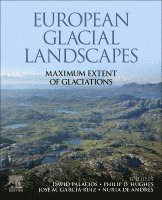
    European Glacial Landscapes

    Maximum Extent of Glaciations

    AvDavid Palacios,Philip D. Hughes

    Häftad, Engelska, 2021

    1 614 kr

    Beställningsvara. Skickas inom 10-15 vardagar. Fri frakt över 249 kr.

    Beskrivning

    European Glacial Landscapes: Maximum Extent of Glaciations brings together relevant experts on the history of glaciers and their impact on the landscape of the main regions of Europe. In some regions the largest recorded glaciations occurred before the Last Glacial Cycle, in one of the major glacial cycles of the Middle Pleistocene. However, the best-preserved evidence of glaciation in the landscape is from the Last Glacial Cycle (Late Pleistocene). The book also analyses these older glacial landforms that can sometimes still be seen in the landscape today. This analysis provides a better understanding of the succession of Pleistocene glaciations and the intervening interglacial periods, examining their possible continental synchrony or asynchrony of past glacier behaviour. The result of this analysis gives important new insights and information on the origin and effects of climatic and geomorphological variability across Europe.

    European Glacial Landscapes: Maximum Extent of Glaciations examines the landscapes produced by glaciers throughout Europe, the geomorphological effects of glaciations, as well as the chronology and evolution of the past glaciers, with the aim of understanding the interrelationship between glacial expansion and climate changes on this continent. This book is a valuable tool for geographers, geologist, environmental scientists, researchers in physics and earth sciences.


    • Provides a synthesis that highlights the main similarities or differences, through both space and time, during the maximum recorded expansions of Pleistocene glaciers in Europe
    • Features research from experts in glacial geomorphology, palaeo-glaciology, palaeo-climatology and palaeo-oceanography on glacial expansion in Europe
    • Includes detailed color figures and maps, providing a comprehensive comparison of the glacial landscapes of European Pleistocene glaciers

    Produktinformation

    • Utgivningsdatum:2021-11-18
    • Mått:216 x 276 x 28 mm
    • Vikt:1 310 g
    • Format:Häftad
    • Språk:Engelska
    • Antal sidor:546
    • Förlag:Elsevier Science
    • ISBN:9780128234983

    Utforska kategorier

    • Geologi inom Naturvetenskap och teknik
    • Energiteknik inom Naturvetenskap och teknik
    • Energiindustri inom Ekonomi och Ledarskap

    Mer om författaren

    David Palacios is Full Professor of Physical Geography at the Complutense University of Madrid, Spain. He has been the coordinator for Spanish National Projects since 1998 to the present, and Spanish coordinator of two European Projects. He has served as founder and director of the High Mountain Physical Geography excellence research group for 12 years, and has authored over 200 international research papers, 100 chapters, and has edited five books. Philip Hughes is Professor of Physical Geography at the University of Manchester, United Kingdom. He obtained his first degree in geography at the University of Exeter graduating in 1999. This was followed by a Masters in Quaternary Science, then a PhD in Geography (2004), both at the University of Cambridge (Darwin College). His PhD was on the glacial history of the Pindus Mountains, Greece. This was then followed by a postdoctoral research project examining the glacial history of Montenegro at the University of Manchester (2004-2006). He has since worked on glaciation across the Mediterranean mountains in Greece, Albania, Montenegro, Croatia, Spain and with recent research activities focusing on the Atlas Mountains, Morocco. His research has utilised U-series dating and cosmogenic nuclides to date moraines in a variety of different lithologies, from limestones to basalts. In addition to studies of Mediterranean mountain glaciations he has also published on global glaciations and stratigraphy in Quaternary science. In addition to several edited scientific volumes on glaciation, in 2016 he published the textbook The Ice Age with co-authors Jürgen Ehlers and Philip Gibbard. In 2011 Philip also edited with these co-authors the highly successful Elsevier volume Quaternary Glaciation: Extent and Chronology – A Closer Look. Philip Hughes is Professor of Physical Geography at the University of Manchester, United Kingdom. José M. García-Ruiz is Ad Honorem Research Professor of the National Research Council of Spain (CSIC) at the Pyrenean Institute of Ecology. He was the Head of the University College of La Rioja (1982-1984), the head of the Pyrenean Institute of Ecology (1988-1990) and President of the Spanish Society of Geomorphology (1994-1996). His main focuses of interest have been related with the interactions between land use changes and their consequences on soil erosion, connectivity between hillslopes and fluvial channels, and fluvial dynamics. The evolution of mountain landscapes since mid-Holocene has been also a main focus of research, in relation with deforestation caused by paleolithic shepherds and Middle Ages transhumant herds, including the recent afforestation caused by land abandonment and the decline of transhumance systems. In parallel, he has published a high number of studies on glacial evolution in northern Iberian Peninsula, particularly in the Pyrenees. Nuria de Andrés is Professor of Physical Geography at the Complutense University of Madrid (Spain). Her PhD was on the application of GIS to the study of hazards in tropical high volcanoes (Mexico and Peru). She has participated in 22 research projects funded in public calls and she is currently leading a research project on the reconstruction of neoglacial oscillations in Iceland. She has published nearly a hundred research papers on the dynamics of deglaciation in mountains and its impact on geodiversity. Her research work focuses on the study of glacier and periglacial geomorphology in mountain areas through the application of different dating techniques and GIS. In addition to the Iberian mountains, she has conducted research in other mountain regions (northern Iceland, Western United States, Trans-Mexican Volcanic Belt, Peruvian Andes), which has given her a broad understanding of land surface processes in cold climate environments. She heads the High Mountain Physical Geography excellence research group.

    Recensioner i media

    "Where to start? How to begin? This is the eternal problem that every person interested in learning a new subject must face, from young students to senior researchers. In a subject such as European glaciation, where a vast amount of knowledge has been produced over two centuries, this question is particularly relevant. In “European Glacial Landscapes: Maximum extent of glaciations”, editors D. Palacios, P.D. Hugues, J.M. García-Ruiz and N. Andrés, put together a continental scale synthesis of the state of the art knowledge on the distribution, chronology and significance of landforms created during past glaciations across Europe. Through a series of concise and well-written articles, more than 60 contributing authors summarize the climatic context, scientific questions, and advances of the current understanding of the glacial landscapes of Europe.The book is divided into six parts or sections. Part I provides a great introduction to the various topics (both practical and theorical) discussed in the book. Part II presents the geographical characteristics and the relevance of the different regions discussed in the book. Part III is devoted to describing the current state of knowledge on the evolution of climate and ocean dynamics during the Last Glacial Cycle. Parts IV and V focus on describing and analyzing the glacial landforms/landscapes developed before and during the Last Glacial Maximum (29 – 19 ka), respectively.  Finally, in Part VI, the authors synthesize the previous parts, by highlighting the importance of the European glacial landscapes in the context of great climatic variability.This compilation represents a monumental effort to provide a comprehensive overview of the evolution of the ice masses that once covered Europe and set the basis to dive into more detailed literature regarding the glacial history of particular regions within the continent. To this end, each chapter suggests a list of key references that the reader should consult to address specific questions related to the subject. This volume is extensively illustrated with detailed figures and standardized maps (with common symbols and colour ramps for the topographic bases), which facilitate our understanding of the glacier histories across the continent. Finally, the ages presented in this book were recalibrated (radiocarbon ages) and recalculated (cosmogenic surface exposure dating) using the most up to date procedures, which permit a direct comparison between key European sites and other formerly glaciated regions around the globe, under a unified chronological framework.We are delighted to learn that this volume is only the first part of a larger effort. The editors have promised to compile a second volume with a synthesis of the glacial landforms formed during the last deglaciation (~19 – 12 ka). We look forward to seeing the results of this new enterprise, and thus to continuing to expand our knowledge on middle latitude glaciations and exploring profound questions as to the interhemispheric teleconnections between boreal and austral glaciers and climates" --Esteban A. Sagredo, Ph.D, Pontificia Universidad Católica de Chile and Rodrigo L. Soteres, Universidad de Magallanes

    Innehållsförteckning

    • Part I Introduction1. Introduction2. The Quaternary ice ages3. Previous synthesis of European Glacial LandscapesPART II The distribution of glacial landscapes in EuropeSection 1 European regions that were covered by the European Ice Sheet Complex (EISC)4. The European Ice Sheet Complex5. Glacial landscapes of Fennoscandia6. Glacial landscapes of Northern Central Europe7. Glacial landscapes of European Russia8. The Eurasian Arctic9. The North Sea and Mid-Norwegian continental margin10. Glacial landscapes of Britain and IrelandSection 2 European regions that not were covered by the EISC11. Glacial landscapes of the Ural Mountains12. Glacial landscapes of Iceland13. Glacial landscapes of the Tatra Mountains14. Glacial landscapes of the Romanian Carpathians15. Glacial landscapes of the Alps16. Glacial landscape of the Pyrenees17. The Iberian Peninsula (except for the Pyrenees)18. The Italian Peninsula19. Glacial landscapes of the Balkans20. The Anatolian PeninsulaPART III Climate changes during the Last Glacial Cycle in the eastern North Atlantic regionSection 1 The Last Glacial Cycle21. An overview of the Last Glacial Cycle22. Ice volume and sea-level changes during Last Glacial Cycle: Evidence from marine records23. Definition of the Last Glacial Cycle marine stages and chronology24. Abrupt climatic variability: Dansgaard_Oeschger events25. Abrupt (or millennial or suborbital) climatic variability: Heinrich events/stadials26. The Global Last Glacial Maximum: the Eastern North Atlantic (marine sediments) and the Greenland Ice Sheet climatic signalPART IV European glacial landforms prior to the Last Glacial Maximum (Before 29 ka)27. Concept and global context of the glacial landforms prior to the Last Glacial MaximumSection 1 European regions that were covered by the European Ice Sheet Complex (EISC)28. The EISC evolution prior to the Last Glacial Maximum29. Fennoscandia: glacial landforms prior to the Last Glacial Maximum30. Northern Central Europe: Glacial landforms prior to the Last Glacial Maximum31. European Russia: Glacial landforms prior to the Last Glacial Maximum32. The Eurasian Arctic: Glacial landforms prior to the Last Glacial Maximum (before 29 ka)33. The North Sea and Mid-Norwegian Continental Margin: glacial landforms prior to the Last Glacial Maximum34. Britain and Ireland: Glacial landforms prior to the Last Glacial MaximumSection 2 European regions that not were covered by the EISC35. The Ural Mountains: Glacial landforms prior to the Last Glacial Maximum36. Iceland: Glacial landforms prior to the Last Glacial Maximum37. The Tatra Mountains: Glacial landforms prior to the Last Glacial Maximum38. The Romanian Carpathians: Glacial landforms prior to the Last Glacial Maximum39. The Alps: glacial landforms prior to the Last Glacial Maximum40. The Pyrenees: glacial landforms prior to the Last Glacial Maximum41. The Iberian Mountains: glacial landforms prior to the Last Glacial Maximum 42. The Italian mountains: glacial landforms prior to the Last Glacial Maximum43. The Balkans: glacial landforms prior to the Last Glacial Maximum44. The Anatolian mountains: Glacial landforms prior to the Last Glacial MaximumSection 3 Synthesis of Part II45. The European glacial landscapes prior to the Last Glacial MaximumsynthesisPART V The European glacial landforms from the Last Glacial Maximum (29_19 ka)46. Concept and global context of the glacial landforms from the Last Glacial MaximumSection 1 European regions that were covered by the European Ice Sheet Complex (EISC)47. European Ice Sheet Complex evolution during the Last Glacial Maximum (29_19 ka)48. Fennoscandia: Glacial landforms from the Last Glacial Maximum49. Northern Central Europe: Glacial landforms from the Last Glacial Maximum50. European Russia: Glacial landforms from the Last Glacial Maximum51. The Eurasian Arctic: Glacial landforms from the Last Glacial Maximum52. The North Sea and Mid-Norwegian continental margin: Glacial landforms from the Last Glacial Maximum53. Britain and Ireland: Glacial landforms from the Last Glacial MaximumSection 2 European regions that were not covered by the EISC54. The Ural Mountains: Glacial landforms from the Last Glacial Maximum55. Iceland: Glacial landforms from the Last Glacial Maximum56. The Tatra Mountains: Glacial landforms from the Last Glacial Maximum57. The Romanian Carpathians: Glacial landforms from the Last Glacial Maximum (29_19 ka)58. The Alps: Glacial landforms from the Last Glacial Maximum59. The Pyrenees: Glacial landforms from the Last Glacial Maximum60. The Iberian Mountains: Glacial landforms from the Last Glacial Maximum61. The Italian mountains: Glacial landforms from the Last Glacial Maximum62. The Balkans: Glacial landforms from the Last Glacial Maximum63. The Anatolian Mountains: Glacial landforms from the Last Glacial MaximumSection 3 Synthesis of Part IV64. The European glacial landscapes from the Last Glacial Maximum-SynthesisPART VI Synthesis of the European Landscapes from maximum glacial extension65. The importance of European glacial landscapes in a context of great climatic variability