Philip D. Hughes - Böcker
1 581 kr
Skickas inom 7-10 vardagar
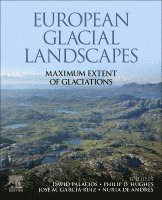
European Glacial Landscapes: Maximum Extent of Glaciations brings together relevant experts on the history of glaciers and their impact on the landscape of the main regions of Europe. In some regions the largest recorded glaciations occurred before the Last Glacial Cycle, in one of the major glacial cycles of the Middle Pleistocene. However, the best-preserved evidence of glaciation in the landscape is from the Last Glacial Cycle (Late Pleistocene). The book also analyses these older glacial landforms that can sometimes still be seen in the landscape today. This analysis provides a better understanding of the succession of Pleistocene glaciations and the intervening interglacial periods, examining their possible continental synchrony or asynchrony of past glacier behaviour. The result of this analysis gives important new insights and information on the origin and effects of climatic and geomorphological variability across Europe.
European Glacial Landscapes: Maximum Extent of Glaciations examines the landscapes produced by glaciers throughout Europe, the geomorphological effects of glaciations, as well as the chronology and evolution of the past glaciers, with the aim of understanding the interrelationship between glacial expansion and climate changes on this continent. This book is a valuable tool for geographers, geologist, environmental scientists, researchers in physics and earth sciences.
Provides a synthesis that highlights the main similarities or differences, through both space and time, during the maximum recorded expansions of Pleistocene glaciers in Europe Features research from experts in glacial geomorphology, palaeo-glaciology, palaeo-climatology and palaeo-oceanography on glacial expansion in Europe Includes detailed color figures and maps, providing a comprehensive comparison of the glacial landscapes of European Pleistocene glaciers1 410 kr
Skickas inom 7-10 vardagar
European Glacial Landscapes: Last Deglaciation brings together relevant experts on the history of glaciers and their impact on the landscape of the main European regions. Soon after the Last Glacial Maximum, a rapid process of the glacial retreat began throughout Europe. This was interrupted several times by abrupt climate cooling, which caused rapid, although moderate, re-advance of the glaciers, until the beginning of the Holocene when the climate became relatively stable and warm. These successive glacial advances and retreats during the Last Deglaciation have shaped much of the European landscape, reflecting abrupt climatic fluctuations.
As our knowledge of abrupt climate changes since the Last Glacial Maximum progresses, new uncertainties arise. These are critical for understanding how climate changes disseminate through Europe, such as the lag between climate changes and the expansion or contraction of glaciers as well as the role of the large continental ice sheets on the European climate. All these contributions are included in the book, which is an invaluable resource for geographers, geologists, environmental scientists, paleoclimatologists, as well as researchers in physics and earth sciences.�
Provides a synthesis that highlights the main similarities or differences, through both space and time, during the Last Deglaciation of Europe Features research from experts in quaternary, geomorphology, palaeoclimatology, palaeoceanography and palaeoglaciology on the Last Deglaciation in Europe during Termination 1 and the important Late Pleistocene-Holocene transition Includes detailed colour figures and maps, providing a comprehensive overview of the glacial landscapes of Europe during the last deglaciation1 410 kr
Skickas inom 7-10 vardagar
European Glacial Landscapes: The Holocene presents the current state of knowledge on glacial landscapes of Europe and nearby areas over the Holocene to deduce the influence of atmospheric and oceanic currents and the insolation forcing variability and volcanic activity on Holocene paleoclimates, the existence of asynchronies in the timing of occurrence of glacier expansion and shrinkage during the Holocene, time lags between the identification of oceanic and atmospheric changes and those occurring in glacial extension during the Holocene, the role of Holocene glaciers on the climate of Europe, and on sea level variability, and the delimitation of landscapes that need special protection.
Students, academics and researchers in Geography, Geology, Environmental Sciences, Physics and Earth Science departments will find this book provides novel findings of all the major European Regions in a single publication, with updated information about Holocene glacial geomorphology and paleo-climatology and clear figures that model the landscapes covered.
Provides a synthesis and summary of glacial processes in Europe over the Holocene period Features research from experts in palaeo-climatology, palaeo-oceanography and palaeo-glaciology Includes access to a companion website with an interactive map, photos of glacial features, and geospatial data related to European Glacial LandscapesQuaternary Glaciations - Extent and Chronology
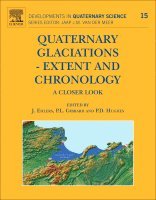
A Closer Look
2 630 kr
Skickas inom 7-10 vardagar
The book presents an up-to-date, detailed overview of the Quaternary glaciations all over the world, not only with regard to stratigraphy but also with regard to major glacial landforms and the extent of the respective ice sheets. The locations of key sites are included. The information is presented in digital, uniformly prepared maps which can be used in a Geographical Information System (GIS) such as ArcView or ArcGIS. The accompanying text supplies the information on how the data were obtained (geomorphology, geological mapping, air photograph evaluation, satellite imagery), how the features were dated (14C, TL, relative stratigraphy) and how reliable they are supposed to be. All references to the underlying basic publications are included. Where controversial interpretations are possible e.g. in Siberia or Tibet, this is pointed out. As a result, the information on Quaternary glaciations worldwide will be much improved and supplied in a uniform digital format.The information on the glacial limits is compiled in digital form by the coordinators of the project, and is available for download at: http://booksite.elsevier.com/9780444534477/
Completely updated detailed coverage of worldwide Quaternary glaciations Information in digital, uniformly prepared maps which can be used in a GIS such as ArcView or ArcGis Step-by-step guideline how to open and use ArcGis files Possibility to convert the shapefiles into GoogleEarth kmz-files Availability of chronological controls