Jose M. Garcia-Ruiz – författare
1 558 kr
Skickas inom 10-15 vardagar
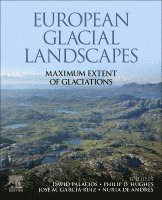
European Glacial Landscapes: Maximum Extent of Glaciations brings together relevant experts on the history of glaciers and their impact on the landscape of the main regions of Europe. In some regions the largest recorded glaciations occurred before the Last Glacial Cycle, in one of the major glacial cycles of the Middle Pleistocene. However, the best-preserved evidence of glaciation in the landscape is from the Last Glacial Cycle (Late Pleistocene). The book also analyses these older glacial landforms that can sometimes still be seen in the landscape today. This analysis provides a better understanding of the succession of Pleistocene glaciations and the intervening interglacial periods, examining their possible continental synchrony or asynchrony of past glacier behaviour. The result of this analysis gives important new insights and information on the origin and effects of climatic and geomorphological variability across Europe.
European Glacial Landscapes: Maximum Extent of Glaciations examines the landscapes produced by glaciers throughout Europe, the geomorphological effects of glaciations, as well as the chronology and evolution of the past glaciers, with the aim of understanding the interrelationship between glacial expansion and climate changes on this continent. This book is a valuable tool for geographers, geologist, environmental scientists, researchers in physics and earth sciences.
Provides a synthesis that highlights the main similarities or differences, through both space and time, during the maximum recorded expansions of Pleistocene glaciers in Europe Features research from experts in glacial geomorphology, palaeo-glaciology, palaeo-climatology and palaeo-oceanography on glacial expansion in Europe Includes detailed color figures and maps, providing a comprehensive comparison of the glacial landscapes of European Pleistocene glaciers2 201 kr
Läs direkt efter köp
1 390 kr
Skickas inom 10-15 vardagar
European Glacial Landscapes: Last Deglaciation brings together relevant experts on the history of glaciers and their impact on the landscape of the main European regions. Soon after the Last Glacial Maximum, a rapid process of the glacial retreat began throughout Europe. This was interrupted several times by abrupt climate cooling, which caused rapid, although moderate, re-advance of the glaciers, until the beginning of the Holocene when the climate became relatively stable and warm. These successive glacial advances and retreats during the Last Deglaciation have shaped much of the European landscape, reflecting abrupt climatic fluctuations.
As our knowledge of abrupt climate changes since the Last Glacial Maximum progresses, new uncertainties arise. These are critical for understanding how climate changes disseminate through Europe, such as the lag between climate changes and the expansion or contraction of glaciers as well as the role of the large continental ice sheets on the European climate. All these contributions are included in the book, which is an invaluable resource for geographers, geologists, environmental scientists, paleoclimatologists, as well as researchers in physics and earth sciences.�
Provides a synthesis that highlights the main similarities or differences, through both space and time, during the Last Deglaciation of Europe Features research from experts in quaternary, geomorphology, palaeoclimatology, palaeoceanography and palaeoglaciology on the Last Deglaciation in Europe during Termination 1 and the important Late Pleistocene-Holocene transition Includes detailed colour figures and maps, providing a comprehensive overview of the glacial landscapes of Europe during the last deglaciation1 975 kr
Läs direkt efter köp
1 738 kr
Skickas inom 10-15 vardagar
2 157 kr
Läs direkt efter köp
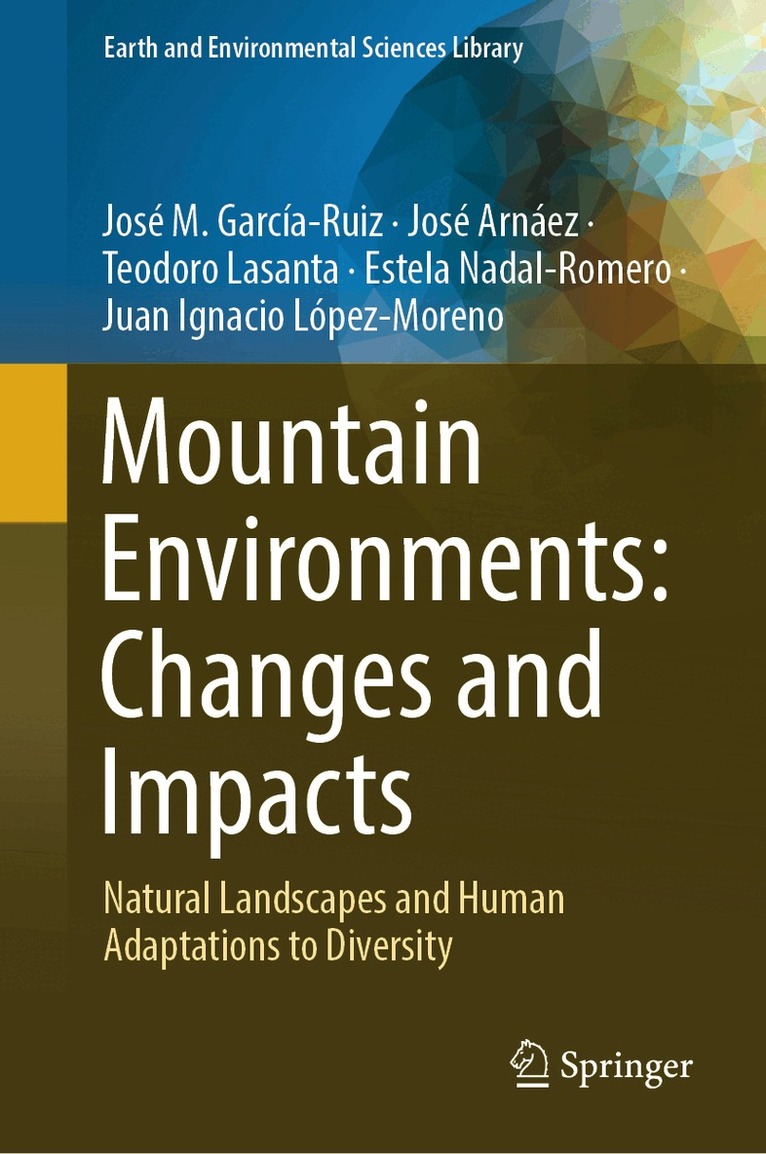
This book studies mountains with a global perspective, like a complex topographic and topoclimatic mosaic organized in altitudinal belts that are influenced by a huge variability in slopes, soils, lithology and insolation. Furthermore, the presence of lower temperatures, higher precipitation and the seasonal presence of snow create conditions conductive to supporting various life forms and natural geomorphological and hydrological processes. The integration of environmental and human aspects highlights the impacts of human activities and climate fluctuations on soil hydrology, soil erosion, water resources, and landscape/landforms evolution. After presenting the way in which humans (from Prehistory to Alexander von Humboldt) discovered the mountains, subsequent chapters try to underline the importance of mountains in generating water resources and hydropower for lowlands, serving as biodiversity hotspots, and contributing to cultural diversity. The book delves into the role ofhuman actives in transforming the natural landscapes and creating new cultural landscapes. This exploration considers the significance of altitudinal belts in shaping the spatial and temporal organization of land uses which, in turn, have been determined by population growth and the development of regional and national markets. Additionally, the book illustrates the effect of global change on mountain evolution, exploring their consequences on landscape characteristics and dynamics as well as on the planetary role of the mountains. It concludes by offering a unique perspective on enhancing mountain conservation in order to preserve cultures, land uses, and landscapes.
1 738 kr
Skickas inom 10-15 vardagar