• Fri frakt över 249 kr
  • •
  • Snabba leveranser
  • •
  • Billiga böcker
Kundservice

Du är på sajten för privatpersoner.

Företag, bibliotek eller offentlig verksamhet?

Du handlar på classic.bokus.com, där alla dina funktioner finns intakta.
Till classic.bokus.com
Bokus logotyp. Gå till startsidan.
  • Erbjudanden
  • Nyheter
  • Student
  • Topplistor
  • Barn & ungdom
  • Bokus Play
  • E-böcker
  • Pocketböcker
  • Spel & pussel

10% rabatt på allt med kod: NYSTART10 →

Sidfot

Mina sidor

    Hjälp

    • Kundservice
    • Vanliga frågor och svar
    • Frakt och leverans
    • Retur vid ångerrätt
    • Reklamera vara
    • Betalning
    • Köpvillkor
    • Allmänna villkor
    • Information om webbplatsens tillgänglighet

    Om Bokus

    • Om oss
    • Pressrum
    • För studenter
    • För företag
    • För bibliotek och offentlig verksamhet
    • För leverantörer
    • Hållbarhet

    Populärt

    • Aktuella erbjudanden
    • Presentkort
    • Studentlitteratur
    • Nya böcker
    • Topplistor
    • Signerade böcker
    • Engelska böcker

    Inspiration

    • Boktips
    • BookTok
    • Populära bokserier
    • Barnbokskaraktärer
    • Populära författare
    Logotyp för Bokus
    Följ oss på Facebook (extern länk)Följ oss på Instagram (extern länk)Följ oss på YouTube (extern länk)Följ oss på TikTok (extern länk)
    bokus @ CookiesAnpassa cookiesIntegritetspolicyKöpvillkor
    Till Citymail hemsida (extern länk)Till Budbee hemsida (extern länk)Till Postnord hemsida (extern länk)Till Schenker hemsida (extern länk)Till Early Bird hemsida (extern länk)Till Walleys hemsida (extern länk)
    1. Psykologi och pedagogik
    2. Pedagogik
    3. Skolväsen och utbildningssystem
    4. Examination och betygsättning

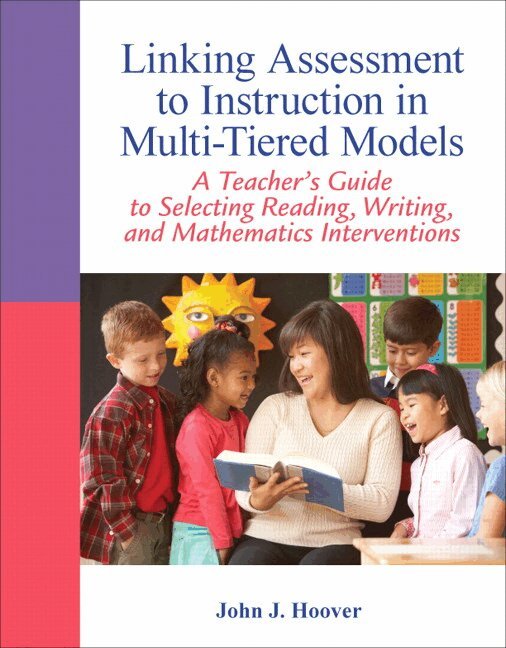
    Linking Assessment to Instruction in Multi-Tiered Models

    A Teacher's Guide to Selecting, Reading, Writing, and Mathematics Interventions

    AvJohn Hoover

    Häftad, Engelska, 2013

    914 kr

    Beställningsvara. Skickas inom 3-6 vardagar. Fri frakt över 249 kr.

    Beskrivning

    With a unique classroom focus, Linking Assessment to Instruction in Multi-Tiered Models, 1e shows teachers how to direct multi-tiered instruction and adjust their teaching based on screening, monitoring and diagnostic achievement scores. Beyond a theoretical perspective, this two-part text explores the multi-tiered instructional model found within the RTI framework and how to best implement it in the classroom setting. It includes reading, writing, and mathematics interventions that can be used for core Tier 1 instruction, supplemental Tier 2 supports and intensive Tier 3 interventions. Throughout the book, its emphasis is on using assessment data to make important instructional decisions that meet learner needs.

    Produktinformation

    • Utgivningsdatum:2013-02-19
    • Mått:100 x 100 x 100 mm
    • Vikt:100 g
    • Format:Häftad
    • Språk:Engelska
    • Antal sidor:192
    • Förlag:Pearson Education (US)
    • ISBN:9780132542678

    Utforska kategorier

    • Examination och betygsättning inom Psykologi och pedagogik

    Mer om författaren

    Dr. John J. Hoover is Associate Research Professor in the Graduate School of Education at the University of Colorado at Boulder specializing in multicultural special education instruction and assessment. He is a former special education teacher and supervisor instructing students with learning, intellectual and emotional disabilities in grades K-12. He also has numerous years of administrative and supervisory experiences in research and teacher training in multicultural and special education over that past 30 years. His work in the field of education is well-documented as he has over 65 publications in multicultural, special and general education. Since 2008, Dr. Hoover has authored or co-authored 4 journal articles, 4 books, and 3 textbook chapters in addition to delivering numerous workshop and conference sessions on multi-tiered response to intervention addressing the interrelated topics of evidence-based interventions, RTI and special education, progress monitoring data collection, and school RTI team decision-making. Recent publications include: Early Reading Assessment Diagnostic Test (2012, Pro-Ed) Response to intervention: Curricular implications and interventions (2011, Pearson); RTI assessment essentials for struggling learners (2009, Corwin Press); and Differentiating learning differences from disabilities: Meeting diverse needs through multi-tiered response to intervention (2009, Pearson).

    Innehållsförteckning

    • PART I – Framework, Process and Collaboration in Multi-tiered Instructional ModelsChapter 1: Structure of Multi-Tiered Instructional Models Chapter Overview/Key TermsOverview of Multi-Tiered Instructional ModelsConclusion  Chapter 2:  Process of Multi-Tiered Instructional ModelsChapter Overview/Key TermsIntroductionMulti-Tiered Instructional Delivery ProcessMulti-Tiered Assessment ProcessInterpreting Achievement Data ScoresFramework for Making Instructional AdjustmentsUniversal Screening and Progress Monitoring Example: AIMSwebConclusion  Chapter 3: Collaboration to Implement Instructional AdjustmentsChapter Overview/Key TermsIntroductionCollaboration ModelFacilitating ChangeConclusion  Part II: Reading, Writing, and Mathematics Interventions  Chapter 4: Evidence-Based Reading PracticesChapter Overview/Key TermsIntroductionFoundations of Reading InstructionReading InterventionsResearch-Based Comprehensive Reading Programs Teacher and Student Strategies for Differentiated Reading InstructionConclusion  Chapter 5: Evidence-Based Writing PracticesChapter Overview/Key TermsIntroductionWriting as a ProcessFoundational Elements of Effective WritingWriting InterventionsComprehensive Writing ProgramsStrategies for Differentiated Writing InstructionConclusion  Chapter 6: Evidence-Based Mathematics PracticesChapter Overview/Key TermsFoundation of Mathematics InstructionMathematics and Use of Mental ProcessesEvidence-Based Mathematics InstructionComprehensive Mathematics Instructional Support ProgramsStrategies for Differentiated Mathematics InstructionConclusion  Concluding Remarks: Meeting the Classroom Challenges of Multi-Tiered Instruction  References