• Fri frakt över 249 kr
  • •
  • Snabba leveranser
  • •
  • Billiga böcker
Kundservice

Du är på sajten för privatpersoner.

Företag, bibliotek eller offentlig verksamhet?

Du handlar på classic.bokus.com, där alla dina funktioner finns intakta.
Till classic.bokus.com
Bokus logotyp. Gå till startsidan.
  • Erbjudanden
  • Nyheter
  • Student
  • Topplistor
  • Barn & ungdom
  • Bokus Play
  • E-böcker
  • Pocketböcker
  • Spel & pussel

10% rabatt på allt med kod: NYSTART10 →

Sidfot

Mina sidor

    Hjälp

    • Kundservice
    • Vanliga frågor och svar
    • Frakt och leverans
    • Retur vid ångerrätt
    • Reklamera vara
    • Betalning
    • Köpvillkor
    • Allmänna villkor
    • Information om webbplatsens tillgänglighet

    Om Bokus

    • Om oss
    • Pressrum
    • För studenter
    • För företag
    • För bibliotek och offentlig verksamhet
    • För leverantörer
    • Hållbarhet

    Populärt

    • Aktuella erbjudanden
    • Presentkort
    • Studentlitteratur
    • Nya böcker
    • Topplistor
    • Signerade böcker
    • Engelska böcker

    Inspiration

    • Boktips
    • BookTok
    • Populära bokserier
    • Barnbokskaraktärer
    • Populära författare
    Logotyp för Bokus
    Följ oss på Facebook (extern länk)Följ oss på Instagram (extern länk)Följ oss på YouTube (extern länk)Följ oss på TikTok (extern länk)
    bokus @ CookiesAnpassa cookiesIntegritetspolicyKöpvillkor
    Till Citymail hemsida (extern länk)Till Budbee hemsida (extern länk)Till Postnord hemsida (extern länk)Till Schenker hemsida (extern länk)Till Early Bird hemsida (extern länk)Till Walleys hemsida (extern länk)
    1. Data och IT
    2. Systemvetenskap och AI
    3. Artificiell intelligens

    Artificial Intelligence for Business

    AvDoug Rose

    Häftad, Engelska, 2021

    Del i serien Pearson Business Analytics Series

    218 kr

    Beställningsvara. Skickas inom 7-10 vardagar. Fri frakt över 249 kr.

    Beskrivning

    The Easy Introduction to Machine Learning (Ml) for Nontechnical People--In Business and Beyond

    Artificial Intelligence for Business is your plain-English guide to Artificial Intelligence (AI) and Machine Learning (ML): how they work, what they can and cannot do, and how to start profiting from them. Writing for nontechnical executives and professionals, Doug Rose demystifies AI/ML technology with intuitive analogies and explanations honed through years of teaching and consulting. Rose explains everything from early “expert systems” to advanced deep learning networks.


    First, Rose explains how AI and ML emerged, exploring pivotal early ideas that continue to influence the field. Next, he deepens your understanding of key ML concepts, showing how machines can create strategies and learn from mistakes. Then, Rose introduces current powerful neural networks: systems inspired by the structure and function of the human brain. He concludes by introducing leading AI applications, from automated customer interactions to event prediction. Throughout, Rose stays focused on business: applying these technologies to leverage new opportunities and solve real problems.

    • Compare the ways a machine can learn, and explore current leading ML algorithms
    • Start with the right problems, and avoid common AI/ML project mistakes
    • Use neural networks to automate decision-making and identify unexpected patterns
    • Help neural networks learn more quickly and effectively
    • Harness AI chatbots, virtual assistants, virtual agents, and conversational AI applications
    Produktinformation

    • Utgivningsdatum:2021-03-19
    • Mått:178 x 229 x 18 mm
    • Vikt:440 g
    • Format:Häftad
    • Språk:Engelska
    • Serie:Pearson Business Analytics Series
    • Antal sidor:272
    • Upplaga:2
    • Förlag:Pearson Education
    • ISBN:9780136556619

    Utforska kategorier

    • Artificiell intelligens inom Data och IT
    • Affärsförhandlingar inom Ekonomi och Ledarskap
    • Affärsapplikationer inom Data och IT

    Mer om författaren

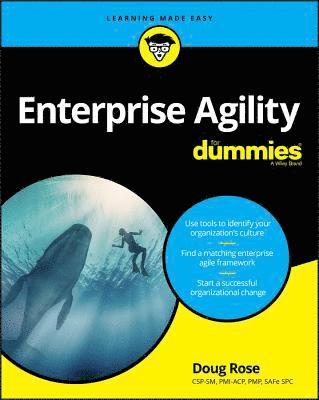
    Doug Rose has been transforming organizations through technology, training, and process optimization for more than 25 years. He is the author of the Project Management Institute (PMI) first major publication on the agile framework, Leading Agile Teams. He is also the author of Data Science: Create Teams That Ask the Right Questions and Deliver Real Value and Enterprise Agility for Dummies. Doug has a master degree (MS) in information management, a law degree (JD) from Syracuse University, and a BA from the University of Wisconsin-Madison. He is also a Scaled Agile Framework Program Consultant (SPC), Certified Technical Trainer (CTT+), Certified Scrum Professional (CSP-SM), Certified Scrum Master (CSM), PMI Agile Certified Professional (PMI-ACP), Project Management Professional (PMP), and Certified Developer for Apache Hadoop (CCDH). You can attend his lively and engaging business and project management courses at the University of Chicago or online through LinkedIn Learning. Doug works through Doug Enterprises, an organization with an office in whatever city he lives. Currently he lives in Atlanta, Georgia, where he spends his free time either riding a stationary recumbent bike or explaining the Marvel Universe to his son.

    Innehållsförteckning

    • Foreword     xv Preface     xix PART I:  Thinking Machines: An Overview of Artificial Intelligence     1 Chapter 1:  What Is Artificial Intelligence?     3 What Is Intelligence?     4 Testing Machine Intelligence     6 The General Problem Solver     8 Strong and Weak Artificial Intelligence     11 Artificial Intelligence Planning     14 Learning over Memorizing     15 Chapter Takeaways     18 Chapter 2:  The Rise of Machine Learning     19 Practical Applications of Machine Learning     22 Artificial Neural Networks     24 The Fall and Rise of the Perceptron     27 Big Data Arrives     30 Chapter Takeaways     33 Chapter 3:  Zeroing in on the Best Approach     35 Expert System Versus Machine Learning     35 Supervised Versus Unsupervised Learning     37 Backpropagation of Errors     38 Regression Analysis     41 Chapter Takeaways     43 Chapter 4:  Common AI Applications     45 Intelligent Robots     45 Natural Language Processing     48 The Internet of Things     50 Chapter Takeaways     51 Chapter 5:  Putting AI to Work on Big Data     53 Understanding the Concept of Big Data     54 Teaming Up with a Data Scientist     54 Machine Learning and Data Mining: What's the Difference?     55 Making the Leap from Data Mining to Machine Learning     56 Taking the Right Approach     57 Chapter Takeaways     59 Chapter 6:  Weighing Your Options     61 Chapter Takeaways     64 PART II:  Machine Learning     65 Chapter 7:  What Is Machine Learning?     67 How a Machine Learns     71 Working with Data     74 Applying Machine Learning     77 Different Types of Learning     79 Chapter Takeaways     81 Chapter 8:  Different Ways a Machine Learns     83 Supervised Machine Learning     83 Unsupervised Machine Learning     86 Semi-Supervised Machine Learning     89 Reinforcement Learning     91 Chapter Takeaways     93 Chapter 9:  Popular Machine Learning Algorithms     95 Decision Trees     99 k-Nearest Neighbor     101 k-Means Clustering     104 Regression Analysis     108 Naive Bayes     110 Chapter Takeaways     113 Chapter 10:  Applying Machine Learning Algorithms     115 Fitting the Model to Your Data     119 Choosing Algorithms     120 Ensemble Modeling     121 Deciding on a Machine Learning Approach     123 Chapter Takeaways     124 Chapter 11:  Words of Advice     125 Start Asking Questions     125 Don't Mix Training Data with Test Data     127 Don't Overstate a Model's Accuracy     127 Know Your Algorithms     128 Chapter Takeaways     128 PART III:  Artificial Neural Networks     129 Chapter 12:  What Are Artificial Neural Networks?     131 Why the Brain Analogy?     133 Just Another Amazing Algorithm     133 Getting to Know the Perceptron     135 Squeezing Down a Sigmoid Neuron     138 Adding Bias     141 Chapter Takeaways     142 Chapter 13:  Artificial Neural Networks in Action     143 Feeding Data into the Network     143 What Goes on in the Hidden Layers     145 Understanding Activation Functions     149 Adding Weights     151 Adding Bias     152 Chapter Takeaways     153 Chapter 14:  Letting Your Network Learn     155 Starting with Random Weights and Biases     156 Making Your Network Pay for Its Mistakes: The Cost Function     157 Combining the Cost Function with Gradient Descent     158 Using Backpropagation to Correct for Errors     160 Tuning Your Network     163 Employing the Chain Rule     164 Batching the Data Set with Stochastic Gradient Descent     166 Chapter Takeaways     167 Chapter 15:  Using Neural Networks to Classify or Cluster     169 Solving Classification Problems     170 Solving Clustering Problems     172 Chapter Takeaways     174 Chapter 16:  Key Challenges     175 Obtaining Enough Quality Data     175 Keeping Training and Test Data Separate     176 Carefully Choosing Your Training Data     177 Taking an Exploratory Approach     177 Choosing the Right Tool for the Job     178 Chapter Takeaways     178 PART IV:  Putting Artificial Intelligence to Work     179 Chapter 17:  Harnessing the Power of Natural Language Processing     181 Extracting Meaning from Text and Speech with NLU     183 Delivering Sensible Responses with NLG     184 Automating Customer Service     186 Reviewing the Top NLP Tools and Resources     187 NLU Tools     189 NLG Tools     190 Chapter Takeaways     191 Chapter 18:  Automating Customer Interactions     193 Choosing Natural Language Technologies     195 Review the Top Tools for Creating Chatbots and Virtual Agents     196 Chapter Takeaways     198 Chapter 19:  Improving Data-Based Decision-Making     199 Choosing Between Automated and Intuitive Decision-Making     201 Gathering Data in Real Time from IoT Devices     202 Reviewing Automated Decision-Making Tools     204 Chapter Takeaways     205 Chapter 20:  Using Machine Learning to Predict Events and Outcomes     207 Machine Learning Is Really about Labeling Data     208 Looking at What Machine Learning Can Do     210 Predict What Customers Will Buy     210 Answer Questions Before They're Asked     210 Make Better Decisions Faster     212 Replicate Expertise in Your Business     213 Use Your Power for Good, Not Evil: Machine Learning Ethics     214 Review the Top Machine Learning Tools     216 Chapter Takeaways     218 Chapter 21:  Building Artificial Minds     219 Separating Intelligence from Automation     221 Adding Layers for Deep Learning     222 Considering Applications for Artificial Neural Networks     223 Classifying Your Best Customers     224 Recommending Store Layouts     225 Analyzing and Tracking Biometrics     226 Reviewing the Top Deep Learning Tools     228 Chapter Takeaways     229 Index     231