• Fri frakt över 249 kr
  • •
  • Snabba leveranser
  • •
  • Billiga böcker
Kundservice

Du är på sajten för privatpersoner.

Företag, bibliotek eller offentlig verksamhet?

Du handlar på classic.bokus.com, där alla dina funktioner finns intakta.
Till classic.bokus.com
Bokus logotyp. Gå till startsidan.
  • Erbjudanden
  • Nyheter
  • Student
  • Topplistor
  • Barn & ungdom
  • Bokus Play
  • E-böcker
  • Pocketböcker
  • Spel & pussel

10% rabatt på allt med kod NYSTART10 →

Sidfot

Mina sidor

    Hjälp

    • Kundservice
    • Vanliga frågor och svar
    • Frakt och leverans
    • Retur vid ångerrätt
    • Reklamera vara
    • Betalning
    • Köpvillkor
    • Allmänna villkor
    • Information om webbplatsens tillgänglighet

    Om Bokus

    • Om oss
    • Pressrum
    • För studenter
    • För företag
    • För bibliotek och offentlig verksamhet
    • För leverantörer
    • Hållbarhet

    Populärt

    • Aktuella erbjudanden
    • Presentkort
    • Studentlitteratur
    • Nya böcker
    • Topplistor
    • Signerade böcker
    • Engelska böcker

    Inspiration

    • Boktips
    • BookTok
    • Populära bokserier
    • Barnbokskaraktärer
    • Populära författare
    Logotyp för Bokus
    Följ oss på Facebook (extern länk)Följ oss på Instagram (extern länk)Följ oss på YouTube (extern länk)Följ oss på TikTok (extern länk)
    bokus @ CookiesAnpassa cookiesIntegritetspolicyKöpvillkor
    Till Citymail hemsida (extern länk)Till Budbee hemsida (extern länk)Till Postnord hemsida (extern länk)Till Schenker hemsida (extern länk)Till Early Bird hemsida (extern länk)Till Walleys hemsida (extern länk)
    1. Psykologi och pedagogik
    2. Pedagogik
    3. Utbildningsstrategier och utbildningspolitik

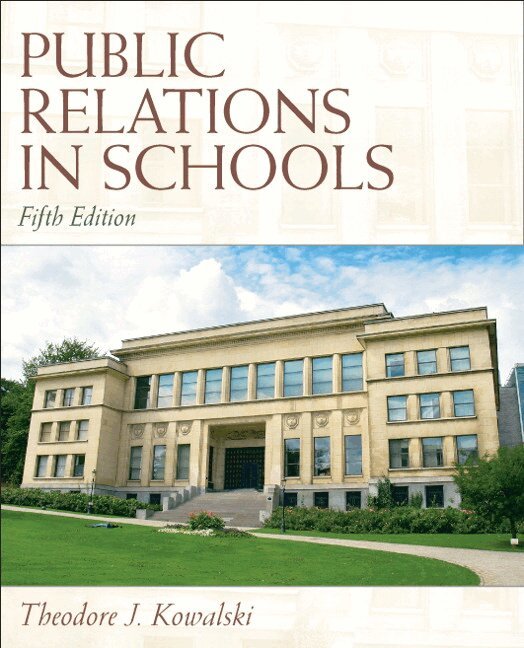
    Public Relations in Schools

    AvTheodore Kowalski

    Inbunden, Engelska, 2010

    3 124 kr

    Beställningsvara. Skickas inom 3-6 vardagar. Fri frakt över 249 kr.

    Beskrivning

    A contemporary and practice-based school public relations text that centers on the importance of communication, relationships, and technology.  Outfitting students with a wealth of practical, practice-based knowledge that they can take directly into the halls of their school, the new fifth edition of Public Relations in Schools has a fresh, contemporary focus on both how administrators can effectively communicate with the community and how building strong relationships with stakeholders can ultimately lead to overall school improvement. Through a blend of theoretical and tacit knowledge, this text offers students an in-depth guide to 1) how to successfully communicate with both internal and external school entities, 2) how to build and maintain positive and active relationships via social and political capital and 3) how to translate the value of these relationships into positive change within the school. While exploring these three central themes, the book emphasizes how new technologies can aid school success. At the same time, real-world case studies at the beginning of each chapter introduce readers to actual public relations issues and bring the material to life.  The revised fifth edition of Public Relations in Schools is updated with new materials and references throughout the text, including two new chapters – one on harnessing technology for your public relations needs and one on collecting, assessing, and applying public opinion. In addition, the new fifth edition text contains a matrix at the front of the book showing how content relates to ELCC/NCATE Standards ­­– the widely used criteria for administrator preparation and licensing.

    Produktinformation

    • Utgivningsdatum:2010-10-04
    • Mått:191 x 239 x 19 mm
    • Vikt:624 g
    • Format:Inbunden
    • Språk:Engelska
    • Antal sidor:280
    • Upplaga:5
    • Förlag:Pearson Education (US)
    • ISBN:9780137072453

    Utforska kategorier

    • Utbildningsstrategier och utbildningspolitik inom Psykologi och pedagogik
    • Lärarutbildning inom Psykologi och pedagogik

    Mer om författaren

    Theodore J. Kowalski, PhDTheodore Kowalski is professor and the Kuntz Family Chair in Educational Administration at the University of Dayton. He began his professional career as a teacher and building-level administrator in suburban Indianapolis, Indiana. Subsequently, he served as an associate superintendent and superintendent. He taught at Purdue University and Saint Louis University prior to becoming professor and dean of the Teachers College at Ball State University.In addition to his duties at the University of Dayton, Professor Kowalski is editor of the Journal of School Public Relations and serves on the editorial boards of several other professional journals including Educational Administration Quarterly and the AASA Journal of Scholarship and Practice. In 2000, he was selected to be the editor of the 2001 National Council of Professors of Educational Administration Yearbook, the first yearbook of the new millennium.The author of numerous books, professional articles, research papers, and monographs, Dr. Kowalski has received awards for his research, writing, and scholarship including the Outstanding Faculty Research Award from the Teachers College at Ball State University in 1993, the Outstanding Faculty Scholarship Award from the School of Education and Allied Professions at the University of Dayton in 2002 and 2005, and the Alumni Award in Scholarship from the University of Dayton in 2005. Since 1986, he has delivered over 100 invited lectures at colleges and universities and has provided consultant services to numerous education and business clients. Professor Kowalski's primary areas of research are organizational behavior and communication, decision making, and school and district administration.

    Innehållsförteckning

    • Standards Matrix (ELCC/NCATE)  Part I: Contemporary PerspectivesChapter 1 School Public Relations: A New AgendaCase Study: The New Superintendent’s Public Relations PlanIntroductionPerspectives of Public RelationsErroneous PerspectivesMultiple Definitions and ModelsSchool Public RelationsMeaningGoalsPersistent BarriersCurrent ImportanceUnderlying ThemesInformation AgeSchool ReformCommunicationReflective PracticeSummaryQuestions and Suggested ActivitiesCase StudyChapter References  Chapter 2 Social and Political ContextsCase Study:  Diversity and Local Public SchoolsIntroduction Social Conditions and SchoolsChanging Family StructurePovertyImmigrant StudentsEffects of Social Problems on Student BehaviorEffects Social Problems on Schools Political Conditions and SchoolsEducation Goals Politics, Reform, and EngagementSummaryQuestions and Suggested ActivitiesCase StudyChapter References  Chapter 3 Legal and Ethical Aspects of Public RelationsCase Study: Maynard Constructs a School Web PageIntroductionLegal DimensionsTort LiabilityConstitutional TortsPolitical SpeechPrivacy RightsReligion and Public Schools Community Values and CurriculumCopyrightEthicsEthics in School AdministrationEthics in PRSummaryQuestions and Suggested ActivitiesCase StudyChapter References  Chapter 4 Current Contexts of School Reform Case Study: Applying a Communicative Approach to Policy Development IntroductionLocal Control and School ReformDemocratic Localism and Representative DemocracyLocal Reforms and Stakeholder InvolvementCivic Engagement and Administrative BehaviorCivic Engagement ApproachesAdministrative BehaviorSchool Improvement and Public RelationsWhy Civic Engagement MattersHow PR Can Contribute to EngagementSummaryQuestions and Suggested ActivitiesCase StudyChapter References  Part II: Conceptualizing and Institutionalizing a Public Relations ProgramChapter 5 Communication and Conflict Management Case Study: Importance of Internal RelationsIntroductionCommunicationCommunication BasicsListening SkillsNonverbal CommunicationCommunication NetworksCommunication CompetenceConflict ManagementConflict TypesConflict ContaminantsConflict-Resolution StrategiesSummaryQuestions and Suggested ActivitiesCase StudyChapter References  Chapter 6 Public Relations ProgramsCase Study: High Hopes Gone SourIntroductionConceptualizing a PR ProgramResponsibilityIntended BeneficiariesOrganizational StructureNon-traditional Public Schools and Private SchoolsNon-Traditional Public SchoolsPrivate SchoolsOrganizing PR in Schools of ChoiceStudent and Parental InvolvementSummaryQuestions and Suggested ActivitiesCase StudyChapter References  Chapter 7 Planning, Implementing, and Evaluating ProgramsCase Study: When Schools and Relationships Fail to ImproveIntroductionProgram planningPlanning ProcessesCharacteristics of Effective PlansPlanning TeamAdministrator InterventionsSchool-Level Supplemental PlanningImplementingAdministrative ResponsibilityNaming the ProgramResource AllocationEvaluating ProgramsTypes of EvaluationOutputs and OutcomesEssential QuestionsUtilityMethods, Techniques, and SourcesSummaryQuestions and Suggested ActivitiesCase StudyChapter References  Chapter 8 Using Technology to Exchange and Manage InformationCase Study: Roger Creates a Web Page IntroductionEssential ConstructsTechnology LiteracyInformation LiteracyInformation TechnologyManagement Information SystemTechnology ToolsEmailElectronic NewslettersDistrict or School Web PagesElectronic NetworkingVideoconferencingChat RoomsBlogsSummaryQuestions and Suggested ActivitiesCase StudyChapter References  Part III:  Focused ObjectivesChapter 9 Community RelationsCase Study: A Mentor’s Questionable AdviceIntroductionRelationships and CommunicationImproving Community RelationsIdentifying and Analyzing PublicsCommunicating with the CommunityDeploying a Multicultural PerspectivePositive Relationships with ParentsNeed for Parental RelationshipsBuilding and Maintaining Parental RelationshipsSummaryQuestions and Suggested ActivitiesCase StudyChapter References  Chapter 10 Media RelationshipCase Study: Mismanaging a Sensitive SituationIntroductionOrganizational decisionsMedia Relations PlanImplementing a Media Relations PlanEmploying a PR SpecialistWorking with Print Media ReportersEstablishing a Foundation for Effective RelationshipsWorking with New ReportersAccommodating DeadlinesDealing with Negative NewsSpeaking Off the RecordRefusing to CommentTelling the TruthStaying on TrackGetting the School’s Story to the MediaPreparing News ReleasesPlanning and Conducting News ConferencesCorrecting the RecordWorking with Electronic Media ReportersTelevisionRadioWeb-Based OutletsSummaryQuestions and Suggested ActivitiesCase StudyChapter References  Chapter 11 Public OpinionCase Study: Good Intentions Aren’t Always EnoughIntroductionDefining Public OpinionCivic Engagement and PolicyTypes Citizen EngagementPublic Opinion as a Form of Civic EngagementSurveying OpinionsScientific PollingSampling IssuesReturn RatesData Collection AlternativesFocus GroupsQuestion DevelopmentSummaryQuestions and Suggested ActivitiesCase StudyChapter References  Chapter 12 Developing and Executing a Successful Funding CampaignCase Study: Playing HardballIntroductionValidating the NeedMarketingFocal PointsCollecting DataProjecting an Election OutcomeReferendum CampaignSteering CommitteeCampaign ConsultantVolunteersPositive Campaign CharacteristicsMistakes and Problems to AvoidEvaluating the CampaignSummaryQuestions and Suggested ActivitiesCase StudyChapter References  Chapter 13 Responding to CrisisCase Study: Suicide at McKinley Middle SchoolIntroductionSafety and Security PlanningIntegrating District and School ResponsibilitiesDefining a CrisisPlanning ScopeAppointing the School Crisis TeamSafety and Security AuditConstructing a Crisis PlanPreparing Employees to Implement the PlanEvaluating the PlanCrisis CommunicationPre-Crisis TasksCommunicating During the CrisisCommunicating After the CrisisSummaryQuestions and Suggested ActivitiesCase StudyChapter References