• Fri frakt över 249 kr
  • •
  • Snabba leveranser
  • •
  • Billiga böcker
Kundservice

Du är på sajten för privatpersoner.

Företag, bibliotek eller offentlig verksamhet?

Du handlar på classic.bokus.com, där alla dina funktioner finns intakta.
Till classic.bokus.com
Bokus logotyp. Gå till startsidan.
  • Erbjudanden
  • Nyheter
  • Student
  • Topplistor
  • Barn & ungdom
  • Bokus Play
  • E-böcker
  • Pocketböcker
  • Spel & pussel

10% rabatt på allt med kod NYSTART10 →

Sidfot

Mina sidor

    Hjälp

    • Kundservice
    • Vanliga frågor och svar
    • Frakt och leverans
    • Retur vid ångerrätt
    • Reklamera vara
    • Betalning
    • Köpvillkor
    • Allmänna villkor
    • Information om webbplatsens tillgänglighet

    Om Bokus

    • Om oss
    • Pressrum
    • För studenter
    • För företag
    • För bibliotek och offentlig verksamhet
    • För leverantörer
    • Hållbarhet

    Populärt

    • Aktuella erbjudanden
    • Presentkort
    • Studentlitteratur
    • Nya böcker
    • Topplistor
    • Signerade böcker
    • Engelska böcker

    Inspiration

    • Boktips
    • BookTok
    • Populära bokserier
    • Barnbokskaraktärer
    • Populära författare
    Logotyp för Bokus
    Följ oss på Facebook (extern länk)Följ oss på Instagram (extern länk)Följ oss på YouTube (extern länk)Följ oss på TikTok (extern länk)
    bokus @ CookiesAnpassa cookiesIntegritetspolicyKöpvillkor
    Till Citymail hemsida (extern länk)Till Budbee hemsida (extern länk)Till Postnord hemsida (extern länk)Till Schenker hemsida (extern länk)Till Early Bird hemsida (extern länk)Till Walleys hemsida (extern länk)
    1. Medicin
    2. Medicin: allmänt
    3. Den medicinska professionen
    4. Medicinsk etik och läkaretik

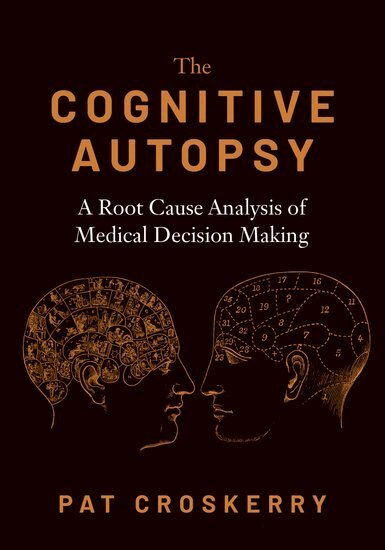
    The Cognitive Autopsy

    A Root Cause Analysis of Medical Decision Making

    AvPat Croskerry

    Häftad, Engelska, 2020

    1 130 kr

    Beställningsvara. Skickas inom 5-8 vardagar. Fri frakt över 249 kr.

    Beskrivning

    Behind heart disease and cancer, medical error is now listed as one of the leading causes of death. Of the many medical errors that may lead to injury and death, diagnostic failure is regarded as the most significant. Generally, the majority of diagnostic failures are attributed to the clinicians directly involved with the patient, and to a lesser extent, the system in which they work. In turn, the majority of errors made by clinicians are due to decision making failures manifested by various departures from rationality. Of all the medical environments in which patients are seen and diagnosed, the emergency department is the most challenging. It has been described as a "wicked" environment where illness and disease may range from minor ailments and complaints to severe, life-threatening disorders. The Cognitive Autopsy is a novel strategy towards understanding medical error and diagnostic failure in 42 clinical cases with which the author was directly involved or became aware of at the time. Essentially, it describes a cognitive approach towards root cause analysis of medical adverse events or near misses. Whereas root cause analysis typically focuses on the observable and measurable aspects of adverse events, the cognitive autopsy attempts to identify covert cognitive processes that may have contributed to outcomes. In this clinical setting, no cognitive process is directly observable but must be inferred from the behavior of the individual clinician. The book illustrates unequivocally that chief among these cognitive processes are cognitive biases and other flaws in decision making, rather than knowledge deficits.

    Produktinformation

    • Utgivningsdatum:2020-07-24
    • Mått:175 x 251 x 17 mm
    • Vikt:703 g
    • Format:Häftad
    • Språk:Engelska
    • Antal sidor:344
    • Förlag:OUP USA
    • ISBN:9780190088743

    Utforska kategorier

    • Medicinsk etik och läkaretik inom Medicin
    • Referensverk och tvärvetenskap inom Samhälle och politik
    • Olycksfalls- och akutmedicin inom Medicin

    Mer om författaren

    Pat Croskerry, MD, PhD, is Professor of Emergency Medicine and in the Division of Medical Education & Continuing Professional Development, Faculty of Medicine at Dalhousie University in Halifax, Nova Scotia, Canada. In addition to his medical training, he holds a doctorate in Experimental Psychology and a Fellowship in Clinical Psychology. He has published over 90 journal articles and 40 book chapters in the area of patient safety, clinical decision making and medical education reform. Two of his papers are in the top 5 cited papers in the emergency medicine education literature. In 2006, he was appointed to the Board of the Canadian Patient Safety Institute, and in the same year received the Ruedy award from the Association of Faculties of Medicine of Canada for innovation in medical education. He has given over 500 keynote presentations at leading medical schools, hospitals, and universities around the world.

    Recensioner i media

    This is the first book I have read that uses actual patient care cases to investigate medical decisions that lead to errors and eventually unexpected outcomes. The depth of the discussion in these cases leaves readers with a good understanding of the processes that lead to the outcomes.

    Innehållsförteckning

    • ForewordPrefaceAcknowledgements Introduction The CasesCase 1. Christmas SurprisesCase 2. Distraught DistractionCase 3. The Fortunate FootballerCase 4. An Incommoded Interior DesignerCase 5. Teenage TachypnoeaCase 6. The Backed-up Bed BlockerCase 7. The English PatientCase 8. Lazarus ReduxCase 9. A Model PilotCase 10. A Rash DiagnosisCase 11. The Perfect StormCase 12. A Case of Premature ClosureCase 13. Postpartum PuzzlerCase 14. The Blind Leading the BlindableCase 15. Pseudodiagnosis of PseudoseizureCase 16. Failed Frequent Flyers (a and b)Case 17. Explosions, Expletives and Erroneous ExplanationsCase 18. The Representativeness RepresentativeCase 19. The Michelin LadyCase 20. An Instable InadvertenceCase 21. A Laconic LadCase 22. The Misunderstood MatelotCase 23. A Hard Tale to SwallowCase 24. A Rake's ProgressCase 25. Deceptive DetachmentCase 26. A Search Satisfied SkateboarderCase 27. The Vacillated VagrantCase 28. A Tale of Two Cycles (a and b)Case 29. Misleading MydriasisCase 30. Bungled BullaeCase 31. Overdosing the OverdosedCase 32. The Lost GuideCase 33. Hazardous HandoverCase 34. Double TroubleCase 35. Tracking Fast and SlowCase 36. Alternate AlternativesCase 37. Notable Near-missCase 38. A Stone Left UnturnedCase 39. Sweet NothingsCase 40. Straining the Strain DiagnosisCase 41. Missed ItConclusion: Strategies for Improving Clinical Decision Making Appendix A: Diagnoses in 42 CasesAppendix B: Probable Biases and Their Frequencies in 42 Clinical CasesAppendix C: Analysis of Ordinal Position of Bias in Clinical CasesAppendix D: Potential Error-Producing ConditionsAppendix E: Analysis of Knowledge-Based Errors in the Case SeriesGlossary of Biases and Their Cognitive FactorsIndex