• Fri frakt över 249 kr
  • •
  • Snabba leveranser
  • •
  • Billiga böcker
Kundservice

Du är på sajten för privatpersoner.

Företag, bibliotek eller offentlig verksamhet?

Du handlar på classic.bokus.com, där alla dina funktioner finns intakta.
Till classic.bokus.com
Bokus logotyp. Gå till startsidan.
  • Erbjudanden
  • Nyheter
  • Student
  • Topplistor
  • Barn & ungdom
  • Bokus Play
  • E-böcker
  • Pocketböcker
  • Spel & pussel

10% rabatt på allt med kod: NYSTART10 →

Sidfot

Mina sidor

    Hjälp

    • Kundservice
    • Vanliga frågor och svar
    • Frakt och leverans
    • Retur vid ångerrätt
    • Reklamera vara
    • Betalning
    • Köpvillkor
    • Allmänna villkor
    • Information om webbplatsens tillgänglighet

    Om Bokus

    • Om oss
    • Pressrum
    • För studenter
    • För företag
    • För bibliotek och offentlig verksamhet
    • För leverantörer
    • Hållbarhet

    Populärt

    • Aktuella erbjudanden
    • Presentkort
    • Studentlitteratur
    • Nya böcker
    • Topplistor
    • Signerade böcker
    • Engelska böcker

    Inspiration

    • Boktips
    • BookTok
    • Populära bokserier
    • Barnbokskaraktärer
    • Populära författare
    Logotyp för Bokus
    Följ oss på Facebook (extern länk)Följ oss på Instagram (extern länk)Följ oss på YouTube (extern länk)Följ oss på TikTok (extern länk)
    bokus @ CookiesAnpassa cookiesIntegritetspolicyKöpvillkor
    Till Citymail hemsida (extern länk)Till Budbee hemsida (extern länk)Till Postnord hemsida (extern länk)Till Schenker hemsida (extern länk)Till Early Bird hemsida (extern länk)Till Walleys hemsida (extern länk)
    1. Medicin
    2. Andra medicinska specialiteter
    3. Klinisk psykologi

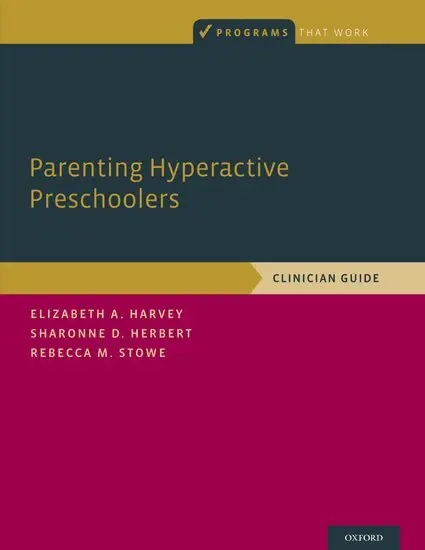
    Parenting Hyperactive Preschoolers

    Clinician Guide

    AvElizabeth Harvey,Sharonne D. Herbert

    Häftad, Engelska, 2015

    Del i serien Programs That Work

    1 514 kr

    Beställningsvara. Skickas inom 5-8 vardagar. Fri frakt över 249 kr.

    Beskrivning

    Parenting any preschooler can be challenging, but when hyperactivity and impulsivity are extreme, parenting requires extraordinary effort and skill. Parents need tools for helping their children behave in ways that are adaptive and socially appropriate and that will prevent their children from developing additional difficulties. Children who are hyperactive are at risk for developing emotional or behavioral disorders, and research suggests that helping parents to provide firm and consistent limits in a nurturing environment can significantly reduce hyperactivity and associated difficulties.Parenting Hyperactive Preschoolers provides a 14-week parent training and emotion socialization program that aims to help preschoolers who have symptoms of ADHD by teaching parents new ways of interacting with their children. This clinician's manual outlines each session and includes homework forms and handouts for parents and children. The treatment includes behavior management strategies that have been demonstrated to be effective for children with behavior problems and tailors these strategies to the specific needs of hyperactive preschoolers. Because children with ADHD have substantial difficulties with emotion regulation, this as an important component of the treatment protocol. The program is designed to be conducted in a group setting in 90 minute sessions, which also allows parents to receive support and input from each other, but can be easily adapted to sessions with individual parents.

    Produktinformation

    • Utgivningsdatum:2015-07-09
    • Mått:213 x 277 x 20 mm
    • Vikt:499 g
    • Format:Häftad
    • Språk:Engelska
    • Serie:Programs That Work
    • Antal sidor:248
    • Förlag:OUP USA
    • ISBN:9780190204631

    Utforska kategorier

    • Klinisk psykologi inom Medicin
    • Uppfostran inom Hälsa och familj
    • Socialt arbete och välfärd inom Samhälle och politik

    Mer om författaren

    Elizabeth A. Harvey, PhD, is a professor in the Psychology Department at the University of Massachusetts Amherst and a licensed psychologist. Dr. Harvey has spent the past two decades conducting research to advance our understanding of the early development of ADHD and related behavior problems in children.Sharonne D. Herbert, PhD, is a pediatric psychology post-doctoral fellow in the Pediatric Psychology Department at Children's Hospital of Orange County. Dr. Herbert is an early career psychologist who spent her graduate school years conducting applied research for families of hyperactive preschoolers.Rebecca M. Stowe, PhD, is a lecturer in the Psychology Department at the University of Massachusetts Amherst and a licensed psychologist. She is a clinical supervisor and senior clinician in the UMass Psychological Services Center. Dr. Stowe's clinical interests include parenting and young children with behavioral difficulties and ADHD.

    Recensioner i media

    "This is a much-needed addition to the clinical literature offering specific, easy-to-implement, detailed guidelines for implementing a behavioral parent training program for parents of preschoolers with ADHD. Unique to this program and of considerable importance is the focus of several sessions specifically addressing the problems of emotional dysregulation now recognized to be as central to ADHD as are the symptoms of inattention, hyperactivity, andimpulsivity. Clinical professionals will find here explicit instructions for implementing this evidence-based parent training program for families in their practices, while students in training in clinicalspecialties, such as child clinical psychology, child psychiatry, social work, special education, and related disciplines, will greatly benefit from acquiring this set of clinical skills." --Russell A. Barkley, Ph.D., Clinical Professor of Psychiatry and Pediatrics, Medical University of South Carolina

    Innehållsförteckning

    • Chapter 1 - Introductory Information for Clinicians ; Chapter 2 - Group Logistics ; Chapter 3 - Session 1: Introduction and Managing Hyperactive Behavior ; Chapter 4 - Session 2: Using Praise Effectively ; Chapter 5 - Session 3: Increasing Positive Interactions and Using Attention to Shape Children's Behavior ; Chapter 6 - Session 4: Setting Up an Effective Reward System ; Chapter 7 - Session 5: Using Commands to Guide Children's Behavior ; Chapter 8 - Session 6: Using Logical and Natural Consequences and Rewards ; Chapter 9 - Session 7: Using Time Out ; Chapter 10 - Session 8: Teaching Children Problem-Solving and Negotiating Skills ; Chapter 11 - Session 9: Learning About Emotion Development ; Chapter 12 - Session 10: Teaching Children to Identify and Label Emotions ; Chapter 13 - Session 11 & 12: Handling Children's Negative Emotion ; Chapter 14 - Session 13: Giving Children Opportunities to Experience Positive Emotion ; Chapter 15 - Session 14: Modeling Emotion Regulation and Expression ; Appendix - Parent Handouts and Worksheets