• Fri frakt över 249 kr
  • •
  • Snabba leveranser
  • •
  • Billiga böcker
Kundservice

Du är på sajten för privatpersoner.

Företag, bibliotek eller offentlig verksamhet?

Du handlar på classic.bokus.com, där alla dina funktioner finns intakta.
Till classic.bokus.com
Bokus logotyp. Gå till startsidan.
  • Erbjudanden
  • Nyheter
  • Student
  • Topplistor
  • Barn & ungdom
  • Bokus Play
  • E-böcker
  • Pocketböcker
  • Spel & pussel

10% studentrabatt med kod TERM26

Sidfot

Mina sidor

    Hjälp

    • Kundservice
    • Vanliga frågor och svar
    • Frakt och leverans
    • Retur vid ångerrätt
    • Reklamera vara
    • Betalning
    • Köpvillkor
    • Allmänna villkor
    • Information om webbplatsens tillgänglighet

    Om Bokus

    • Om oss
    • Pressrum
    • För studenter
    • För företag
    • För bibliotek och offentlig verksamhet
    • För leverantörer
    • Hållbarhet

    Populärt

    • Aktuella erbjudanden
    • Presentkort
    • Studentlitteratur
    • Nya böcker
    • Topplistor
    • Signerade böcker
    • Engelska böcker

    Inspiration

    • Boktips
    • BookTok
    • Populära bokserier
    • Barnbokskaraktärer
    • Populära författare
    Logotyp för Bokus
    Följ oss på Facebook (extern länk)Följ oss på Instagram (extern länk)Följ oss på YouTube (extern länk)Följ oss på TikTok (extern länk)
    bokus @ CookiesAnpassa cookiesIntegritetspolicyKöpvillkor
    Till Citymail hemsida (extern länk)Till Budbee hemsida (extern länk)Till Postnord hemsida (extern länk)Till Schenker hemsida (extern länk)Till Early Bird hemsida (extern länk)Till Walleys hemsida (extern länk)
    1. Juridik
    2. Särskilda rättsområden
    3. Författningsrätt och förvaltningsrätt
    4. Polisrätt och vapenlagar

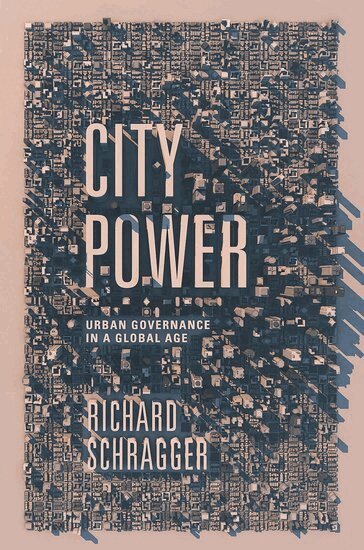
    City Power

    Urban Governance in a Global Age

    AvRichard C. Schragger

    Inbunden, Engelska, 2016

    490 kr

    Beställningsvara. Skickas inom 3-6 vardagar. Fri frakt över 249 kr.

    Beskrivning

    In 2013, Detroit filed the largest municipal bankruptcy in US history. That dubious honor marked the end of a long decline, during which city leaders slashed municipal costs and sought desperately to attract private investment. That same year, an economically resurgent New York City elected a progressive mayor intent on reducing income inequality and spurring more equitable economic development. Whether or not Mayor Bill de Blasio realizes his legislative vision, his agenda raises a fundamental question: can American cities govern or are they relatively powerless in the face of global capital? Both Detroit's demise and reigning theories of city agency suggest that in a world dominated by footloose transnational capital, cities have little capacity to effect social change. Cities have to "compete" with each other by offering favorable deals to corporations, reducing tax rates, limiting the public sector, and pursuing "business-friendly" policies. The notion that cities can do little but make themselves attractive to global capital also underscores a pervasive skepticism of municipal politics. Conventional economic wisdom asserts that cities cannot do very much. Conventional political wisdom asserts that cities should not do very much. In City Power, Richard C. Schragger challenges both these claims. He argues that cities can govern, but only if we let them. In the past decade, city leaders across America have raised the minimum wage, expanded social services, put conditions on incoming development, and otherwise engaged in social welfare redistribution. These cities have not suffered from capital flight. Indeed, many are experiencing an economic renaissance. Schragger argues that the range of city policies is not limited by the requirements of capital but instead by a constitutional structure that serves the interests of state and federal officials. Having weak cities is a political choice. City Power shows how cities can govern despite these constitutional limitations--and why we should want them to. It argues that in an era of global capital, municipal power is more relevant to citizen well-being, not less. Instead of treating the exercise of city power as marginal-ineffectual at best, corrupt and unattractive at worst--Schragger argues that the city should be at the very center of our economic, legal, and political thinking.

    Produktinformation

    • Utgivningsdatum:2016-11-24
    • Mått:163 x 236 x 30 mm
    • Vikt:590 g
    • Format:Inbunden
    • Språk:Engelska
    • Antal sidor:336
    • Förlag:OUP USA
    • ISBN:9780190246662

    Utforska kategorier

    • Polisrätt och vapenlagar inom Juridik
    • Regionalt styre och förvaltning inom Samhälle och politik
    • Digital ekonomi inom Ekonomi och Ledarskap

    Mer om författaren

    Perre Bowen Professor of Law and Barron F. Black Research Professor of Law, University of Virginia School of Law

    Recensioner i media

    I have been recommending this book to my friends working in community economic development, who are trying to understand what distinctive competency can mean in a global market. I have also been recommending it to students of urban theory, who share the pleasure of following along in the construction of theory-and the space to deconstruct it further. Researchers will find here a raft of theoretical propositions begging for empirical confirmation. And I recommend it to anyone else, for the enthralling fun of watching someone build something new and marvelous from a heap of simple pieces. After reading this book, you will no longer see things quite the same as you did before.

    Innehållsförteckning

    • Introduction: Cities, Capital, and Constitutions 1. What is the City?Building Blocks of Economic LifeByproducts and ProductsThe City as a ProcessConclusion: Mystery and Modesty 2. Decentralization and DevelopmentCompetition and GrowthThe Historic Vulnerability of City StatusWhat Does Decentralization Do?Conclusion: Freeing Cities from a False Constraint 3. Vertical Federalism: Making Weak CitiesLegal Autonomy and Political InfluenceFederalism and City PowerTechnocracy versus DemocracyConclusion: "Things Could be Worse. I Could be a Mayor." 4. Horizontal Federalism: Encouraging Footloose CapitalInter-Municipal Border ControlsSubsidizing Mobile CapitalConclusion: Economic [Dis]Integration 5. The City Redistributes I: PolicyThe Limits of City LimitsMandating a Living Wage Land-Use Unionism Regulating Through ContractConclusion: Exercising Urban Power 6. The City Redistributes II: PoliticsMunicipal Politics MattersImmobile CapitalTranslocal NetworksEconomic LocalismConclusion: The Re-emergence of the Regulatory City 7. Urban ResurgenceUrban Policy and Urban ResurgenceAssessing Economic Development StrategiesUncertainty and Economic DevelopmentConclusion: Back to Basics 8. Urban Crisis Debt and Discipline Of Bailouts and BankruptcyThe Politics of Municipal FailureConclusion: Marginal Cities Conclusion: Can Cities Govern? NotesAcknowledgementsIndex