• Fri frakt över 249 kr
  • •
  • Snabba leveranser
  • •
  • Billiga böcker
Kundservice

Du är på sajten för privatpersoner.

Företag, bibliotek eller offentlig verksamhet?

Du handlar på classic.bokus.com, där alla dina funktioner finns intakta.
Till classic.bokus.com
Bokus logotyp. Gå till startsidan.
  • Erbjudanden
  • Nyheter
  • Student
  • Topplistor
  • Barn & ungdom
  • Bokus Play
  • E-böcker
  • Pocketböcker
  • Spel & pussel

10% rabatt på allt med kod: NYSTART10 →

Sidfot

Mina sidor

    Hjälp

    • Kundservice
    • Vanliga frågor och svar
    • Frakt och leverans
    • Retur vid ångerrätt
    • Reklamera vara
    • Betalning
    • Köpvillkor
    • Allmänna villkor
    • Information om webbplatsens tillgänglighet

    Om Bokus

    • Om oss
    • Pressrum
    • För studenter
    • För företag
    • För bibliotek och offentlig verksamhet
    • För leverantörer
    • Hållbarhet

    Populärt

    • Aktuella erbjudanden
    • Presentkort
    • Studentlitteratur
    • Nya böcker
    • Topplistor
    • Signerade böcker
    • Engelska böcker

    Inspiration

    • Boktips
    • BookTok
    • Populära bokserier
    • Barnbokskaraktärer
    • Populära författare
    Logotyp för Bokus
    Följ oss på Facebook (extern länk)Följ oss på Instagram (extern länk)Följ oss på YouTube (extern länk)Följ oss på TikTok (extern länk)
    bokus @ CookiesAnpassa cookiesIntegritetspolicyKöpvillkor
    Till Citymail hemsida (extern länk)Till Budbee hemsida (extern länk)Till Postnord hemsida (extern länk)Till Schenker hemsida (extern länk)Till Early Bird hemsida (extern länk)Till Walleys hemsida (extern länk)
    1. Skönlitteratur
    2. Litteraturvetenskap
    3. Litteraturvetenskap

    The Theater of Experiment

    Staging Natural Philosophy in Eighteenth-Century Britain

    AvAl Coppola

    Inbunden, Engelska, 2016

    1 635 kr

    Beställningsvara. Skickas inom 5-8 vardagar. Fri frakt över 249 kr.

    Beskrivning

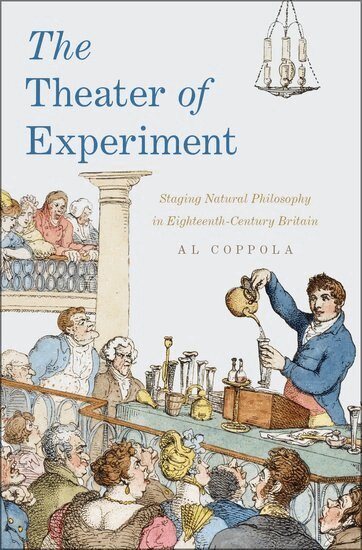
    The first book-length study of the relationship between science and theater during the long eighteenth century in Britain, The Theater of Experiment explores the crucial role of spectacle in the establishment of modern science by analyzing how eighteenth-century science was "staged" in a double sense. On the one hand, this study analyzes science in performance: the way that science and scientists were made a public spectacle in comedies, farces, and pantomimes for purposes that could range from the satiric to the pedagogic to the hagiographic. But this book also considers the way in which these plays laid bare science as performance: that is, the way that eighteenth-century science was itself a kind of performing art, subject to regimes of stagecraft that traversed the laboratory, the lecture hall, the anatomy theater, and the public stage. Not only did the representation of natural philosophy in eighteenth-century plays like Thomas Shadwell's Virtuoso, Aphra Behn's The Emperor of the Moon, Susanna Centlivre's The Basset Table, and John Rich's Necromancer, or Harelequin Doctor Faustus, influence contemporary debates over the role that experimental science was to play public life, the theater shaped the very form that science itself was to take. By disciplining, and ultimately helping to legitimate, experimental philosophy, the eighteenth-century stage helped to naturalize an epistemology based on self-evident, decontextualized facts that might speak for themselves. In this, the stage and the lab jointly fostered an Enlightenment culture of spectacle that transformed the conditions necessary for the production and dissemination of scientific knowledge. Precisely because Enlightenment public science initiatives, taking their cue from the public stages, came to embrace the stagecraft and spectacle that Restoration natural philosophy sought to repress from the scene of experimental knowledge production, eighteenth-century science organized itself around not the sober, masculine "modest witness" of experiment but the sentimental, feminized, eager observer of scientific performance.

    Produktinformation

    • Utgivningsdatum:2016-10-06
    • Mått:155 x 236 x 22 mm
    • Vikt:544 g
    • Format:Inbunden
    • Språk:Engelska
    • Antal sidor:278
    • Förlag:OUP USA
    • ISBN:9780190269715

    Utforska kategorier

    • Litteraturvetenskap inom Skönlitteratur
    • Teater inom Kultur
    • Naturvetenskapens historia inom Naturvetenskap och teknik

    Mer om författaren

    Al Coppola is Assistant Professor of English at John Jay College of Criminal Justice at the City University of New York.

    Recensioner i media

    Coppola's deeply researched book brings to the table subtle readings of theatrical texts that historians of science have not previously considered relevant to their domain. For this, all scholars of the period should be grateful. ...Al Coppola has inspired a new round of research in this field and exemplified the best that can be hoped for in terms of its quality.

    Innehållsförteckning

    • Introduction Science as Performance; Science in Performance Against the Virtuosi A Matter of Concern Prologue: "Bare Unfinish'd Histories": The Rehearsal of Natural Philosophy Buckingham amid the Virtuosi Bacon, Dryden, Sprat and the Labyrinth of Induction 1. The Spectacle of Experiment and the Politics of Virtuoso Satire in the 1670s The Modest Witness as Eager Spectator: Boyle in the Theater of Experiment The Virtuoso Discovered: Shadwell, Hooke and the Royal Society The Virtuoso Beyond Science: Bad Men and Bad Manners The Virtuoso as Reactionary: D'Urfey's Madam Fickle Virtuoso Satire and the Purification of Natural Philosophy 2. Retraining the Virtuoso's Gaze: The Emperor of the Moon and the Spectacles of Science and Politics The Virtuoso's Gaze Reformed: Tory Politics and Natural Philosophy "Hold Doting Fool, put on your Spectacles": The Show of Politics in the 1680s Spectacle against Enthusiasm: Behn's Emperor and the Exclusion Crisis Dryden's Albion to the Moon: Political and Theatrical Pressures in 1687 3. Physiology, Commerce and Comedy: Three Hours after Marriage and A Bold Stroke for a Wife The Virtuoso Vindicated From the Old Physiology to the New Psychology Soft Comedy and Whig Science Scriblerian Lampoon as Humoral Purge Centlivre's Humorous Circulation 4. Harlequin Newton: Faustus Pantomimes and Public Science in the 1720s "To Gaze Surpriz'd": The Panorama of Science, Magic and Pantomime "Surprizing Phaenomena" and the Attraction of Popular Newtonianism "One Wide Conflagration": The Pleasures of Harlequin Faustus Defoe, Conjuring and the Science of the Pantomimes The Force Field of Public Science 5. Modest Witnesses and Eager Spectators: Engendering Enlightenment Science "This Woman-hood of Yours Seems to be Mightily in the Way Appropriating Moliere's Learned Ladies Cibber, Centlivre and The Vanishing Virtuosa Enlightenment Periodicals and Science "for the Ladies" Embodying the Eager Spectator Epilogue: Rehearsing Spectacle From Spectacles to SpectatorsReflexive Empiricism and Fielding's Spectators Bibliography