• Fri frakt över 249 kr
  • •
  • Snabba leveranser
  • •
  • Billiga böcker
Kundservice

Du är på sajten för privatpersoner.

Företag, bibliotek eller offentlig verksamhet?

Du handlar på classic.bokus.com, där alla dina funktioner finns intakta.
Till classic.bokus.com
Bokus logotyp. Gå till startsidan.
  • Erbjudanden
  • Nyheter
  • Student
  • Topplistor
  • Barn & ungdom
  • Bokus Play
  • E-böcker
  • Pocketböcker
  • Spel & pussel

10% rabatt på allt med kod NYSTART10 →

Sidfot

Mina sidor

    Hjälp

    • Kundservice
    • Vanliga frågor och svar
    • Frakt och leverans
    • Retur vid ångerrätt
    • Reklamera vara
    • Betalning
    • Köpvillkor
    • Allmänna villkor
    • Information om webbplatsens tillgänglighet

    Om Bokus

    • Om oss
    • Pressrum
    • För studenter
    • För företag
    • För bibliotek och offentlig verksamhet
    • För leverantörer
    • Hållbarhet

    Populärt

    • Aktuella erbjudanden
    • Presentkort
    • Studentlitteratur
    • Nya böcker
    • Topplistor
    • Signerade böcker
    • Engelska böcker

    Inspiration

    • Boktips
    • BookTok
    • Populära bokserier
    • Barnbokskaraktärer
    • Populära författare
    Logotyp för Bokus
    Följ oss på Facebook (extern länk)Följ oss på Instagram (extern länk)Följ oss på YouTube (extern länk)Följ oss på TikTok (extern länk)
    bokus @ CookiesAnpassa cookiesIntegritetspolicyKöpvillkor
    Till Citymail hemsida (extern länk)Till Budbee hemsida (extern länk)Till Postnord hemsida (extern länk)Till Schenker hemsida (extern länk)Till Early Bird hemsida (extern länk)Till Walleys hemsida (extern länk)
    1. Naturvetenskap och teknik
    2. Matematik och naturvetenskap
    3. Biologi
    4. Biovetenskap

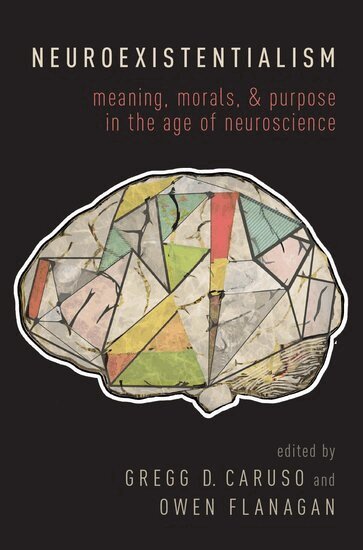
    Neuroexistentialism

    Meaning, Morals, and Purpose in the Age of Neuroscience

    AvGregg Caruso,Owen Flanagan

    Häftad, Engelska, 2018

    796 kr

    Beställningsvara. Skickas inom 5-8 vardagar. Fri frakt över 249 kr.

    Beskrivning

    Existentialisms arise when the foundations of being, such as meaning, morals, and purpose come under assault. In the first-wave of existentialism, writings typified by Kierkegaard, Dostoevsky, and Nietzsche concerned the increasingly apparent inability of religion, and religious tradition, to support a foundation of being. Second-wave existentialism, personified philosophically by Sartre, Camus, and de Beauvoir, developed in response to similar realizations about the overly optimistic Enlightenment vision of reason and the common good. The third-wave of existentialism, a new existentialism, developed in response to advances in the neurosciences that threaten the last vestiges of an immaterial soul or self. Given the increasing explanatory and therapeutic power of neuroscience, the mind no longer stands apart from the world to serve as a foundation of meaning. This produces foundational anxiety. In Neuroexistentialism, a group of contributors that includes some of the world's leading philosophers, neuroscientists, cognitive scientists, and legal scholars, explores the anxiety caused by third-wave existentialism and possible responses to it. Together, these essays tackle our neuroexistentialist predicament, and explore what the mind sciences can tell us about morality, love, emotion, autonomy, consciousness, selfhood, free will, moral responsibility, law, the nature of criminal punishment, meaning in life, and purpose.

    Produktinformation

    • Utgivningsdatum:2018-03-29
    • Mått:231 x 155 x 25 mm
    • Vikt:567 g
    • Format:Häftad
    • Språk:Engelska
    • Antal sidor:392
    • Förlag:OUP USA
    • ISBN:9780190460730

    Utforska kategorier

    • Biovetenskap inom Naturvetenskap och teknik
    • Filosofiska discipliner inom Filosofi och religion
    • Naturvetenskapens filosofi inom Naturvetenskap och teknik

    Mer om författaren

    Gregg D. Caruso is Associate Professor of Philosophy at SUNY CorningOwen Flanagan is James B. Duke Professor of Philosophy at Duke University

    Recensioner i media

    Caruso and Flanagan's edited collection Neuroexistentialism provides a carefully considered selection of writings that discuss a broad range of themes pertaining to a contemporary discourse that is both fascinating, thought provoking and complex.

    Innehållsförteckning

    • PrefaceContributor List Chapter 1: Neuroexistentialism: Third-Wave Existentialism Owen Flanagan and Gregg D. Caruso Section I. Morality, Love, and EmotionChapter 2: The Impact of Social Neuroscience on Moral Philosophy Patricia Smith Churchland Chapter 3: All You Need is Love(s): Exploring the Biological Platform of Morality Maureen Sie Chapter 4: Does Neuroscience Undermine Morality? Paul Henne and Walter Sinnott-ArmstrongChapter 5: The Neuroscience of Purpose, Meaning, and Morals Edmund T. RollsChapter 6: Moral Sedimentation Jesse Prinz Section II. Autonomy, Consciousness, and the SelfChapter 7: Choices Without Choosers: Towards a Neuropsychologically Plausible Existentialism Neil Levy Chapter 8: Relational Authenticity Shaun Gallagher, Ben Morgan, and Naomi Rokotnitz Chapter 9: Behavior Control, Meaning, and Neuroscience Walter GlannonChapter 10: Two Types of Libertarian Free Will are Realized in the Human Brain Peter U. Tse Section III. Free Will, Moral Responsibility, and Meaning in LifeChapter 11: Hard-Incompatibilist Existentialism: Neuroscience, Punishment, and Meaning in Life Derk Pereboom and Gregg D. CarusoChapter 12: On Determinism and Human Responsibility Michael S. Gazzaniga Chapter 13:Free Will Skepticism, Freedom, and Criminal Behavior Farah Focquaert, Andrea L. Glenn, Adrian RaineChapter 14: Your Brain as the Source of Free Will Worth Wanting: Understanding Free Will in the Age of Neuroscience Eddy Nahmias Chapter 15: Humility, Free Will Beliefs, and Existential Angst: How We Got from a Preliminary Investigation to a Cautionary Tale Thomas Nadelhoffer and Jennifer Cole WrightChapter 16: Purpose, Freedom, and the Laws of Nature Sean M. Carroll Section IV. Neuroscience and the LawChapter 17: The Neuroscience of Criminality and Our Sense of Justice: An Analysis of Recent Appellate Decisions in Criminal CasesValerie Hardcastle Chapter 18:The Neuroscientific Non-Challenge to Meaning, Morals and Purpose Stephen J. Morse