• Fri frakt över 249 kr
  • •
  • Snabba leveranser
  • •
  • Billiga böcker
Kundservice

Du är på sajten för privatpersoner.

Företag, bibliotek eller offentlig verksamhet?

Du handlar på classic.bokus.com, där alla dina funktioner finns intakta.
Till classic.bokus.com
Bokus logotyp. Gå till startsidan.
  • Erbjudanden
  • Nyheter
  • Student
  • Topplistor
  • Barn & ungdom
  • Bokus Play
  • E-böcker
  • Pocketböcker
  • Spel & pussel

10% rabatt på allt med kod: NYSTART10 →

Sidfot

Mina sidor

    Hjälp

    • Kundservice
    • Vanliga frågor och svar
    • Frakt och leverans
    • Retur vid ångerrätt
    • Reklamera vara
    • Betalning
    • Köpvillkor
    • Allmänna villkor
    • Information om webbplatsens tillgänglighet

    Om Bokus

    • Om oss
    • Pressrum
    • För studenter
    • För företag
    • För bibliotek och offentlig verksamhet
    • För leverantörer
    • Hållbarhet

    Populärt

    • Aktuella erbjudanden
    • Presentkort
    • Studentlitteratur
    • Nya böcker
    • Topplistor
    • Signerade böcker
    • Engelska böcker

    Inspiration

    • Boktips
    • BookTok
    • Populära bokserier
    • Barnbokskaraktärer
    • Populära författare
    Logotyp för Bokus
    Följ oss på Facebook (extern länk)Följ oss på Instagram (extern länk)Följ oss på YouTube (extern länk)Följ oss på TikTok (extern länk)
    bokus @ CookiesAnpassa cookiesIntegritetspolicyKöpvillkor
    Till Citymail hemsida (extern länk)Till Budbee hemsida (extern länk)Till Postnord hemsida (extern länk)Till Schenker hemsida (extern länk)Till Early Bird hemsida (extern länk)Till Walleys hemsida (extern länk)
    1. Skönlitteratur
    2. Litteraturvetenskap
    3. Litteraturvetenskap

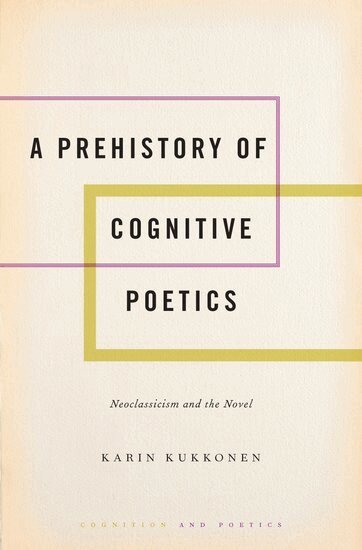
    A Prehistory of Cognitive Poetics

    Neoclassicism and the Novel

    AvKarin Kukkonen

    Inbunden, Engelska, 2017

    Del i serien Cognition and Poetics

    2 023 kr

    Beställningsvara. Skickas inom 5-8 vardagar. Fri frakt över 249 kr.

    Beskrivning

    This study provides an introduction to the neoclassical debates around how literature is shaped in concert with the thinking and feeling human mind. Three key rules of neoclassicism, namely, poetic justice (the rewards and punishments of characters in the plot), the unities (the coherence of the fictional world and its extensions through the imagination) and decorum (the inferential connections between characters and their likely actions), are reconsidered in light of social cognition, embodied cognition and probabilistic, predictive cognition. The meeting between neoclassical criticism and today's research psychology, neurology and philosophy of mind yields a new perspective for cognitive literary study.Neoclassicism has a crucial contribution to make to current debates around the role of literature in cultural and cognition. Literary critics writing at the time of the scientific revolution developed a perspective on literature the question of how literature engages minds and bodies as its central concern. A Prehistory of Cognitive Poetics traces the cognitive dimension of these critical debates in seventeenth- and eighteenth-century Britain and puts them into conversation with today's cognitive approaches to literature.Neoclassical theory is then connected to the praxis of eighteenth-century writers in a series of case studies that trace how these principles shaped the emerging narrative form of the novel. The continuing relevance of neoclassicism also shows itself in the rise of the novel, as A Prehistory of Cognitive Poetics illustrates through examples including Pamela, Tom Jones and the Gothic novel.

    Produktinformation

    • Utgivningsdatum:2017-04-27
    • Mått:239 x 163 x 27 mm
    • Vikt:536 g
    • Format:Inbunden
    • Språk:Engelska
    • Serie:Cognition and Poetics
    • Antal sidor:288
    • Förlag:OUP USA
    • ISBN:9780190634766

    Utforska kategorier

    • Litteraturvetenskap inom Skönlitteratur
    • Litteraturteori inom Skönlitteratur

    Mer om författaren

    Karin Kukkonen is Professor in Comparative Literature at the University of Oslo. She is a specialist in cognitive approaches to literature and narratology. She has published on comics and graphic novels (Contemporary Comics Storytelling, 2013), embodied and probabilistic cognitive approaches to literary narrative, as well as on the eighteenth-century novel. From 2010-2013, she was a Balzan Postdoctoral Research Fellow at St John's College, University of Oxford.

    Recensioner i media

    Karin Kukkonen's important book proposes several innovative theses. It argues that European neoclassicist literary theory was an early incarnation of present-day cognitive poetics, that the rules governing a given literary genre during a definite historical period, in this case seventeenthand eighteenth-century neoclassicist poetics of drama, were equally applied to other genres, and that, consequently, the eighteenth-century English literary wave called "the rise of the novel" was deeply indebted to the neoclassicist views on literature ... To conclude, Kukkonen's book represents the promising debut of a very talented young scholar and will certainly enjoy the success it deserves.

    Innehållsförteckning

    • AcknowledgementsPreface Chapter 1: Neoclassical Poetics and the Rise of the Novel1.1 Beating the Bounds of the Rules in Incognita1.2 Manners, Passions, Unities1.3 Neoclassicism and the Sciences Chapter 2. The Situational Logic of Vraisemblance2.1. Cognitive Moves2.2. Successful Solutions2.3. Vraisemblance Now I: Poetic Justice Chapter 3: Samuel Richardson and the Project of Poetic Justice3.1. Virtue Rewarded3.2. Altruistic Punishers in B-Hall3.3 Pamela - Shamela - Anti-Pamela Chapter 4: The Trials of Clarissa4.1 Editing the Social Contract4.2 Lovelace's Happy Endings4.3. Poetic Justice at the Limits Chapter 5: Ann Radcliffe and the Abdication of the Superpunisher5.1 Comeuppance Clockworks5.2 Enter the Uncanny5.3 The Supernatural and Superpunishers II: The Unities Chapter 6: The Best Possible Storyworld: Johnson's Rasselas6.1 Rasselas, the Imagination and the Unities6.2 Event Cognition, Spatialization and the Conceptual Shape of the Storyworld6.3 Closure in Abissinia Chapter 7: Utopian Reasoning in Mercier's L'An 2440 and Madden's Memoirs of the Twentieth Century 7.1 Poetics and Politics 7.2 The Cognitive Estrangements of Utopia 7.3 The Idea of Progress and Intertemporal Bargaining in Utopian Fiction 7.4 A Unified Utopia Chapter 8: The Dramatic Passages of The Castle of Otranto 8.1. Where the Bodies Are 8.2 The Return of Racine 8.3 Embodied Experience in the Novel III: Decorum Chapter 9. Henry Fielding's Probability Design 9.1 9.2 Decorum and Surprise 9.3 A Hero Chapter 10. The Female Quixote and the Probability of Romance 10.1. The Querelle de Miss Groves 10.2 Educating Readers 10.3 Arabella's Wager Chapter 11. John Cleland vs. the Novel 11.1. Building a Social World in Mrs Mercier's Academy 11.2. The Predictable Novel 11.3. Love, Duty and the End of Curiosity Conclusion: Explorations in the Prehistory of Cognitive Poetics Bibliography