• Fri frakt över 249 kr
  • •
  • Snabba leveranser
  • •
  • Billiga böcker
Kundservice

Du är på sajten för privatpersoner.

Företag, bibliotek eller offentlig verksamhet?

Du handlar på classic.bokus.com, där alla dina funktioner finns intakta.
Till classic.bokus.com
Bokus logotyp. Gå till startsidan.
  • Erbjudanden
  • Nyheter
  • Student
  • Topplistor
  • Barn & ungdom
  • Bokus Play
  • E-böcker
  • Pocketböcker
  • Spel & pussel

10% rabatt på allt med kod: NYSTART10 →

Sidfot

Mina sidor

    Hjälp

    • Kundservice
    • Vanliga frågor och svar
    • Frakt och leverans
    • Retur vid ångerrätt
    • Reklamera vara
    • Betalning
    • Köpvillkor
    • Allmänna villkor
    • Information om webbplatsens tillgänglighet

    Om Bokus

    • Om oss
    • Pressrum
    • För studenter
    • För företag
    • För bibliotek och offentlig verksamhet
    • För leverantörer
    • Hållbarhet

    Populärt

    • Aktuella erbjudanden
    • Presentkort
    • Studentlitteratur
    • Nya böcker
    • Topplistor
    • Signerade böcker
    • Engelska böcker

    Inspiration

    • Boktips
    • BookTok
    • Populära bokserier
    • Barnbokskaraktärer
    • Populära författare
    Logotyp för Bokus
    Följ oss på Facebook (extern länk)Följ oss på Instagram (extern länk)Följ oss på YouTube (extern länk)Följ oss på TikTok (extern länk)
    bokus @ CookiesAnpassa cookiesIntegritetspolicyKöpvillkor
    Till Citymail hemsida (extern länk)Till Budbee hemsida (extern länk)Till Postnord hemsida (extern länk)Till Schenker hemsida (extern länk)Till Early Bird hemsida (extern länk)Till Walleys hemsida (extern länk)
    1. Medicin
    2. Medicin: icke kliniska discipliner
    3. Fysiologi

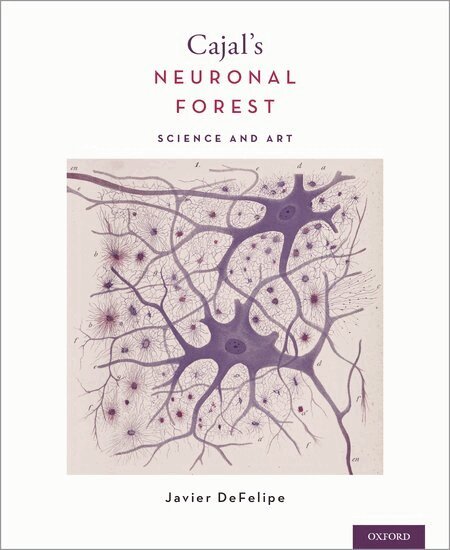
    Cajal's Neuronal Forest

    Science and Art

    AvJavier DeFelipe

    Inbunden, Engelska, 2017

    1 935 kr

    Beställningsvara. Skickas inom 5-8 vardagar. Fri frakt över 249 kr.

    Beskrivning

    Cajal's Neuronal Forest: Science and Art continues the tradition set forth by its sister volume Cajal's Butterflies of the Soul (OUP, 2009). This new collection contains hundreds of beautiful rarely-seen-before figures produced throughout the nineteenth century and the beginning of the twentieth century by famed father-of-modern-neuroscience Santiago Ramón y Cajal (1852-1934) and his contemporaries. Cajal was captivated by the beautiful shapes of the cells of the nervous system. He and his fellow scientists saw neurons as trees and glial cells as bushes. Given their high density and arrangement, neurons and glial resembled a thick forest, a seemingly impenetrable terrain of interacting cells mediating cognition and behavior. In unraveling the mysteries of the brain, these researchers encountered an almost infinite number of cellular forms with an extraordinary beauty, which they could not help but put pen to paper, allowing them to discover a new artistic world- the neuronal forest- that gave free rein not only to their imagination, but to a new way of viewing the brain as well. This book has been divided into two parts. The first focuses on the scientific atmosphere in Cajal's times, on the history of the neuron, and the anatomical challenge posed in studying neuronal connections. It also delves into the artistic skills of Cajal and other important pioneers in neuroscience and how the neuronal forests have served as an unlimited source of artistic inspiration. The second consists of 275 original drawings by Cajal. All were published over the course of his scientific career and cover virtually all of his research fields of interest, including the spinal cord, the optic lobe and retina, cerebral cortex, and many other regions of the brain. Cajal's Neuronal Forest: Science and Art is a testament to the natural beauty found in science. Despite the common misconception that the drawings of Cajal and other scientists of the time are pieces of art, these drawings are in fact copies of histological preparations and contributed greatly to the discoveries made in the field of neuroscience. This book is a gem in any library, whether serving as a medical history or a gallery of stunning sketches.

    Produktinformation

    • Utgivningsdatum:2017-12-21
    • Mått:229 x 282 x 30 mm
    • Vikt:2 059 g
    • Format:Inbunden
    • Språk:Engelska
    • Antal sidor:512
    • Förlag:OUP USA
    • ISBN:9780190842833

    Utforska kategorier

    • Fysiologi inom Medicin
    • Biovetenskap inom Naturvetenskap och teknik
    • Teckningskonst inom Kultur

    Mer om författaren

    Javier DeFelipe is a Research Professor at the Instituto Cajal (CSIC), Madrid, Spain. His main area of expertise lies in the microanatomy of the cerebral cortex. The frequent citation of his work in the scientific literature reflects the variety and excellence of his numerous contributions. Prof. DeFelipe is also fascinated by the link between the study of the brain and art and has been involved in organizing and curating numerous exhibitions around the world. He has written several articles, chapters and books on both this subject and the influence of Santiago Ramón y Cajal in modern neuroscience.

    Recensioner i media

    This beautiful book would grace any coffee table, and grace a neurologists coffee table most of all. Its illustrations are truly captivating, and the reproductions of Ramon y Cajals work can be appreciated all the more because they are presented alongside many other historic drawings, as well as photographs and artworks.

    Innehållsförteckning

    • Table of ContentsForeword Ramon Areces FoundationForeword Spanish Foundation to Science and Technology Foreword Tatiana Perez De Guzman El Bueno FoundationForeword by Pasko Rakic Preface Part I: Introduction Introductory RemarksA Note on Microphotography and Illustrations of Histological PreparationsThe Anatomical Challenge of the Study of Neuronal Connections Section A: The Scientific Atmosphere in Cajal's TimesThe Discovery of the Reazione Nera: Commencing the Detailed Study of the Structure of the Nervous SystemThe Discovery of the Golgi Method by Cajal and the Influence of Maestre De San Juan and Simarro Drawing as a Tool to Illustrate Microscopic ImagesDifferences in the Interpretation of the Microscopic World Neuron Doctrine versus the Reticular TheoryThe Reticular Theory and Precursors of the Neuron TheoryGolgi, Cajal and the Nobel Prize Lectures in 1906The Law of Dynamic Polarization of Nerve Cells Introduction of the Term "Neuron" and the Renascence of ReticularismConfirmation of the Free Ending of the Nervous Processes: The Discoveryof the Synaptic CleftNeoreticularism and the Neuron Doctrine in the Present Day Dendritic Spines: True Anatomical Structures versus ArtifactDendritic Spines and the Methylene Blue MethodOther Interpretations of the Dendritic SpinesDendritic Spines and Cajal's 'Final Lesson' Confirmation that Dendritic Spines are Postsynaptic StructuresCombination of the Golgi Method and Electron MicroscopyDendritic Spines: Their Features and Role as a Key Component in Microcircuits Section B: The Golden Era for Artistic Creativity in NeuroscienceArtistic Skills and Emotions of Cajal and Other Early Neuroanatomists Verification of the Drawings of Cajal and Other ScientistsThe Neuronal Forest as a Source of Artistic InspirationSummary, Final Considerations and Concluding Remarks Notes Bibliography Part II: Gallery of Cajal's DrawingsSection A: Spinal CordSection B: Medulla OblongataSection C: Cerebellum and Deep Cerebellar NucleiSection D: Midbrain and ThalamusSection E: Optic Lobe of Lower Vertebrates Section F: Retina of Vertebrates Section G: Cerebral Cortex and Olfactory ApparatusSection H: Degeneration and Regeneration of the Nervous SystemSection I: Retina and Optic Centers of Cephalopods Section J: Insect Brain: Visual SystemSection K: Supplementary Figures Author Index