Javier DeFelipe - Böcker
Visar alla böcker från författaren Javier DeFelipe. Handla med fri frakt och snabb leverans.
5 produkter
5 produkter
1 110 kr
Skickas inom 5-8 vardagar
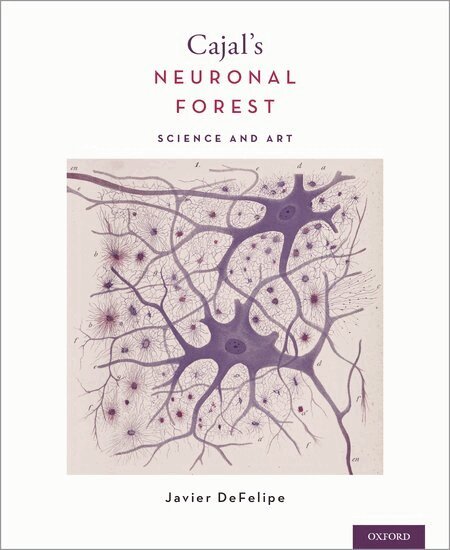
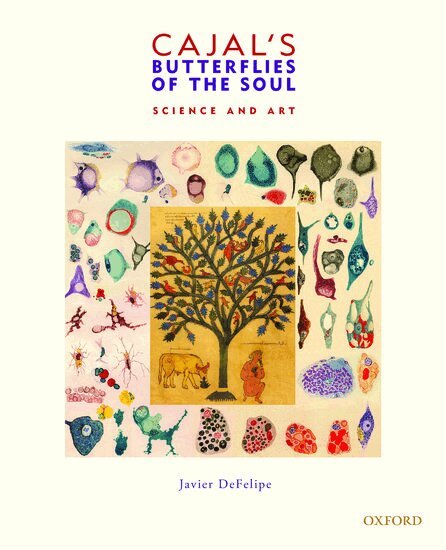
Cajal's Neuronal Forest: Science and Art continues the tradition set forth by its sister volume Cajal's Butterflies of the Soul (OUP, 2009). This new collection contains hundreds of beautiful rarely-seen-before figures produced throughout the nineteenth century and the beginning of the twentieth century by famed father-of-modern-neuroscience Santiago Ramón y Cajal (1852-1934) and his contemporaries. Cajal was captivated by the beautiful shapes of the cells of the nervous system. He and his fellow scientists saw neurons as trees and glial cells as bushes. Given their high density and arrangement, neurons and glial resembled a thick forest, a seemingly impenetrable terrain of interacting cells mediating cognition and behavior. In unraveling the mysteries of the brain, these researchers encountered an almost infinite number of cellular forms with an extraordinary beauty, which they could not help but put pen to paper, allowing them to discover a new artistic world- the neuronal forest- that gave free rein not only to their imagination, but to a new way of viewing the brain as well. This book has been divided into two parts. The first focuses on the scientific atmosphere in Cajal's times, on the history of the neuron, and the anatomical challenge posed in studying neuronal connections. It also delves into the artistic skills of Cajal and other important pioneers in neuroscience and how the neuronal forests have served as an unlimited source of artistic inspiration. The second consists of 275 original drawings by Cajal. All were published over the course of his scientific career and cover virtually all of his research fields of interest, including the spinal cord, the optic lobe and retina, cerebral cortex, and many other regions of the brain. Cajal's Neuronal Forest: Science and Art is a testament to the natural beauty found in science. Despite the common misconception that the drawings of Cajal and other scientists of the time are pieces of art, these drawings are in fact copies of histological preparations and contributed greatly to the discoveries made in the field of neuroscience. This book is a gem in any library, whether serving as a medical history or a gallery of stunning sketches.
1 236 kr
Skickas inom 7-10 vardagar
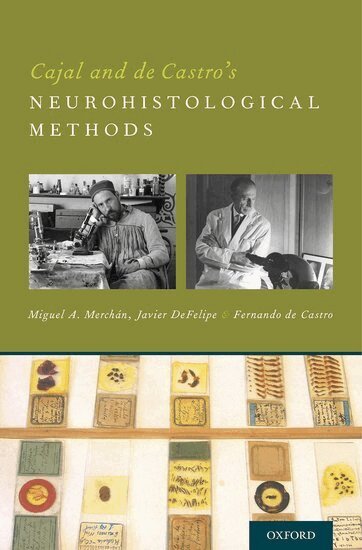
Cajal and De Castro's Neurohistological Methods provides the first English translation of Fernando de Castro's 1933 publication "Elementos de Técnica Micrográfica del Sistema Nervioso ". A student of the famed founder of modern neuroscience, with Santiago Ramon y Cajal also serving as the Editor of the original text, Fernando de Castro recorded all the various protocols that had been used in his laboratory by his students in order to provide a manual of histological procedures specifically designed for the fine structure of the nervous system. This renowned text is virtually unknown in its original form outside the Spanish-speaking world. In a text that reads like a mix between a recipe book and an alchemical manuscript, authors Miguel Merchan, Javier DeFelipe, and Fernando de Castro (descendant of the 1933 publication's author) put the new translation into historical context. This book is also beautifully illustrated with plates of histological techniques, provides a quick guide to new vocabulary, and the author's notes on the translated text. This pivotal work of classic neurohistological techniques is a wonderful addition to the Cajal library.
Del 1 - History of Neuroscience
Cajal on the Cerebral Cortex
An Annotated Translation of the Complete Writings
Inbunden, Engelska, 1989
1 464 kr
Skickas inom 7-10 vardagar
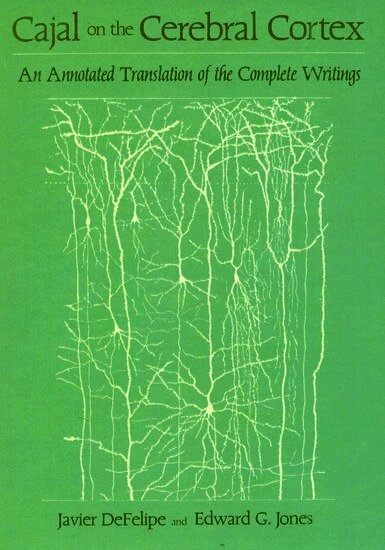
This is the first English-language publication of the complete works of the great Spanish neurohistologist, Santiago Ramon y Cajal, on the cerebral cortex. The new translations include all Cajal's very early contributions on the cortex of small mammals, relevant chapters from his definitive textbook, and all his great works on the human cerebral cortex made at the peak of his career. The book also presents Cajal's surveys of cortical structure, which date from his later years. The book is extensively annotated, and the authors have verified and completed all Cajal's references. Special introductory chapters review the state of knowledge during each period covered, and the work concludes with an extensive essay on modern cortical neurohistology in which the quality and lasting significance of Cajal's contributions are highlighted.
Del 5 - History of Neuroscience
Cajal's Degeneration and Regeneration of the Nervous System
Inbunden, Engelska, 1991
3 918 kr
Skickas inom 5-8 vardagar
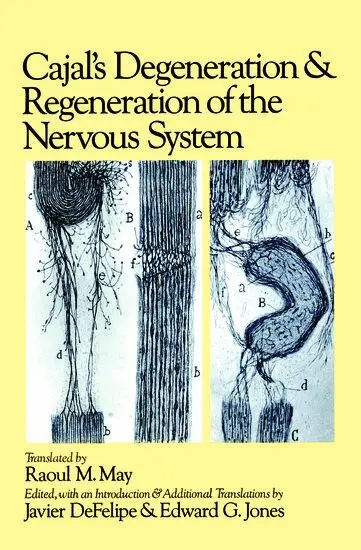
This book is a reprint of an English translation of Cajal's original work, with abundant notes and commentaries by the editor. Cajal's fundamental contributions to neuroscience continue to be important today and this account accurately details his ideas and data. It also provides readers with the opportunity to learn what he thought about his research career and the significance of his observations. Excerpts from Tello's memorial lectures also provide a contemporary view of Cajal's work.
1 594 kr
Skickas inom 5-8 vardagar
This book contains a large collection of beautiful figures produced throughout the nineteenth century and the beginning of the twentieth century and that represent some characteristic examples of the early days of research in neuroscience. The main aim of this work is to demonstrate to the general public that the study of the nervous system is not only important for the many obvious reasons related to brain function in both health and disease, but also for the unexpected natural beauty that it beholds. This beauty has been discovered thanks to the techniques used to visualize the microscopic structure of the brain, a true forest of colourful and florid neural cells. As illustrated by his marvellous drawings, the studies of Santiago Ramón y Cajal (1852-1934) no doubt contributed more than those of any other researcher at the time to the growth of modern neuroscience. Thus, we have honored his name in the title of this book, even though the figures contained in the main body of the book are from 91 authors. Looking at the illustrations in this book the readers will not only marvel at Cajal's drawings but they will also find that many of the other early researchers that studied the nervous system were also true artists, of considerable talent and aesthetic sensibility. Thus, the present book contains numerous drawings of some of the most important pioneers in neuroscience, including Deiters, Kölliker, Meynert, Ranvier, Golgi, Retzius, Nissl, Dogiel, Alzheimer, del Río-Hortega and de Castro.The book has been divided into two Parts, Part I and II, the latter containing the main body of the work. Part I contains introductory information that will give readers unfamiliar with the nervous system a better understanding of the importance of the scientific illustrations produced in those days. The second part of the book, Part II, contains the collection of 282 figures with the intention of transforming the reader into an observer. These illustrations have been divided in three main categories: Section I, The Benedictine period: The early days; Section II, The black period: Neurons, glia and organization of the nervous system; Section III, The colourful period: internal structure and chemistry of the cells.This book will be of general interest, not only due to the captivating aesthetic appeal of the illustrations but also because they represent the bases of our current understanding of the nervous system. The reader will find that many of the illustrations can be considered to belong to different artistic movements, such as modernism, surrealism, cubism, abstract art or impressionism. Indeed, these illustrations may also provide artists with a source of inspiration since they reveal a fantastic and virtually unknown world of forms, a microuniverse with an aura of mystery.