• Fri frakt över 249 kr
  • •
  • Snabba leveranser
  • •
  • Billiga böcker
Kundservice

Du är på sajten för privatpersoner.

Företag, bibliotek eller offentlig verksamhet?

Du handlar på classic.bokus.com, där alla dina funktioner finns intakta.
Till classic.bokus.com
Bokus logotyp. Gå till startsidan.
  • Erbjudanden
  • Nyheter
  • Student
  • Topplistor
  • Barn & ungdom
  • Bokus Play
  • E-böcker
  • Pocketböcker
  • Spel & pussel

10% rabatt på allt med kod: NYSTART10 →

Sidfot

Mina sidor

    Hjälp

    • Kundservice
    • Vanliga frågor och svar
    • Frakt och leverans
    • Retur vid ångerrätt
    • Reklamera vara
    • Betalning
    • Köpvillkor
    • Allmänna villkor
    • Information om webbplatsens tillgänglighet

    Om Bokus

    • Om oss
    • Pressrum
    • För studenter
    • För företag
    • För bibliotek och offentlig verksamhet
    • För leverantörer
    • Hållbarhet

    Populärt

    • Aktuella erbjudanden
    • Presentkort
    • Studentlitteratur
    • Nya böcker
    • Topplistor
    • Signerade böcker
    • Engelska böcker

    Inspiration

    • Boktips
    • BookTok
    • Populära bokserier
    • Barnbokskaraktärer
    • Populära författare
    Logotyp för Bokus
    Följ oss på Facebook (extern länk)Följ oss på Instagram (extern länk)Följ oss på YouTube (extern länk)Följ oss på TikTok (extern länk)
    bokus @ CookiesAnpassa cookiesIntegritetspolicyKöpvillkor
    Till Citymail hemsida (extern länk)Till Budbee hemsida (extern länk)Till Postnord hemsida (extern länk)Till Schenker hemsida (extern länk)Till Early Bird hemsida (extern länk)Till Walleys hemsida (extern länk)
    1. Medicin
    2. Andra medicinska specialiteter
    3. Psykiatri

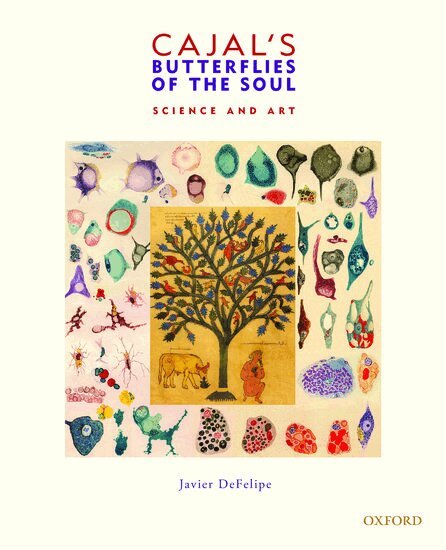
    Cajal's Butterflies of the Soul

    Science and Art

    AvJavier DeFelipe

    Inbunden, Engelska, 2009

    2 529 kr

    Beställningsvara. Skickas inom 5-8 vardagar. Fri frakt över 249 kr.

    Beskrivning

    This book contains a large collection of beautiful figures produced throughout the nineteenth century and the beginning of the twentieth century and that represent some characteristic examples of the early days of research in neuroscience. The main aim of this work is to demonstrate to the general public that the study of the nervous system is not only important for the many obvious reasons related to brain function in both health and disease, but also for the unexpected natural beauty that it beholds. This beauty has been discovered thanks to the techniques used to visualize the microscopic structure of the brain, a true forest of colourful and florid neural cells. As illustrated by his marvellous drawings, the studies of Santiago Ramón y Cajal (1852-1934) no doubt contributed more than those of any other researcher at the time to the growth of modern neuroscience. Thus, we have honored his name in the title of this book, even though the figures contained in the main body of the book are from 91 authors. Looking at the illustrations in this book the readers will not only marvel at Cajal's drawings but they will also find that many of the other early researchers that studied the nervous system were also true artists, of considerable talent and aesthetic sensibility. Thus, the present book contains numerous drawings of some of the most important pioneers in neuroscience, including Deiters, Kölliker, Meynert, Ranvier, Golgi, Retzius, Nissl, Dogiel, Alzheimer, del Río-Hortega and de Castro.The book has been divided into two Parts, Part I and II, the latter containing the main body of the work. Part I contains introductory information that will give readers unfamiliar with the nervous system a better understanding of the importance of the scientific illustrations produced in those days. The second part of the book, Part II, contains the collection of 282 figures with the intention of transforming the reader into an observer. These illustrations have been divided in three main categories: Section I, The Benedictine period: The early days; Section II, The black period: Neurons, glia and organization of the nervous system; Section III, The colourful period: internal structure and chemistry of the cells.This book will be of general interest, not only due to the captivating aesthetic appeal of the illustrations but also because they represent the bases of our current understanding of the nervous system. The reader will find that many of the illustrations can be considered to belong to different artistic movements, such as modernism, surrealism, cubism, abstract art or impressionism. Indeed, these illustrations may also provide artists with a source of inspiration since they reveal a fantastic and virtually unknown world of forms, a microuniverse with an aura of mystery.

    Produktinformation

    • Utgivningsdatum:2009-11-19
    • Mått:235 x 289 x 22 mm
    • Vikt:1 547 g
    • Format:Inbunden
    • Språk:Engelska
    • Antal sidor:424
    • Förlag:OUP USA
    • ISBN:9780195392708

    Utforska kategorier

    • Psykiatri inom Medicin
    • Biovetenskap inom Naturvetenskap och teknik
    • Neurologi och klinisk neurofysiologi inom Medicin

    Mer om författaren

    Javier DeFelipe, PhD is a Research Professor at the Instituto Cajal (CSIC) located in his hometown, Madrid, Spain.The particular expertise of Javier DeFelipe lies in the microanatomy of the cerebral cortex. Since 1991, the main focus of his team has been directed at understanding the neurochemical and microanatomical characteristics of the neocortex and of the hippocampal formation. The information that has been obtained regarding the normal organization of these cortical regions has been used to investigate the possible alterations that might occur in these structures in epilepsy and Alzheimer disease. Another of his principal interests is in the study of the history of our current understanding of important aspects of cortical organization and function. In particular, he is interested in the origins and the roots of cortical histology and circuitry.

    Recensioner i media

    Javier DeFelipe should be congratulated on assembling such a beautiful book about the earliest microscopic investigations of the nervous system conducated at the end of the 19th century and early 20th century...This book is a wonderful addition to the library of any neuroscientist or neurologist. It is worthy of attention of artists who enjoy the beauty of the natural world.

    Innehållsförteckning

    • PART I: INTRODUCTION INTRODUCTORY REMARKS The beauties of the nervous system: neurons and glial cells A note on the illustration. A SKETCH HISTORY OF THE MICROSCOPIC ANATOMY OF THE NERVOUS SYSTEMBEFORE THE DISCOVERY OF THE "REAZIONE NERA" SECTION 1 : THE BENEDICTINE PERIOD: THE EARLY DAYS Globules, granules, corpuscles (nerve cells): key elements of the nervous system Relationship between nerve cells and nerve fibers: development of microanatomical methods The reticular theory SECTION 2: THE BLACK PERIOD: NEURONS, GLIA AND ORGANIZATION OF THE NERVOUS SYSTEM The discovery of the reazione nera The Golgi method, Cajal, Maestre de San Juan and Simarro Cajal's first study with the Golgi method: dendrites and axons end freely The neuron doctrine and the law of dynamic polarization of nerve cells Arrows in the illustrations: the direction of the nervous currents SECTION 3: THE COLORFUL PERIOD: INTERNAL STRUCTURE AND CHEMISTRY OF THE CELLS On the early use of selective colorants to study the nervous system The first explosion of colors: normal and altered cytology of neural cells The second explosion of colors: Fluorescence microscopy and confocal laser scanning microscopy The third explosion of colors: the green fluorescent protein and the Brainbow CLOSING COMMENTS ON BRAIN AND ART BIBLIOGRAPHY PART II: GALLERY OF DRAWINGS SECTION 1. THE BENEDICTINE PERIOD: THE EARLY DAYS FIGURE LEGENDS AND BIBLIOGRAPHY SECTION 2. THE BLACK PERIOD: NEURONS, GLIA AND ORGANIZATION OF THE NERVOUS SYSTEM FIGURE LEGENDS AND BIBLIOGRAPHY SECTION 3. THE COLORFUL PERIOD: INTERNAL STRUCTURE AND CHEMISTRY OF THE CELLS FIGURE LEGENDS AND BIBLIOGRAPHY INDEX