• Fri frakt över 249 kr
  • •
  • Snabba leveranser
  • •
  • Billiga böcker
Kundservice

Du är på sajten för privatpersoner.

Företag, bibliotek eller offentlig verksamhet?

Du handlar på classic.bokus.com, där alla dina funktioner finns intakta.
Till classic.bokus.com
Bokus logotyp. Gå till startsidan.
  • Erbjudanden
  • Nyheter
  • Student
  • Topplistor
  • Barn & ungdom
  • Bokus Play
  • E-böcker
  • Pocketböcker
  • Spel & pussel

10% rabatt på allt med kod: NYSTART10 →

Sidfot

Mina sidor

    Hjälp

    • Kundservice
    • Vanliga frågor och svar
    • Frakt och leverans
    • Retur vid ångerrätt
    • Reklamera vara
    • Betalning
    • Köpvillkor
    • Allmänna villkor
    • Information om webbplatsens tillgänglighet

    Om Bokus

    • Om oss
    • Pressrum
    • För studenter
    • För företag
    • För bibliotek och offentlig verksamhet
    • För leverantörer
    • Hållbarhet

    Populärt

    • Aktuella erbjudanden
    • Presentkort
    • Studentlitteratur
    • Nya böcker
    • Topplistor
    • Signerade böcker
    • Engelska böcker

    Inspiration

    • Boktips
    • BookTok
    • Populära bokserier
    • Barnbokskaraktärer
    • Populära författare
    Logotyp för Bokus
    Följ oss på Facebook (extern länk)Följ oss på Instagram (extern länk)Följ oss på YouTube (extern länk)Följ oss på TikTok (extern länk)
    bokus @ CookiesAnpassa cookiesIntegritetspolicyKöpvillkor
    Till Citymail hemsida (extern länk)Till Budbee hemsida (extern länk)Till Postnord hemsida (extern länk)Till Schenker hemsida (extern länk)Till Early Bird hemsida (extern länk)Till Walleys hemsida (extern länk)
    1. Kultur
    2. Musikböcker
    3. Musikvetenskap

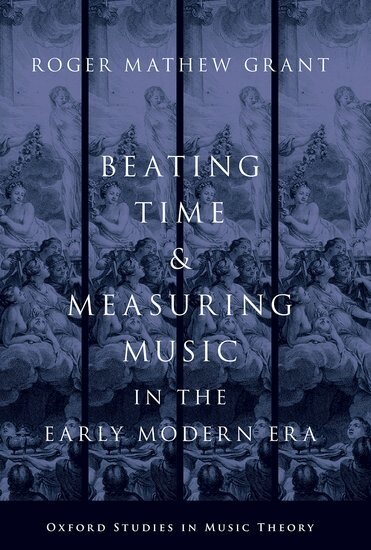
    Beating Time & Measuring Music in the Early Modern Era

    AvRoger Mathew Grant

    Häftad, Engelska, 2018

    Del i serien Oxford Studies in Music Theory

    665 kr

    Beställningsvara. Skickas inom 5-8 vardagar. Fri frakt över 249 kr.

    Fler format och utgåvor

    E-bok

    514 kr

    Beskrivning

    Beating Time & Measuring Music in the Early Modern Era chronicles the shifting relationships between ideas about time in music and science from the sixteenth through the early nineteenth centuries. Centered on theories of musical meter, the book investigates the interdependence between theories of meter and conceptualizations of time from the age of Zarlino to the invention of the metronome. These formulations have evolved throughout the history of Western music, reflecting fundamental reevaluations not only of music but also of time itself. Drawing on paradigms from the history of science and technology and the history of philosophy, author Roger Mathew Grant illustrates ways in which theories of meter and time, informed by one another, have manifested themselves in the field of music.During the long eighteenth century, treatises on subjects such as aesthetics, music theory, mathematics, and natural philosophy began to reflect an understanding of time as an absolute quantity, independent of events. This gradual but conclusive change had a profound impact on the network of ideas connecting time, meter, character, and tempo. Investigating the impacts of this change, Grant explores the timekeeping techniques - musical and otherwise - that implemented this conceptual shift, both technologically and materially. Bringing together diverse strands of thought in a broader intellectual history of temporality, Grant's study fills an unexpected yet conspicuous gap in the history of music theory, and is essential reading for music theorists and composers as well as historical musicologists and practitioners of historically informed performance.

    Produktinformation

    • Utgivningsdatum:2018-01-04
    • Mått:155 x 231 x 22 mm
    • Vikt:458 g
    • Format:Häftad
    • Språk:Engelska
    • Serie:Oxford Studies in Music Theory
    • Antal sidor:328
    • Förlag:OUP USA
    • ISBN:9780190858469

    Utforska kategorier

    • Musikvetenskap inom Kultur
    • Klassisk musik, konstmusik och orkestermusik inom Kultur

    Mer om författaren

    Roger Mathew Grant is Assistant Professor of Music at Wesleyan University. A recent graduate of the University of Pennsylvania (PhD 2010) his research focuses on the relationships between eighteenth-century music theory, Enlightenment aesthetics, and early modern science. His journal articles have appeared in Music Theory Spectrum, Eighteenth-Century Music, and the Journal of Music Theory. A former Junior Fellow of the University of Michigan's Society of Fellows, he was the fourth musicologist ever to hold a fellowship in the forty-year history of the Society.

    Recensioner i media

    Beating Time and Measuring Music in the Early Modern Era will appeal primarily to theorists, historians, and scholars of the history of ideas, though its insights are relevant to all lovers of European music from this era ... Grant offers his audience a much more integrated understanding of music and the broader social world, as well as a more specific understanding of the constraints upon musics temporal features in this era and what these constraints make possible. Interested readers will find ample reward.

    Innehållsförteckning

    • Table of Contents AcknowledgementsIntroductionA History of Meter Theory, Or, the Rules of the RulesReading in the Dark Part I1. Beating TimeThemes in Meter Theory, 1500-1700The Theoretical Work of the BeatThe Organizing Principle of Meter Theory: Four Approaches "Honor Them All": On the Use (and Misuse?) of Meter Theory2. The Beat: A Technical HistoryA Technical and Physical Solution A Problem of ContinuityThe Techn? of the Beat.Re-reading Zarlino3. A Renewed Account of Unequal Triple MeterEqualityInequality Part II4. Measuring MusicMeter, Measure, and Motion in Eighteenth-Century Music TheoryA Transformation in TimeA Multiplicity of MeasuresKirnberger's Contribution5. Techniques for Keeping TimeThe Problem of TempoTimekeeping Two Ways: 1. ChronometersTimekeeping Two Ways: 2. Taxonomies of Meter6. The Eighteenth-Century Alla BreveA Rather Vague IndicationLong-Note Music in the Eighteenth CenturyLong Notes in Eighteenth-Century Music Part III7. The Reinvention of TempoA New Chronometer?Meter, Tempo, NumberLength Into Duration, Duration Into Length: A Crisis of MeasuresMaelzel's Metronome8. The Persistent Question of MeterThe Measure as MysteryMeter as Attention, Activity, AesthesisFétis and the FutureAppendicesBibliography