• Fri frakt över 249 kr
  • •
  • Snabba leveranser
  • •
  • Billiga böcker
Kundservice

Du är på sajten för privatpersoner.

Företag, bibliotek eller offentlig verksamhet?

Du handlar på classic.bokus.com, där alla dina funktioner finns intakta.
Till classic.bokus.com
Bokus logotyp. Gå till startsidan.
  • Erbjudanden
  • Nyheter
  • Student
  • Topplistor
  • Barn & ungdom
  • Bokus Play
  • E-böcker
  • Pocketböcker
  • Spel & pussel

10% rabatt på allt med kod NYSTART10 →

Sidfot

Mina sidor

    Hjälp

    • Kundservice
    • Vanliga frågor och svar
    • Frakt och leverans
    • Retur vid ångerrätt
    • Reklamera vara
    • Betalning
    • Köpvillkor
    • Allmänna villkor
    • Information om webbplatsens tillgänglighet

    Om Bokus

    • Om oss
    • Pressrum
    • För studenter
    • För företag
    • För bibliotek och offentlig verksamhet
    • För leverantörer
    • Hållbarhet

    Populärt

    • Aktuella erbjudanden
    • Presentkort
    • Studentlitteratur
    • Nya böcker
    • Topplistor
    • Signerade böcker
    • Engelska böcker

    Inspiration

    • Boktips
    • BookTok
    • Populära bokserier
    • Barnbokskaraktärer
    • Populära författare
    Logotyp för Bokus
    Följ oss på Facebook (extern länk)Följ oss på Instagram (extern länk)Följ oss på YouTube (extern länk)Följ oss på TikTok (extern länk)
    bokus @ CookiesAnpassa cookiesIntegritetspolicyKöpvillkor
    Till Citymail hemsida (extern länk)Till Budbee hemsida (extern länk)Till Postnord hemsida (extern länk)Till Schenker hemsida (extern länk)Till Early Bird hemsida (extern länk)Till Walleys hemsida (extern länk)
    1. Samhälle och politik
    2. Samhälle och kultur
    3. Kultur och medier
    4. Referensverk och tvärvetenskap

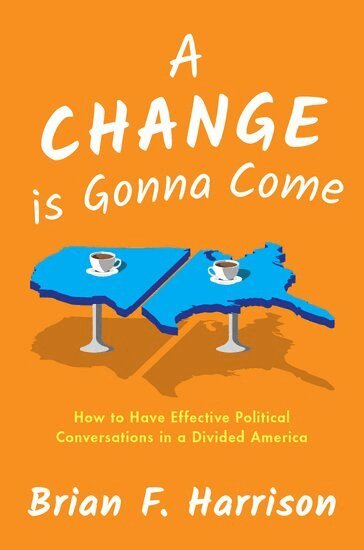
    A Change is Gonna Come

    How to Have Effective Political Conversations in a Divided America

    AvBrian F. Harrison

    Inbunden, Engelska, 2020

    461 kr

    Skickas . Fri frakt över 249 kr.

    Beskrivning

    Get your head out of your @*&. Snowflake. Stupid liberal. Ignorant conservative. There is much discussion today about the decline in civility in American politics. Couple this phenomenon with the fracturing and hardening of political attitudes, and one might wonder how deliberative democracy, much less political civility, can survive if we can't even talk to people with whom we disagree. Insults are thrown, feelings are hurt, and family and friends, at best, decide to avoid political discussions altogether. At worst, arguments cause social groups to break apart. How can deliberative democracy survive if we can't even speak to people with whom we disagree? As this book argues, we need a new way to discuss politics, one that encourages engagement and room for dissent. One way to approach this challenge is to consider how public opinion changes. By and large, public opinion is sticky and change occurs very slowly; one exception to this is the more recent and significant change in public opinion toward LGBTQ rights and marriage equality. The marriage equality movement is considered one of the great success stories of political advocacy, but why was it so successful? Brian F. Harrison argues that one of the most powerful reasons is that a broad range of marriage equality advocates were willing to engage in contentious and sometimes uncomfortable discussion about their opinions on the matter. They started everyday conversations that got people out of their echo chambers and encouraged them to start listening and thinking. But the question remains, if simple conversation can work in one arena, can it work in others? And how and where does one approach such conversation?Drawing from social psychology, communication studies, and political science, as well as personal narratives and examples, A Change is Gonna Come reflects on the last fifteen years of LGBTQ advocacy to propose practical ways to approach informal political conversation on a variety of contentious issues. This book seeks to answer the seemingly simple question: how can we be politically civil to each other again?

    Produktinformation

    • Utgivningsdatum:2020-04-09
    • Mått:226 x 145 x 27 mm
    • Vikt:363 g
    • Format:Inbunden
    • Språk:Engelska
    • Antal sidor:208
    • Förlag:OUP USA
    • ISBN:9780190939557

    Utforska kategorier

    • Referensverk och tvärvetenskap inom Samhälle och politik
    • Socialpsykologi och gruppsykologi inom Psykologi och pedagogik
    • Politisk aktivism inom Samhälle och politik

    Mer om författaren

    Brian F. Harrisonis a Lecturer at the Humphrey School of Public Affairs at the University of Minnesota. He is also Founder and President of Voters for Equality, a political organization dedicated to education, research, and political engagement among progressives and LGBT allies. Harrison is co-author of Listen, We Need to Talk: How to Change Attitudes about LGBT Rights, and specializes in American politics, public opinion, political communication, and LGBT politics.Prior to academia, Brian was a political appointee in the George W. Bush administration, serving as an assistant to the Assistant Secretary for Infrastructure Protection in the Department of Homeland Security. While he identifies as a progressive, he grew up with Republican parents and worked in a conservative administration and department, experiences that provided important insights on how to communicate with people with divergent political views.

    Recensioner i media

    An accomplished social scientist, writer, and award-winning teacher, Harrison gives concrete points on how to have difficult talks, leaving behind the drama of Twitter feuding, name-calling, and internet bullying that can make any sort of discussion with "the other side" seem impossible.

    Innehållsförteckning

    • Chapter 1: How to Talk Politics like Grown-ups Chapter 2: The Virtue of Uncomfortable Conversations Chapter 3: How to Alienate Others Chapter 4: The Mechanics of Persuasion and the Impact of Information Chapter 5: Don't Know How I Feel About That Chapter 6: People Like Us Have Got to Stick Together Chapter 7: Change Is Hard but Not Impossible Notes References Index