• Fri frakt över 249 kr
  • •
  • Snabba leveranser
  • •
  • Billiga böcker
Kundservice

Du är på sajten för privatpersoner.

Företag, bibliotek eller offentlig verksamhet?

Du handlar på classic.bokus.com, där alla dina funktioner finns intakta.
Till classic.bokus.com
Bokus logotyp. Gå till startsidan.
  • Erbjudanden
  • Nyheter
  • Student
  • Topplistor
  • Barn & ungdom
  • Bokus Play
  • E-böcker
  • Pocketböcker
  • Spel & pussel

10% rabatt på allt med kod: NYSTART10 →

Sidfot

Mina sidor

    Hjälp

    • Kundservice
    • Vanliga frågor och svar
    • Frakt och leverans
    • Retur vid ångerrätt
    • Reklamera vara
    • Betalning
    • Köpvillkor
    • Allmänna villkor
    • Information om webbplatsens tillgänglighet

    Om Bokus

    • Om oss
    • Pressrum
    • För studenter
    • För företag
    • För bibliotek och offentlig verksamhet
    • För leverantörer
    • Hållbarhet

    Populärt

    • Aktuella erbjudanden
    • Presentkort
    • Studentlitteratur
    • Nya böcker
    • Topplistor
    • Signerade böcker
    • Engelska böcker

    Inspiration

    • Boktips
    • BookTok
    • Populära bokserier
    • Barnbokskaraktärer
    • Populära författare
    Logotyp för Bokus
    Följ oss på Facebook (extern länk)Följ oss på Instagram (extern länk)Följ oss på YouTube (extern länk)Följ oss på TikTok (extern länk)
    bokus @ CookiesAnpassa cookiesIntegritetspolicyKöpvillkor
    Till Citymail hemsida (extern länk)Till Budbee hemsida (extern länk)Till Postnord hemsida (extern länk)Till Schenker hemsida (extern länk)Till Early Bird hemsida (extern länk)Till Walleys hemsida (extern länk)
    1. Medicin
    2. Medicin: allmänt
    3. Medicinhistoria

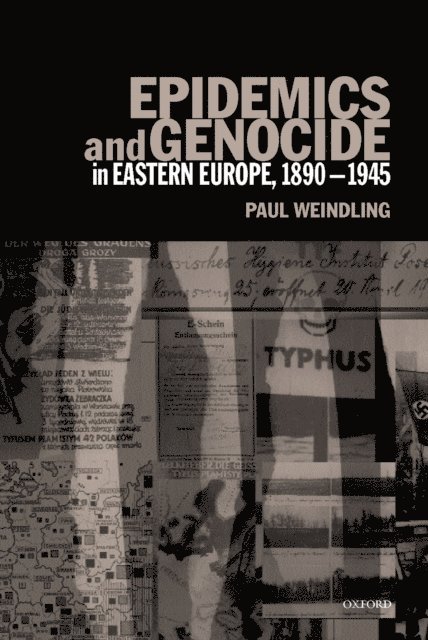
    Epidemics and Genocide in Eastern Europe, 1890-1945

    AvPaul Weindling

    E-bok
    PDF, Engelska, 2000

    2 413 kr

    Läs direkt i Bokus Reader – eller ladda ned till din enhet (PDF kräver ofta zoom och scroll på små skärmar).

    Fler format och utgåvor

    Inbunden

    3 379 kr

    Beskrivning

    During the First World War, delousing became routine for soldiers and civilians following the recent discovery that the louse carried typhus germs. But how did typhus come to be viewed as a "Jewish disease" and what was the connection between the anti-typhus measures during the First World War and the Nazi gas chambers in the Second World War?In this powerful book, Professor Weindling draws upon wide-ranging archival research throughout East and Central Europe to the United States, to provide valuable new insight into the history of German medicine from its response to the perceived threat of typhus epidemics from its Eastern borders. He examines how German experts in tropical medicine took an increasingly racialised approach to bacteriology, regarding supposedly racially inferior peoples as carriers of the disease.So they came toview typhus as a "Jewish" disease.By the Second World War as migrants and deportees had become conditioned to expect the ordeal of delousing at border crossings, ports, railway junctions and on entry to camps, so sanitary policing became entwined with racialisation as the Germans sought to eradicate typhus by eradicating the perceived carriers. Typhus had come to assume a new and terrifying genocidal significance, as the medical authorities sealed the German frontiers against diseased undesirables from the east, and gassingbecame a favoured means of disease eradication.

    Produktinformation

    • Utgivningsdatum:2000-02-03
    • Språk:Engelska
    • Filformat:PDF
    • Kopieringsskydd:LCP
    • ISBN:9780191542633
    • Förlag:Oxford University Press

    Utforska kategorier

    • Medicinhistoria inom Medicin
    • Europas historia inom Historia och arkeologi
    • Folkmord och etnisk rensning inom Historia och arkeologi