• Fri frakt över 249 kr
  • •
  • Snabba leveranser
  • •
  • Billiga böcker
Kundservice

Du är på sajten för privatpersoner.

Företag, bibliotek eller offentlig verksamhet?

Du handlar på classic.bokus.com, där alla dina funktioner finns intakta.
Till classic.bokus.com
Bokus logotyp. Gå till startsidan.
  • Erbjudanden
  • Nyheter
  • Student
  • Topplistor
  • Barn & ungdom
  • Bokus Play
  • E-böcker
  • Pocketböcker
  • Spel & pussel

10% rabatt på allt med kod NYSTART10 →

Sidfot

Mina sidor

    Hjälp

    • Kundservice
    • Vanliga frågor och svar
    • Frakt och leverans
    • Retur vid ångerrätt
    • Reklamera vara
    • Betalning
    • Köpvillkor
    • Allmänna villkor
    • Information om webbplatsens tillgänglighet

    Om Bokus

    • Om oss
    • Pressrum
    • För studenter
    • För företag
    • För bibliotek och offentlig verksamhet
    • För leverantörer
    • Hållbarhet

    Populärt

    • Aktuella erbjudanden
    • Presentkort
    • Studentlitteratur
    • Nya böcker
    • Topplistor
    • Signerade böcker
    • Engelska böcker

    Inspiration

    • Boktips
    • BookTok
    • Populära bokserier
    • Barnbokskaraktärer
    • Populära författare
    Logotyp för Bokus
    Följ oss på Facebook (extern länk)Följ oss på Instagram (extern länk)Följ oss på YouTube (extern länk)Följ oss på TikTok (extern länk)
    bokus @ CookiesAnpassa cookiesIntegritetspolicyKöpvillkor
    Till Citymail hemsida (extern länk)Till Budbee hemsida (extern länk)Till Postnord hemsida (extern länk)Till Schenker hemsida (extern länk)Till Early Bird hemsida (extern länk)Till Walleys hemsida (extern länk)
    1. Juridik
    2. Särskilda rättsområden
    3. Straffrätt: process och brott
    4. Straffprocessrätt

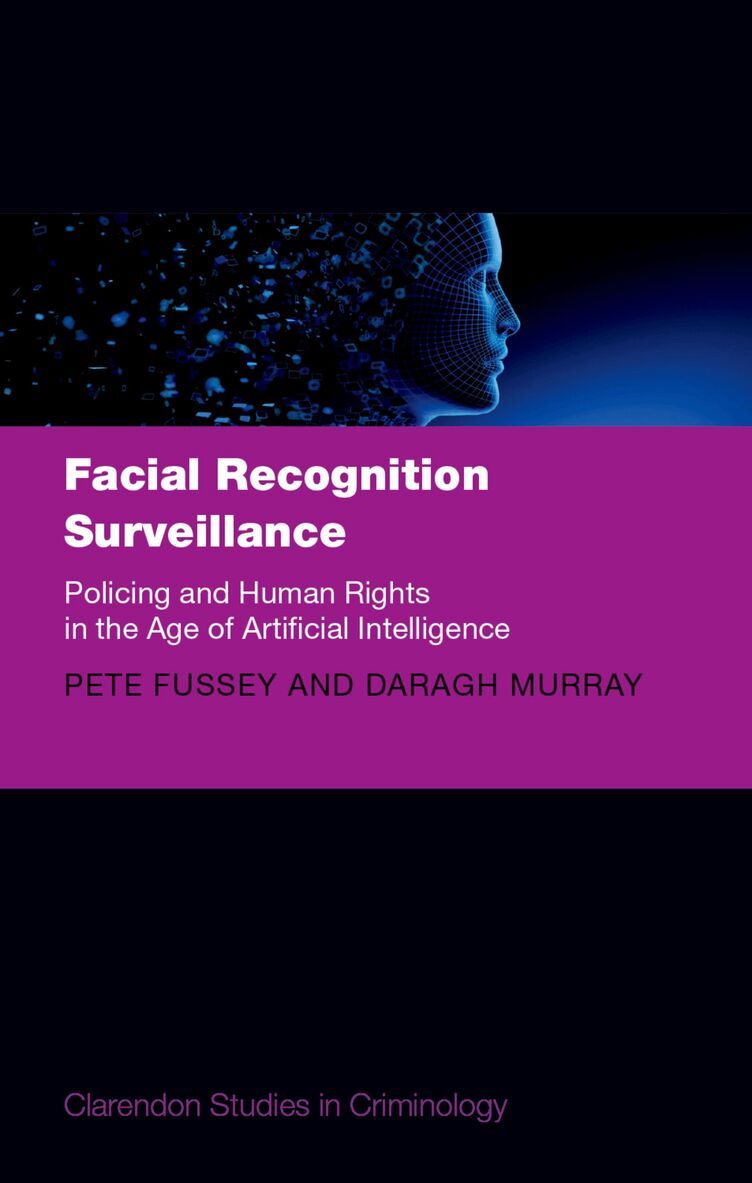
    Facial Recognition Surveillance

    Policing and Human Rights in the Age of Artificial Intelligence

    AvPete Fussey,Daragh Murray

    Inbunden, Engelska, 2025

    Del i serien Clarendon Studies in Criminology

    1 277 kr

    Beställningsvara. Skickas inom 7-10 vardagar. Fri frakt över 249 kr.

    Beskrivning

    Scanning millions of faces each year, facial recognition technology (FRT) has become one of today's fastest growing and most controversial AI-driven surveillance technologies.Based on rare ethnographic access to police FRT deployments, Facial Recognition Surveillance: Policing and Human Rights in the Age of Artificial Intelligence delves into the profound impact of FRT on policing practices, surveillance capabilities, and human rights protections. It reveals how this technology shapes, and is also shaped by, the complex environments in which it is deployed, dramatically reshaping police-citizen interactions.This book exposes the selective scientific and legal narratives that justify the expansion of AI-driven surveillance. It draws on cutting-edge human rights theory to propose a due diligence framework tailored to police use of FRT and introduces the concept of 'compound human rights harm' to capture the multifaceted impact of surveillance.Integrating insights from the sociology of policing, science and technology studies, and human rights scholarship, this book advances a theoretically novel and empirically informed perspective that positions FRT as a socio-technical system capable of altering the fundamental nature of policing.

    Produktinformation

    • Utgivningsdatum:2025-07-29
    • Mått:210 x 20 x 140 mm
    • Vikt:620 g
    • Format:Inbunden
    • Språk:Engelska
    • Serie:Clarendon Studies in Criminology
    • Antal sidor:368
    • Förlag:OUP OXFORD
    • ISBN:9780192883704

    Utforska kategorier

    • Straffprocessrätt inom Juridik
    • Sekretess inom Juridik
    • Brottsutredning och kriminalteknik inom Samhälle och politik

    Mer om författaren

    Pete Fussey is a Professor of Criminology at the University of Southampton and researches the human rights implications of advanced surveillance and other policing technologies. His other published work analyses digital sociology, algorithmic justice, and urban studies. He has authored work laid before the UN General Assembly; co-authored UN human rights standards on police technology at protests; and co-directed the ESRC Human Rights, Big Data and Technology project (2015-2023). Professor Fussey's research has featured on the front pages of The Guardian and Financial Times, and additionally covered by BBC Newsnight, PBS Newshour, The New York Times, Washington Post, BBC Radio 4 and others.Daragh Murray is a Senior Lecturer at Queen Mary University London School of Law, and a Fellow of the Institute of Humanities and Social Sciences. He specialises in international human rights law and the law of armed conflict, with an interest in artificial intelligence and other advanced technologies. He has been awarded a UKRI Future Leaders Fellowship to examine the 'unintended consequences' of artificial intelligence, with an emphasis on understanding the links between surveillance and the processes central to individual's identity development and the evolution of democratic societies. He was previously a member of the UKRI funded Human Rights, Big Data & Technology Project.

    Recensioner i media

    This book is a must read. Based on extensive ethnographic observations of one of the largest police forces in the world, the book undertakes two equally novel and important tasks. First, it conceptualises why the police's use of advanced surveillance technologies are capable of giving rise to compound human rights harms and sets out what a human rights due diligence framework to prevent such harms should look like. Second, it shows how algorithmic decision making undermines the exercise of police discretion with manifold consequences for human rights and policing culture. The result is a superb delivery of an evidence-based cautionary tale about the erosion of human rights based policing through the emergence of algorithmic classifications of suspicion.

    Innehållsförteckning

    • PART I. 1: The Emergence of Advanced Biometric Surveillance 2: The Form, Function, and Fallibilities of AI-Driven Surveillance 3: Human Rights Law Considerations Brought into Play by Public Surveillance PART II. 4: A Due Diligence Framework for Facial Recognition Technology 5: Identifying the Utility Linked to Facial Recognition Deployments 6: Metropolitan Police Service Efforts to Identify Potential Harm to Human Rights Associated with Live Facial Recognition Deployments 7: Deploying Facial Recognition Technology in London: Techno-Certainties and Operational Ambiguities 8: Human-Technology Interaction during Advanced Surveillance Operations 9: Conclusion: Facial Recognition as a Complex Socio-Technical Surveillance System