• Fri frakt över 249 kr
  • •
  • Snabba leveranser
  • •
  • Billiga böcker
Kundservice

Du är på sajten för privatpersoner.

Företag, bibliotek eller offentlig verksamhet?

Du handlar på classic.bokus.com, där alla dina funktioner finns intakta.
Till classic.bokus.com
Bokus logotyp. Gå till startsidan.
  • Erbjudanden
  • Nyheter
  • Student
  • Topplistor
  • Barn & ungdom
  • Bokus Play
  • E-böcker
  • Pocketböcker
  • Spel & pussel

10% rabatt på allt med kod NYSTART10 →

Sidfot

Mina sidor

    Hjälp

    • Kundservice
    • Vanliga frågor och svar
    • Frakt och leverans
    • Retur vid ångerrätt
    • Reklamera vara
    • Betalning
    • Köpvillkor
    • Allmänna villkor
    • Information om webbplatsens tillgänglighet

    Om Bokus

    • Om oss
    • Pressrum
    • För studenter
    • För företag
    • För bibliotek och offentlig verksamhet
    • För leverantörer
    • Hållbarhet

    Populärt

    • Aktuella erbjudanden
    • Presentkort
    • Studentlitteratur
    • Nya böcker
    • Topplistor
    • Signerade böcker
    • Engelska böcker

    Inspiration

    • Boktips
    • BookTok
    • Populära bokserier
    • Barnbokskaraktärer
    • Populära författare
    Logotyp för Bokus
    Följ oss på Facebook (extern länk)Följ oss på Instagram (extern länk)Följ oss på YouTube (extern länk)Följ oss på TikTok (extern länk)
    bokus @ CookiesAnpassa cookiesIntegritetspolicyKöpvillkor
    Till Citymail hemsida (extern länk)Till Budbee hemsida (extern länk)Till Postnord hemsida (extern länk)Till Schenker hemsida (extern länk)Till Early Bird hemsida (extern länk)Till Walleys hemsida (extern länk)
    1. Samhälle och politik
    2. Samhälle och kultur
    3. Kultur och medier
    4. Kulturvetenskap

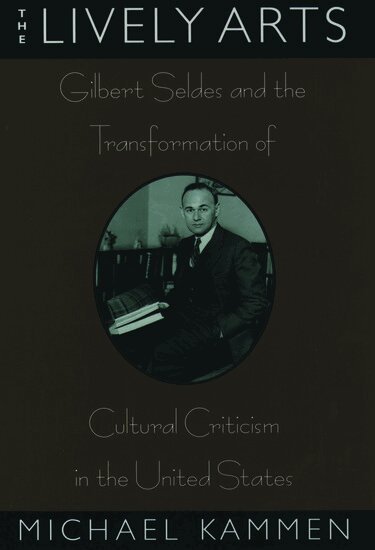
    The Lively Arts

    Gilbert Seldes and the Transformation of Cultural Criticism in the United States

    AvMichael Kammen

    Inbunden, Engelska, 1996

    610 kr

    Beställningsvara. Skickas inom 5-8 vardagar. Fri frakt över 249 kr.

    Beskrivning

    He was a friend of James Joyce, Pablo Picasso, e.e. cummings, John Dos Passos, Irving Berlin, and F. Scott Fitzgerald--and the enemy of Ezra Pound, H.L. Mencken, and Ernest Hemingway. He was so influential a critic that Edmund Wilson declared that he had played a leading role in the "liquidation of genteel culture in America." Yet today many students of American culture would not recognize his name. He was Gilbert Seldes, and in this brilliant biographical study,Pulitzer Prize-winning historian Michael Kammen recreates a singularly American life of letters. Equally important, Kammen uses Seldes's life as a lens through which to bring into sharp focus thedramatic shifts in American culture that occurred in the half-century after World War I.Born in 1893, Seldes saw in his lifetime an astonishing series of innovations in popular and mass culture: silent films and talkies, the phonograph and the radio, the coming of television, and the proliferation of journalism aimed at mainstream America in such venues as Vanity Fair, The Saturday Evening Post, and Esquire. (His monthly column in Esquire was called"The Lively Arts.") Seldes was more than a witness to these changes, however; he was the leading champion of popular culture in his time, and a skilled practitioner as well. Kammen, the first scholar to enjoy access to Seldes'sunpublished papers, illuminates his immense influence as the earliest cultural critic to insist that the lively arts--vaudeville, musical revues, film, jazz, and the comics--should be taken just as seriously as grand opera, the legitimate theatre, and other manifestations of high culture.As he traces Seldes's remarkable evolution from an acknowledged aesthete and highbrow to a cultural democrat with a passion for the popular arts, Kammen recaptures the critic's prescience, wit, andgenerosity for a newly expanded audience. We witness Seldes's triumphs and travails as managing editor of The Dial, the most influential literary magazine of its time, and read of New York's endlesslyfeuding publications and literary rivalries. Kammen offers wonderfully detailed accounts of The Dial's introduction of "The Wasteland" in its November 1922 issue; Seldes's review of Ulysses for The Nation, one of the first (if not the very first) to appear in the U.S.; and the complete story of the writing, publication, and critical reception of The Seven Lively Arts, Seldes's most influential book. And Kammen also covers Seldes's astonishingly versatilelater career as a freelance writer (on every conceivable subject), historian, novelist, playwright, filmmaker, radio scriptwriter, the first program director for CBS Television, and the founding dean of the Annenberg School of Communicationsat the University of Pennsylvania.One of popular culture's earliest and most eloquent champions, Seldes was nonetheless publicly worried as early as 1937 that the popularity of radio, film, and television would mean the demise of the "private art of reading." By 1957 he was warning that "with the shift of all entertainment into the area of big business, we are being engulfed into a mass-produced mediocrity." At a time when many thoughtful Americans despair of popular culture,The Lively Arts revisits the opening salvos in the ongoing debate over "democratization" versus "dumbing down" of the arts. It offers a penetrating and timely analysis of Gilbert Seldes's pioneeringconviction that the popular and the great arts must not only co-exist but enrich one another if we are to realize the innovation and intensity of American culture at its best.

    Produktinformation

    • Utgivningsdatum:1996-07-18
    • Mått:165 x 243 x 37 mm
    • Vikt:810 g
    • Format:Inbunden
    • Språk:Engelska
    • Antal sidor:512
    • Förlag:OUP USA
    • ISBN:9780195098686

    Utforska kategorier

    • Kulturvetenskap inom Samhälle och politik
    • Dansböcker inom Kultur
    • Övrig scenkonst inom Kultur

    Mer om författaren

    Michael Kammen is the Newton C. Farr Professor of American History and Culture at Cornell University. President of the Organization of American Historians, he is the author or editor of many other books, including People of Paradox, which won the Pulitzer Prize, and A Machine That Would Go of Itself, which won the Francis Parkman Prize and the Henry Adams Prize.

    Recensioner i media

    "Michael Kammen is a copious and readable writer, almost conversational in tone and in digression. He has a fine sense of the historical background, he carries learning lightly, and he offers a shrewd assessment of Seldes's qualities.... The Lively Arts is a rich and stimulating work and a long overdue account of the intelligent and energetic man who almost single-handedely changed American attitudes toward the popular arts."--Arthur Schlesinger Jr.,The New York Times Book Review"Kammen is an astute student of U.S. cultural history."--Booklist"[Kammen's] balanced and insightful account of Seldes's professional life--from the early '20s at The Dial magazine...to the 1950s debates on the role of 'mass culture'--is a story of a life as well as a history of pop culture on the rise."--Publishers Weekly"Once again the author of People of Paradox writes a lively narrative of efforts to reconcile opposing tendencies in American cultural life. Mr. Kammen shows us how the editor who first published Eliot's 'The Wasteland' came to write serious criticism about Al Jolson, Fanny Brice, and Krazy Kat."--David Levin, Department of English, University of Virginia"The Lively Arts reveals the full story of the life, work, and intellectual journey that still illuminate the 'culture wars' and debates of today."--George Gerbner, Professor and Dean Emeritus, The Annenberg School for Communication, University of Pennsylvania"Gilbert Seldes was one of the nation's foremost cultural commentators during the second third of the twentieth century. With typical verve and insight, Michael Kammen uses his career to examine the major developments in twentieth-century popular culture. The result is a fascinating biography of Seldes and an illuminating exercise in cultural criticism."--David E. Shi, President of Furman University and author of The Simple Life"Gilbert Seldes is fortunate to have his remarkable career recounted by one of the few historians whose interests are as diverse as those of Seldes himself. We are no less fortunate; Michael Kammen's richly detailed, perceptive, and sensitive study has much to teach us about our century, our culture, and ourselves."--Lawrence W. Levine, Professor of History and Cultural Studies, George Mason University