• Fri frakt över 249 kr
  • •
  • Snabba leveranser
  • •
  • Billiga böcker
Kundservice

Du är på sajten för privatpersoner.

Företag, bibliotek eller offentlig verksamhet?

Du handlar på classic.bokus.com, där alla dina funktioner finns intakta.
Till classic.bokus.com
Bokus logotyp. Gå till startsidan.
  • Erbjudanden
  • Nyheter
  • Student
  • Topplistor
  • Barn & ungdom
  • Bokus Play
  • E-böcker
  • Pocketböcker
  • Spel & pussel

10% rabatt på allt med kod: NYSTART10 →

Sidfot

Mina sidor

    Hjälp

    • Kundservice
    • Vanliga frågor och svar
    • Frakt och leverans
    • Retur vid ångerrätt
    • Reklamera vara
    • Betalning
    • Köpvillkor
    • Allmänna villkor
    • Information om webbplatsens tillgänglighet

    Om Bokus

    • Om oss
    • Pressrum
    • För studenter
    • För företag
    • För bibliotek och offentlig verksamhet
    • För leverantörer
    • Hållbarhet

    Populärt

    • Aktuella erbjudanden
    • Presentkort
    • Studentlitteratur
    • Nya böcker
    • Topplistor
    • Signerade böcker
    • Engelska böcker

    Inspiration

    • Boktips
    • BookTok
    • Populära bokserier
    • Barnbokskaraktärer
    • Populära författare
    Logotyp för Bokus
    Följ oss på Facebook (extern länk)Följ oss på Instagram (extern länk)Följ oss på YouTube (extern länk)Följ oss på TikTok (extern länk)
    bokus @ CookiesAnpassa cookiesIntegritetspolicyKöpvillkor
    Till Citymail hemsida (extern länk)Till Budbee hemsida (extern länk)Till Postnord hemsida (extern länk)Till Schenker hemsida (extern länk)Till Early Bird hemsida (extern länk)Till Walleys hemsida (extern länk)
    1. Naturvetenskap och teknik
    2. Matematik och naturvetenskap
    3. Naturvetenskap:allmänt
    4. Naturvetenskapens filosofi

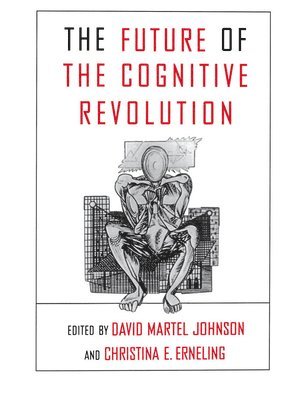
    The Future of the Cognitive Revolution

    AvJohnson,Erneling

    Häftad, Engelska, 1997

    1 364 kr

    Beställningsvara. Skickas inom 5-8 vardagar. Fri frakt över 249 kr.

    Beskrivning

    The model of the mind developed during the twentieth century's so-called "cognitive revolution" - that the mind is analogous to computer software - has recently lost its once virtually unquestioned pre-eminence. Thus we are now faced with the question of whether it it possible to repair this model, or whether we need to reconceive it in fundamental terms and replace it with something different. In this book, 28 leading scholars from various areas of cognitive science present their latest judgments on the future course for this intellectual movement.

    Produktinformation

    • Utgivningsdatum:1997-06-12
    • Mått:159 x 232 x 26 mm
    • Vikt:567 g
    • Format:Häftad
    • Språk:Engelska
    • Antal sidor:416
    • Förlag:OUP USA
    • ISBN:9780195103342

    Utforska kategorier

    • Naturvetenskapens filosofi inom Naturvetenskap och teknik
    • Kognitiv psykologi inom Psykologi och pedagogik
    • Psykologiska teorier och skolor inom Psykologi och pedagogik

    Recensioner i media

    "The 25 chapters and related introductions in The Future of the Cognitive Revolution provide one of the finest compilations of current issues and perspectives within cognitive science. . . . [It] is written in clear and accessible language intended for a wide audience. The editors, Johnson and Erneling, provide masterful introductions to book sections and a general Introduction and Afterword that help the reader to have an overview and navigate throughthe book. The book could be used in an upper level undergraduate course or a graduate seminar on cognition, or subsets of chapters could be easily incorporated into graduate seminars in related disciplines. Ihighly recommend this book for new entrants into cognitive science as well as for seasoned researchers. This book should not be ignored."--Contemporary Psychology"[T]he use of any formal language automatizes and standardizes human thinking. From that point of view, the computer is not a model or a partner for the human mind. It is only an invention that . . . supports human mental skills. If we assume that the chapters presented in parts four and five of The Future of the Cognitive Revolution are something that can influence the mainstream of cognitive science, then we can say that cognitive revolution has afuture. This future is the realization that culture together with its psychophysical products . . . constitute the environment of individual minds, that we cannot separate human thought from human action in aparticular environment: 'All action involves some amount of awareness, as well as vice versa' (270). Over and above all that, I may say that The Future of the Cognitive Revolution is a consistent collection of more than thirty very good papers written by outstanding authors."--Journal of the History of the Behavioral Sciences"Instructive and fun. A valuable supplement."--Choice"The 25 chapters and related introductions in The Future of the Cognitive Revolution provide one of the finest compilations of current issues and perspectives within cognitive science. . . . [It] is written in clear and accessible language intended for a wide audience. The editors, Johnson and Erneling, provide masterful introductions to book sections and a general Introduction and Afterword that help the reader to have an overview and navigate throughthe book. The book could be used in an upper level undergraduate course or a graduate seminar on cognition, or subsets of chapters could be easily incorporated into graduate seminars in related disciplines. Ihighly recommend this book for new entrants into cognitive science as well as for seasoned researchers. This book should not be ignored."--Contemporary Psychology"[T]he use of any formal language automatizes and standardizes human thinking. From that point of view, the computer is not a model or a partner for the human mind. It is only an invention that . . . supports human mental skills. If we assume that the chapters presented in parts four and five of The Future of the Cognitive Revolution are something that can influence the mainstream of cognitive science, then we can say that cognitive revolution has afuture. This future is the realization that culture together with its psychophysical products . . . constitute the environment of individual minds, that we cannot separate human thought from human action in aparticular environment: 'All action involves some amount of awareness, as well as vice versa' (270). Over and above all that, I may say that The Future of the Cognitive Revolution is a consistent collection of more than thirty very good papers written by outstanding authors."--Journal of the History of the Behavioral Sciences"Instructive and fun. A valuable supplement."--Choice

    Innehållsförteckning

    • Introduction ; What is the Purported Discipline of Cognitive Science; and Why Does It Need to be Reassessed at the Present Moment?: The Search for "Cognitive Glue" ; Part 1. Good Old-Fashioned Cognitive Science: Does it have a Future? ; Language and Cognition ; Functionalism: Cognitive Science or Science Fiction? a Hilary Putnam ; Reassessing the Cognitive Revolution ; Promise and Achievement in Cognitive Science ; Boden's Middle Way: Viable or Not? ; Metasubjective Processes: the Missing "ILingua Franca of Cognitive Science ; Is Cognitive Science a Discipline? ; Anatomy of a Revolution ; Part 2. Cognitive Science and the Study of Language ; Language from an Internalist Perspective ; The Novelty of Chomsky's Theories ; Buy What Have You Done For Us Lately?: Some Recent Perspectives on Linguistic Nativism ; Part 3. Connectionism: A Non-Rule-Following Rival, or Supplement to the Traditional Approach? ; From Text to Process: Connectionism's Contribution to the Future of Cognitive Science ; Embodied Connectionism ; Neural Networks and Neuroscience: What are Connectionist Simulations Good for? ; Can Wittgenstein Help Free the Mind From Rules? The Philosophical Foundations of Connectionism ; What Might Cognition be if Not Computation? ; Part 4. The Ecological Alternative: Knowledge as Sensitivity to Objectively Existing Facts ; The Future of Cognitive Science: An Ecological Analysis ; The Cognitive Revolution from an Ecological Point of View ; Part 5. Challenges to Cognitive Science: The Cultural Approach ; Will Cognitive Revolutions Ever Stop? ; Neural Cartesianism: Comments on the Epistemology of the Cognitive Sciences ; Language, Action and Mind ; Cognition as a Social Practice: From Computer Power to Word Power ; 'Berkeleyan' Arguments and the Ontology of Cognitive Science ; Part 6. Historical Approaches ; The Mind from an Historical Perspective: Human Cognitive Phylogenesis and the Possibility of Continuing Cognitive Evolution ; Taking the Past Seriously: How History Shows that Eliminativists' Account of Folk Psychology is Partly Right and Partly Wrong ; Afterword ; Cognitive Science and the Future of Psychology - Challenges and Opportunities