• Fri frakt över 249 kr
  • •
  • Snabba leveranser
  • •
  • Billiga böcker
Kundservice

Du är på sajten för privatpersoner.

Företag, bibliotek eller offentlig verksamhet?

Du handlar på classic.bokus.com, där alla dina funktioner finns intakta.
Till classic.bokus.com
Bokus logotyp. Gå till startsidan.
  • Erbjudanden
  • Nyheter
  • Student
  • Topplistor
  • Barn & ungdom
  • Bokus Play
  • E-böcker
  • Pocketböcker
  • Spel & pussel

10% rabatt på allt med kod: NYSTART10 →

Sidfot

Mina sidor

    Hjälp

    • Kundservice
    • Vanliga frågor och svar
    • Frakt och leverans
    • Retur vid ångerrätt
    • Reklamera vara
    • Betalning
    • Köpvillkor
    • Allmänna villkor
    • Information om webbplatsens tillgänglighet

    Om Bokus

    • Om oss
    • Pressrum
    • För studenter
    • För företag
    • För bibliotek och offentlig verksamhet
    • För leverantörer
    • Hållbarhet

    Populärt

    • Aktuella erbjudanden
    • Presentkort
    • Studentlitteratur
    • Nya böcker
    • Topplistor
    • Signerade böcker
    • Engelska böcker

    Inspiration

    • Boktips
    • BookTok
    • Populära bokserier
    • Barnbokskaraktärer
    • Populära författare
    Logotyp för Bokus
    Följ oss på Facebook (extern länk)Följ oss på Instagram (extern länk)Följ oss på YouTube (extern länk)Följ oss på TikTok (extern länk)
    bokus @ CookiesAnpassa cookiesIntegritetspolicyKöpvillkor
    Till Citymail hemsida (extern länk)Till Budbee hemsida (extern länk)Till Postnord hemsida (extern länk)Till Schenker hemsida (extern länk)Till Early Bird hemsida (extern länk)Till Walleys hemsida (extern länk)
    1. Samhälle och politik
    2. Politik och statsskick
    3. Centralt styre och förvaltning

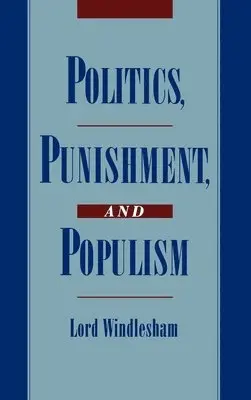
    Politics, Punishment, and Populism

    AvLord Windlesham

    Inbunden, Engelska, 1998

    Del i serien Studies in Crime and Public Policy

    1 979 kr

    Beställningsvara. Skickas inom 5-8 vardagar. Fri frakt över 249 kr.

    Fler format och utgåvor

    E-bok

    795 kr

    Beskrivning

    In this timely, challenging book, a former minister and current legislator in the British government examines the wave of American federal crime-control laws that surfaced both before and after the 1994 "Republican Revolution" in Congress. Lord Windlesham focuses on the pressure that populist opinion and special interests can exert in shaping crime policy. Several law-making actions and arguments are explored, such as the Violent Crime Control and Law Enforcement Act (thought by many to be the key legislative achievement of President Clinton's first term), the Brady Act, the "three strikes and you're out" rule, Megan's Law, and so forth. Furthermore, in presenting controversial views on the NRA and its competitors, the book ultimately asks how long America can continue to tolerate the private possession of deadly weapons.

    Produktinformation

    • Utgivningsdatum:1998-08-20
    • Mått:160 x 234 x 25 mm
    • Vikt:590 g
    • Format:Inbunden
    • Språk:Engelska
    • Serie:Studies in Crime and Public Policy
    • Antal sidor:288
    • Förlag:OUP USA
    • ISBN:9780195115307

    Utforska kategorier

    • Centralt styre och förvaltning inom Samhälle och politik
    • Straffrätt: process och brott inom Juridik
    • Statsvetenskap och politisk teori inom Samhälle och politik

    Mer om författaren

    Lord Windlesham is Principal of Brasenose College at Oxford University and national President of Victim Support in the United Kingdom. He was Chairman of the Parole Board for England and Wales in the 1980s, and before that served in government as a Minister at the Home Office and the Northern Ireland Office. Among other books, his published work includes the three-volume Responses to Crime (Oxford University Press, 1987-96). Lord Windlesham was theWeinberg/Goldman Sachs Visiting Professor at Princeton University in 1997.

    Recensioner i media

    His latest book shows a grasp of the political and legal dynamics of another country which has astonished even Americans, and his care for detail adds to its interest./ Prof. Nigel Walker, Institute of Criminology, Cambridge / New Law Journal, 26/02 /99