• Fri frakt över 249 kr
  • •
  • Snabba leveranser
  • •
  • Billiga böcker
Kundservice

Du är på sajten för privatpersoner.

Företag, bibliotek eller offentlig verksamhet?

Du handlar på classic.bokus.com, där alla dina funktioner finns intakta.
Till classic.bokus.com
Bokus logotyp. Gå till startsidan.
  • Erbjudanden
  • Student
  • Topplistor
  • Barn & ungdom
  • Bokus Play
  • E-böcker
  • Ljudböcker
  • Pocketböcker
  • Spel & pussel

10% rabatt på allt med kod NYSTART10 →

Sidfot

Mina sidor

    Hjälp

    • Kundservice
    • Vanliga frågor och svar
    • Frakt och leverans
    • Retur vid ångerrätt
    • Reklamera vara
    • Betalning
    • Köpvillkor
    • Allmänna villkor
    • Information om webbplatsens tillgänglighet

    Om Bokus

    • Om oss
    • Pressrum
    • För studenter
    • För företag
    • För bibliotek och offentlig verksamhet
    • För leverantörer
    • Hållbarhet

    Populärt

    • Aktuella erbjudanden
    • Presentkort
    • Studentlitteratur
    • Nya böcker
    • Topplistor
    • Signerade böcker
    • Engelska böcker

    Inspiration

    • Boktips
    • BookTok
    • Populära bokserier
    • Barnbokskaraktärer
    • Populära författare
    Logotyp för Bokus
    Följ oss på Facebook (extern länk)Följ oss på Instagram (extern länk)Följ oss på YouTube (extern länk)Följ oss på TikTok (extern länk)
    bokus @ CookiesAnpassa cookiesIntegritetspolicyKöpvillkor
    Till Citymail hemsida (extern länk)Till Budbee hemsida (extern länk)Till Postnord hemsida (extern länk)Till Schenker hemsida (extern länk)Till Early Bird hemsida (extern länk)Till Walleys hemsida (extern länk)
    1. Samhälle och politik
    2. Politik och statsskick
    3. Statsskick och politiska processer
    4. Val och folkomröstningar

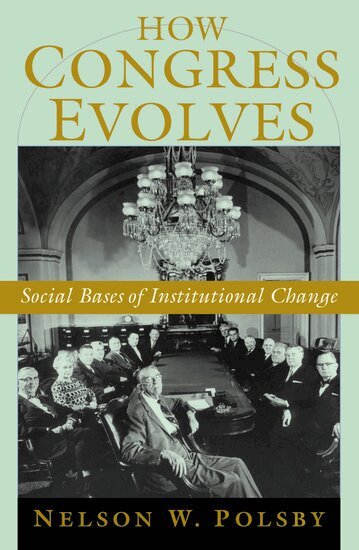
    How Congress Evolves

    Social Bases of Institutional Change

    AvNelson W. Polsby

    Inbunden, Engelska, 2004

    1 234 kr

    Beställningsvara. Skickas inom 5-8 vardagar. Fri frakt över 249 kr.

    Fler format och utgåvor

    E-bok

    342 kr

    Häftad

    535 kr

    E-bok

    330 kr

    Beskrivning

    In this greatly entertaining tale of of one of our most august institutions, Nelson Polsby argues that among other things, from the 50s to the 90s, Congress evolved. In short, Polsby argues that air conditioning altered the demography of the Southern States, which in turn changed the political parties of the South, which transformed the composition and in due course the performance of the US House of Representatives. This evolutionary process led to the House's liberalisation and later to its transformation into an arena of sharp partisanship, visible among both Democrats and Republicans. This book breathes new life into the dusty corners of institutional history, and offers a unique expanation for important transformations in the congressional environment.

    Produktinformation

    • Utgivningsdatum:2004-01-15
    • Mått:236 x 160 x 30 mm
    • Vikt:524 g
    • Format:Inbunden
    • Språk:Engelska
    • Antal sidor:272
    • Förlag:OUP OXFORD
    • ISBN:9780195161953

    Utforska kategorier

    • Val och folkomröstningar inom Samhälle och politik
    • Politiska partier inom Samhälle och politik

    Mer om författaren

    Nelson Polsby is Heller Professor of Political Science at the University of California, Berkeley where he has taught American politics and government since 1967. A close Congress watcher for more than 40 years, he is the author of, among others, Congress and the Presidency, and Presidential Elections (with Aaron Wildavsky, 10th edition.) He is editor of the Annual Review of Political Science and writes often for the Op-edpages of the LA Times, Boston Globe, New York Times, Wall Street Journal and Washington Post.

    Recensioner i media

    A fascinating history of how the House has developed.

    Innehållsförteckning

    • Preface Introduction I: The House in Sam Rayburn's Time II: Toward Liberalization III: Causes of Liberalization IV: Consequences: Toward a More Responsible Two-Party System? V: Overview: How Congress Evolves Appendix: Methods and Sources Notes