• Fri frakt över 249 kr
  • •
  • Snabba leveranser
  • •
  • Billiga böcker
Kundservice

Du är på sajten för privatpersoner.

Företag, bibliotek eller offentlig verksamhet?

Du handlar på classic.bokus.com, där alla dina funktioner finns intakta.
Till classic.bokus.com
Bokus logotyp. Gå till startsidan.
  • Erbjudanden
  • Nyheter
  • Student
  • Topplistor
  • Barn & ungdom
  • Bokus Play
  • E-böcker
  • Pocketböcker
  • Spel & pussel

10% rabatt på allt med kod: NYSTART10 →

Sidfot

Mina sidor

    Hjälp

    • Kundservice
    • Vanliga frågor och svar
    • Frakt och leverans
    • Retur vid ångerrätt
    • Reklamera vara
    • Betalning
    • Köpvillkor
    • Allmänna villkor
    • Information om webbplatsens tillgänglighet

    Om Bokus

    • Om oss
    • Pressrum
    • För studenter
    • För företag
    • För bibliotek och offentlig verksamhet
    • För leverantörer
    • Hållbarhet

    Populärt

    • Aktuella erbjudanden
    • Presentkort
    • Studentlitteratur
    • Nya böcker
    • Topplistor
    • Signerade böcker
    • Engelska böcker

    Inspiration

    • Boktips
    • BookTok
    • Populära bokserier
    • Barnbokskaraktärer
    • Populära författare
    Logotyp för Bokus
    Följ oss på Facebook (extern länk)Följ oss på Instagram (extern länk)Följ oss på YouTube (extern länk)Följ oss på TikTok (extern länk)
    bokus @ CookiesAnpassa cookiesIntegritetspolicyKöpvillkor
    Till Citymail hemsida (extern länk)Till Budbee hemsida (extern länk)Till Postnord hemsida (extern länk)Till Schenker hemsida (extern länk)Till Early Bird hemsida (extern länk)Till Walleys hemsida (extern länk)
    1. Psykologi och pedagogik
    2. Psykologi
    3. Socialpsykologi och gruppsykologi

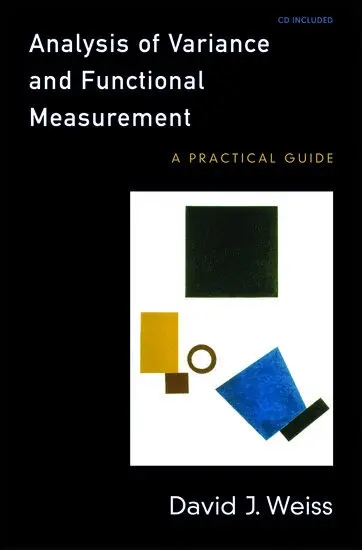
    Analysis of Variance and Functional Measurement

    A Practical Guide

    AvDavid J. Weiss

    Inbunden, Engelska, 2005

    1 325 kr

    Beställningsvara. Skickas inom 5-8 vardagar. Fri frakt över 249 kr.

    Fler format och utgåvor

    E-bok

    690 kr

    Beskrivning

    Analysis of variance is the backbone of experimental research. This book is a clear and straightforward guide to how to do the analyses, with an emphasis on how to interpret statistical results and translate them into prose that will clearly tell the audience what the data are saying. There are plenty of end-of-chapter practice problems, all with suggested answers. Life in the laboratory doesn't always follow the script, so both new and established techniques are presented for coping with non-standard situations. Because data analysis is not a closed subject, pros and cons are presented for various options. The final chapter is the first elementary presentation of functional measurement, a methodology built upon analysis of variance. Initially developed by Norman H Anderson, functional measurement (also known as information integration theory) offers a powerful technology for studying cognitive processes. The accompanying CD contains analysis of variance software that is easy to use (really!), with an interface that greets the user with appropriate requests. In addition to programs for standard analyses, the software includes several specialized routines that have heretofore been presented only in journals. This guide will be an important resource for students and professionals in the social, behavioural and neurosciences.

    Produktinformation

    • Utgivningsdatum:2005-12-01
    • Mått:239 x 160 x 22 mm
    • Vikt:558 g
    • Format:Inbunden
    • Språk:Engelska
    • Antal sidor:280
    • Förlag:OUP USA
    • ISBN:9780195183153

    Utforska kategorier

    • Socialpsykologi och gruppsykologi inom Psykologi och pedagogik
    • Barnpsykologi och utvecklingspsykologi inom Psykologi och pedagogik
    • Psykologisk metod inom Psykologi och pedagogik

    Recensioner i media

    "This is a well-written introduction to ANOVA.... The multitude of examples and handy parallels with the included statistical software make this a user-friendly book." --Doody's"This is an outstanding textbook on experimental design and analysis. It is ideally positioned for new students with little or no background in statistics. It has three notable features that put it above the competitors: First, it is extremely well written and easy to follow . . . Second, the book contains several important topics that are often ignored in comparable books . . . Third, the CALSTAT computer package is a delight! It is a stable, well-programmedseries of interconnected programs that are approachable, even fun to use. In fact, CALSTAT is worth the price of the book alone. The bottom line is that Weiss text sets the standard for use in designand analysis courses targeted to students with minimal background."--James Shanteau, University Distinguished Professor and Commerce Bank Distinguished Graduate Professor of Psychology, Kansas State University"Analysis of Variance and Functional Measurement is an essential addition to the bookshelf of any serious analyst of behavioral data. Like a good dance partner who neither leads nor follows but anticipates and trusts, Weiss has an uncanny talent for writing clearly about sophisticated and complex issues with a tone that is singularly authoritative and compassionate. Readers will find 14 well-written, satisfying chapters that explain statisticalconcepts in everyday language, many of which are short enough to be read in a single sitting. With this book, David Weiss succeeds in becoming what every student hopes foran ally in the classroom."-- Anthony D. Ong,Department of Psychology, University of Notre Dame"Finally, a literate and readable statistics text. Students now have one fewer reason to avoid learning statistics. If Weiss lectures as well as he writes, someone should nominate him for teacher of the year."-- Warren Thorngate, Professor of Psychology, Carleton University"Those of us who have suffered its teaching tortures know the signs. Heavy lids. Furrowed brows. Empty seats. Frequent groans. And a text thicker than two planks, more expensive than a heart transplant, and read less often than the Gideon bible. The joys of teaching advanced statistics to less-than-advanced students are few (Mean = 0.3, df = 0, p 0.02). Yet there are signs of hope. Our own David Weiss has just published a thoughtful, readable, and refreshinglyshort textbook on the analysis of variance and functional measurement, suitable for advanced undergraduates or graduate students in a 10-12 week course, or for people wanting to jog their memory aboutthese topics. Worth a look for a course adoption." --Society for Judgment and Decision Making Newsletter, March 2006"...useful as a practical guide for both undergraduate and postgraduate work (as well as academics who have gotten a bit rusty!)...This book provides excellent advice and procedures for dealing with missing data, non-normal distributions and differences in sample sizes ...an excellent learning and reference text for most social scientists."--Psychology Teaching Review"This is a well-written introduction to ANOVA.... The multitude of examples and handy parallels with the included statistical software make this a user-friendly book." --Doody's"This is an outstanding textbook on experimental design and analysis. It is ideally positioned for new students with little or no background in statistics. It has three notable features that put it above the competitors: First, it is extremely well written and easy to follow . . . Second, the book contains several important topics that are often ignored in comparable books . . . Third, the CALSTAT computer package is a delight! It is a stable, well-programmedseries of interconnected programs that are approachable, even fun to use. In fact, CALSTAT is worth the price of the book alone. The bottom line is that Weiss text sets the standard for use in designand analysis courses targeted to students with minimal background."--James Shanteau, University Distinguished Professor and Commerce Bank Distinguished Graduate Professor of Psychology, Kansas State University"Analysis of Variance and Functional Measurement is an essential addition to the bookshelf of any serious analyst of behavioral data. Like a good dance partner who neither leads nor follows but anticipates and trusts, Weiss has an uncanny talent for writing clearly about sophisticated and complex issues with a tone that is singularly authoritative and compassionate. Readers will find 14 well-written, satisfying chapters that explain statisticalconcepts in everyday language, many of which are short enough to be read in a single sitting. With this book, David Weiss succeeds in becoming what every student hopes foran ally in the classroom."-- Anthony D. Ong,Department of Psychology, University of Notre Dame"Finally, a literate and readable statistics text. Students now have one fewer reason to avoid learning statistics. If Weiss lectures as well as he writes, someone should nominate him for teacher of the year."-- Warren Thorngate, Professor of Psychology, Carleton University"Those of us who have suffered its teaching tortures know the signs. Heavy lids. Furrowed brows. Empty seats. Frequent groans. And a text thicker than two planks, more expensive than a heart transplant, and read less often than the Gideon bible. The joys of teaching advanced statistics to less-than-advanced students are few (Mean = 0.3, df = 0, p < 0.02). Yet there are signs of hope. Our own David Weiss has just published a thoughtful, readable, andrefreshingly short textbook on the analysis of variance and functional measurement, suitable for advanced undergraduates or graduate students in a 10-12 week course, or for people wanting to jog their memoryabout these topics. Worth a look for a course adoption." --Society for Judgment and Decision Making Newsletter, March 2006"...useful as a practical guide for both undergraduate and postgraduate work (as well as academics who have gotten a bit rusty!)...This book provides excellent advice and procedures for dealing with missing data, non-normal distributions and differences in sample sizes ...an excellent learning and reference text for most social scientists."--Psychology Teaching Review

    Innehållsförteckning

    • 1. Introduction ; 2. One-way ANOVA ; 3. Using the Computer ; 4. Factorial Structure ; 5. Two-way ANOVA ; 6. Multifactor Designs ; 7. Error-Purifying Designs ; 8. Specific Comparisons ; 9. Measurement Issues ; 10. Strength of Effect ; 11. Nested Designs ; 12. Missing Data ; 13. Confounded Designs ; 14. Introduction to Functional Measurement