• Fri frakt över 249 kr
  • •
  • Snabba leveranser
  • •
  • Billiga böcker
Kundservice

Du är på sajten för privatpersoner.

Företag, bibliotek eller offentlig verksamhet?

Du handlar på classic.bokus.com, där alla dina funktioner finns intakta.
Till classic.bokus.com
Bokus logotyp. Gå till startsidan.
  • Erbjudanden
  • Nyheter
  • Student
  • Topplistor
  • Barn & ungdom
  • Bokus Play
  • E-böcker
  • Pocketböcker
  • Spel & pussel

10% rabatt på allt med kod: NYSTART10 →

Sidfot

Mina sidor

    Hjälp

    • Kundservice
    • Vanliga frågor och svar
    • Frakt och leverans
    • Retur vid ångerrätt
    • Reklamera vara
    • Betalning
    • Köpvillkor
    • Allmänna villkor
    • Information om webbplatsens tillgänglighet

    Om Bokus

    • Om oss
    • Pressrum
    • För studenter
    • För företag
    • För bibliotek och offentlig verksamhet
    • För leverantörer
    • Hållbarhet

    Populärt

    • Aktuella erbjudanden
    • Presentkort
    • Studentlitteratur
    • Nya böcker
    • Topplistor
    • Signerade böcker
    • Engelska böcker

    Inspiration

    • Boktips
    • BookTok
    • Populära bokserier
    • Barnbokskaraktärer
    • Populära författare
    Logotyp för Bokus
    Följ oss på Facebook (extern länk)Följ oss på Instagram (extern länk)Följ oss på YouTube (extern länk)Följ oss på TikTok (extern länk)
    bokus @ CookiesAnpassa cookiesIntegritetspolicyKöpvillkor
    Till Citymail hemsida (extern länk)Till Budbee hemsida (extern länk)Till Postnord hemsida (extern länk)Till Schenker hemsida (extern länk)Till Early Bird hemsida (extern länk)Till Walleys hemsida (extern länk)
    1. Djur och Natur
    2. Naturböcker
    3. Växtböcker

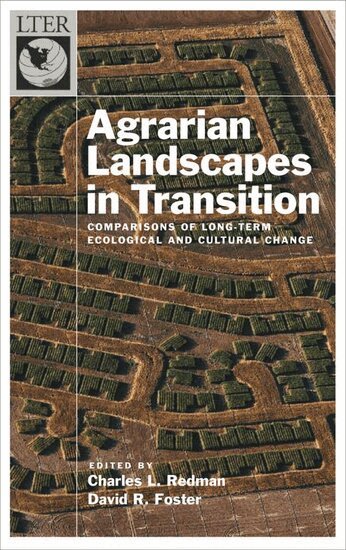
    Agrarian Landscapes in Transition

    Comparisons of Long-Term Ecological & Cultural Change

    AvCharles Redman,David R. Foster

    Inbunden, Engelska, 2008

    Del i serien Long-Term Ecological Research Network

    1 243 kr

    Beställningsvara. Skickas inom 5-8 vardagar. Fri frakt över 249 kr.

    Beskrivning

    Agrarian Landscapes in Transition researches human interaction with the earth. With hundreds of acres of agricultural land going out of production every day, the introduction, spread, and abandonment of agriculture represents the most pervasive alteration of the Earth's environment for several thousand years. What happens when humans impose their spatial and temporal signatures on ecological regimes, and how does this manipulation affect the earth and nature's desire for equilibrium? Studies were conducted at six Long Term Ecological Research sites within the US, including New England, the Appalachian Mountains, Colorado, Michigan, Kansas, and Arizona. While each site has its own unique agricultural history, patterns emerge that help make sense of how our actions have affected the earth, and how the earth pushes back. The book addresses how human activities influence the spatial and temporal structures of agrarian landscapes, and how this varies over time and across biogeographic regions. It also looks at the ecological and environmental consequences of the resulting structural changes, the human responses to these changes, and how these responses drive further changes in agrarian landscapes. The time frames studied include the ecology of the earth before human interaction, pre-European human interaction during the rise and fall of agricultural land use, and finally the biological and cultural response to the abandonment of farming, due to complete abandonment or a land-use change such as urbanization.

    Produktinformation

    • Utgivningsdatum:2008-07-17
    • Mått:160 x 234 x 20 mm
    • Vikt:522 g
    • Format:Inbunden
    • Språk:Engelska
    • Serie:Long-Term Ecological Research Network
    • Antal sidor:296
    • Förlag:OUP USA
    • ISBN:9780195367966

    Utforska kategorier

    • Växtböcker inom Djur och Natur
    • Konsthistoria inom Kultur
    • Botanik inom Naturvetenskap och teknik

    Mer om författaren

    Charles Redman received his BA from Harvard University, and his MA and PhD in Anthropology from the University of Chicago. He taught at New York University and at SUNY-Binghamton before coming to Arizona State University in 1983. Since then, he served nine years as Chair of the Department of Anthropology, seven years as Director of the Center for Environmental Studies and, in 2004, was chosen to be the Julie Ann Wrigley Director of the newly formed Global Institute of Sustainability. Redman's interests include human impacts on the environment, sustainable landscapes, rapidly urbanizing regions, urban ecology, environmental education, and public outreach. He is the author or co-author of 10 books (see below). Redman is currently working on building upon the extensive urban-environmental research portfolio of the Global Institute of Sustainability through the new School of Sustainability, for which he serves as Director. The School is educating a new generation of leaders through collaborativelearning, transdisciplinary approaches, and problem-oriented training to address the environmental, economic, and social challenges of the 21st century. David Foster is an ecologist and director of the Harvard Forest at Harvard University where he is a faculty member in the Department of Organismic and Evolutionary Biology and Principal Investigator for the Harvard Forest Long Term Ecological Research program.

    Innehållsförteckning

    • Authors Biographical Notes ; Acknowledgements ; Introduction - Charles L. Redman, Arizona State University (CAP LTER) ; Chapter 1: Changing Agrarian Landscapes across America: A Comparative Perspective - Kenneth M. Sylvester and Myron P. Gutmann, University of Michigan (Shortgrass Steppe LTER) ; Chapter 2: New Englands Forest Landscape: Ecological Legacies and Conservation Patterns Shaped by Agrarian History - David R. Foster, Brian Donahue, Dave Kittredge, Glenn Motzkin, Brian Hall, Billie Turner, and Elizabeth Chilton, Harvard University (Harvard Forest LTER) ; Chapter 3: Agrarian Transformation of Southern Appalachia - Ted L. Gragson, Paul V. Bolstad, and Meredith Welch Devine, University of Georgia (Coweeta LTER) ; Chapter 4: Dustbowl Legacies: Long-Term Change and Resilience in the Shortgrass Steppe - Kenneth M. Sylvester and Myron P. Gutmann, University of Michigan (Shortgrass Steppe LTER) ; Chapter 5: The Political Ecology of SW Michigan Agriculture, 1837-2000 - Alan Rudy, Craig Harris, Brian Thomas, Michelle Worosz, Siena Kaplan, and Evann C. O'Donnell Michigan State University (Kellog Bioligical Station) ; Chapter 6: Agrarian Landscape Transition in the Flint Hills of Kansas: Legacies and Resilience - Gerad Middendorf, Derrick Cline, and Leonard Bloomquist (deceased), Kansas State University (Konza Prairie LTER) ; Chapter 7: Water Can Flow Uphill: A Narrative of Central Arizona - Charles L. Redman and Ann P. Kinzig, Arizona State University (CAP LTER) ; Conclusion - Ted L. Gragson, University of Georgia (Coweeta LTER)