• Fri frakt över 249 kr
  • •
  • Snabba leveranser
  • •
  • Billiga böcker
Kundservice

Du är på sajten för privatpersoner.

Företag, bibliotek eller offentlig verksamhet?

Du handlar på classic.bokus.com, där alla dina funktioner finns intakta.
Till classic.bokus.com
Bokus logotyp. Gå till startsidan.
  • Erbjudanden
  • Nyheter
  • Student
  • Topplistor
  • Barn & ungdom
  • Bokus Play
  • E-böcker
  • Pocketböcker
  • Spel & pussel

Må bättre, för mindre! Upp till 50% rabatt på hälsoböcker

Sidfot

Mina sidor

    Hjälp

    • Kundservice
    • Vanliga frågor och svar
    • Frakt och leverans
    • Retur vid ångerrätt
    • Reklamera vara
    • Betalning
    • Köpvillkor
    • Allmänna villkor
    • Information om webbplatsens tillgänglighet

    Om Bokus

    • Om oss
    • Pressrum
    • För studenter
    • För företag
    • För bibliotek och offentlig verksamhet
    • För leverantörer
    • Hållbarhet

    Populärt

    • Aktuella erbjudanden
    • Presentkort
    • Studentlitteratur
    • Nya böcker
    • Topplistor
    • Signerade böcker
    • Engelska böcker

    Inspiration

    • Boktips
    • BookTok
    • Populära bokserier
    • Barnbokskaraktärer
    • Populära författare
    Logotyp för Bokus
    Följ oss på Facebook (extern länk)Följ oss på Instagram (extern länk)Följ oss på YouTube (extern länk)Följ oss på TikTok (extern länk)
    bokus @ CookiesAnpassa cookiesIntegritetspolicyKöpvillkor
    Till Citymail hemsida (extern länk)Till Budbee hemsida (extern länk)Till Postnord hemsida (extern länk)Till Schenker hemsida (extern länk)Till Early Bird hemsida (extern länk)Till Walleys hemsida (extern länk)
    1. Medicin
    2. Andra medicinska specialiteter
    3. Psykiatri

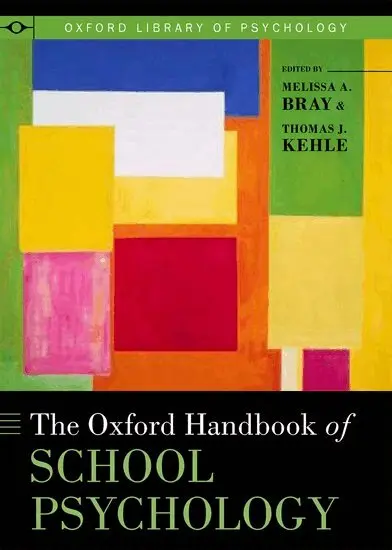
    The Oxford Handbook of School Psychology

    AvPeter E Nathan,Melissa A. Bray

    Inbunden, Engelska, 2011

    Del i serien Oxford Library of Psychology

    3 214 kr

    Beställningsvara. Skickas inom 5-8 vardagar. Fri frakt över 249 kr.

    Beskrivning

    With its roots in clinical and educational psychology, school psychology is an ever-changing field that encompasses a diversity of topics. The Oxford Handbook of School Psychology synthesizes the most vital and relevant literature in all of these areas, producing a state-of-the-art, authoritative resource for practitioners, researchers, and parents. Comprising chapters authored by the leading figures in school psychology, The Oxford Handbook of School Psychology focuses on the significant issues, new developments, and scientific findings that continue to change the practical landscape. The handbook's focuses include: - allegiance to the reciprocal relationship between science and practice to promote problem-solving and enrichment models- service delivery designed to improve competencies of all students- the relationship between general cognitive ability and important life outcomes- the development of viable and enduring educational, family, and community systems to support students- increasing student diversity and the necessity of increased sensitivity to the influences of social, cultural, political, and legislative variables of schooling- outlining tenable reasons why, since the end of World War II, children from kindergarten through the secondary grades have generally not been the recipients of a superior or efficient educational system- all relevant legislation, including the No Child Left Behind Act, and the ongoing question of who or what is responsible for the inadequate academic preparation of inner-city children- building a cumulative knowledge base to better facilitate students' academic, social, and personal competencies including the promotion of positive mental health and subjective well-beingThe scholarship compiled here is a must-read for practitioners, students, and faculty, and an ideal resource for parents seeking a scientific approach to the efficacy of school psychology practices. In both breadth and depth, this handbook promises to serve as the benchmark reference work for years to come.

    Produktinformation

    • Utgivningsdatum:2011-03-03
    • Mått:254 x 191 x 53 mm
    • Vikt:1 760 g
    • Format:Inbunden
    • Språk:Engelska
    • Serie:Oxford Library of Psychology
    • Antal sidor:920
    • Förlag:OUP USA
    • ISBN:9780195369809

    Utforska kategorier

    • Psykiatri inom Medicin

    Mer om författaren

    Melissa A. Bray is Associate Professor in the Department of Educational Psychology and the School Psychology Program at the University of Connecticut.Thomas J. Kehle is Professor and Director of School Psychology at the University of Connecticut.

    Recensioner i media

    "Bray and Kehle have set a new standard for the field. With over 40 chapters by a virtual who's-who in the school psychology community and beyond, this book is comprehensive in both scope and substance. Alongside sections on traditional topics, the handbook includes sections related to more contemporary and pressing concerns such as research methods, professional issues, gifted education, subjective well-being, program evaluation, technology in practice,pediatric psychopharmacology, mathematics assessment, and the role of legislation... An invaluable resource for many years to come." Frank C. Worrell University of California, Berkeley"All the latest legislation is included in this book, which is a resource that should be in the libraries of all professionals who work in school systems." --Doody's

    Innehållsförteckning

    • Part One: Introduction and Overview 1. Introduction: On Such a Full Sea and We Continue to FlounderThomas J. Kehle and Melissa A. Bray Part Two: Historical and Contemporary Issues 2. The History of School Psychology: Understanding the Past to Not Repeat It Rik Carl D'Amato, Christina Zafiris, Erica McConnell, and Raymond S. Dean 3. The Expanding Role of School PsychologyCarrie Ball, Eric Pierson, and David E. McIntosh Part Three: Theoretical Perspectives 4. Individual DifferencesThomas J. Kehle and Melissa A. Bray 5. Theories of IntelligenceMichael K. Gardner Part Four: Research Methodology and Data Analysis 6. Research Methodology for Decision-Making in School PsychologyHariharan Swaminathan, H. Jane Rogers, and Rohini Sen 7. Data Analysis for Effective Decision MakingHoi K. Suen, Pui-Wa Lei, and Hongli Li Part Five: Assessment 8. Advances in Neuroscience and Reading DisabilitiesElaine Clark and Janiece L. Pompa 9. Functional Assessment of BehaviorT. Steuart Watson, Mark W. Steege, and Tonya S. Watson 10. Academic AssessmentEdward S. Shapiro, Jaime Benson, Nathan Clemens, and Karen L. Gischlar 11. The Development and Model of Therapeutic Assessment with Children: Application to School-based AssessmentDeborah J. Tharinger, Lauren S. Krumholz, Cynthia Austin, and May Matson 12. Assessment of Classroom EnvironmentsMaribeth Gettinger, Clarissa Schienebeck, Stephanie Seigel, and Laura Vollmer 13. Assessment of Externalizing Behavioral Deficits Robert J. Volpe and Sandra M. Chafouleas 14. Assessment of Internalizing Behavioral DeficitsRandy W. Kamphaus and Kristen L. Mays 15. Learning Disabilities: Assessment, Identification and TreatmentH. Lee Swanson Part Six: Intervention 16. Prevention as Early Intervention for Young Children at Risk: Recognition and Response in Early ChildhoodCathryn Lehman, Jennifer L. Salaway, Stephen J. Bagnato, Robert M. Grom, and Barbara Willard 17. Externalizing Disorders in Children and Adolescents: Behavioral Excess and Behavioral DeficitsWilliam R. Jenson, Sarah Harward, and Julie M. Bowen 18. Interventions for Students with Internalizing Behavioral DeficitsBarbara A. Gueldner and Kenneth W. Merrell 19. Classroom Interventions for Attention and HyperactivityGeorge J. DuPaul, Jocelyn R. Helwig, and Peter M. Slay 20. Social Skills Assessment and InterventionRichard J. Cowan 21. Challenging Gifted and Talented Learners with a Continuum of Research-Based Interventions StrategiesSally M. Reis and Joseph S. Renzulli 22. Interventions to Address School Crises and ViolenceSteven G. Little, Angeleque Akin-Little, and Natasha S. Medley 23. Promoting Subjective Well-BeingShannon M. Suldo, E. Scott Huebner, Jessica Michalowski, and Amanda Thalji 24. Efficacy of Special EducationKenneth A. Kavale and Lucinda S. Spaulding 25. Academic Interventions: What School Psychologists Need to Know for Their Assessment and Problem Solving Consultation RolesVirginia W. Berninger, Michel Fayol, and Nicole Alston-Abel 26. Evidence-based Practice and Autism Spectrum DisordersSusan M. Wilczynski, Laura Fisher, Leslie Sutro, Jennifer Bass, Dipti Mudgal, Victoria Zeiger, Lauren Christian, and Jesse Logue 27. The ClassMaps Framework for Data-Based, Classwide Classroom ManagementBeth Doll, Kristin Jones, Allison Champion, Allison Osborn, Sharon Zumbrunn, Alyssa Collaro, and Chelsie Guerrero 28. Response to Intervention: Conceptual Foundations and Evidence-Based PracticesFrank M. Gresham 29. Counseling in the Practice of School PsychologyTony D. Crespi and Denise E. Laframboise 30. Systems-Based Service Delivery in School PsychologySusan G. Forman and Jeffrey S. Selman 31. Positive Behavioral SupportsLisa M. Hagermoser Sanetti and Brandi Simonsen 32. Problem Solving Consultation: Applications in Evidence-Based Prevention and InterventionCaroline N. Racine Gilles, Thomas R. Kratochwill, Jacquelyn N. Felt, Clarissa Schienebeck, and Cara A. Vaccarello Part Seven: Medical Problems 33. Pediatric Health-Related Disorders: Prevention and Early InterventionLeAdelle Phelps 34. Pediatric PsychopharmacologyThomas Kubiszyn 35. Psychologically-Based Treatments for Children with Medical ProblemsLaura B. Allen, Jennie C. I. Tsao, Caryn Freeman, and Lonnie K. Zeltzer Part Eight: Professional Issues 36. The Influence of Legislation on the Practice of School PsychologyAngie Dahl, Kathryn E. Hoff, Gretchen Gimpel Peacock, and Ruth A. Ervin 37. Ethical Considerations in the Practice of School PsychologyKathleen M. McNamara 38. Emerging Trends in the Preparation of School Psychologists for Practice Rich Gilman, Kristen Missall, and Ryan Macks 39. Program Planning and EvaluationLaura M. Crothers, Lea A. Theodore, and Tammy L. Hughes 40. International Development of School PsychologyBonnie Kaul Nastasi and Kris Varjas Part Nine: Conclusions and Future Directions 41. Technology in the Practice of School Psychology: The Future is Past TenseJack A. Cummings 42. The Clinical Interview in Mathematics Assessment and Intervention: The Case of FractionsZheng Zhou 43. Conclusion: Evolution of School PsychologyTanya L. Eckert