• Fri frakt över 249 kr
  • •
  • Snabba leveranser
  • •
  • Billiga böcker
Kundservice

Du är på sajten för privatpersoner.

Företag, bibliotek eller offentlig verksamhet?

Du handlar på classic.bokus.com, där alla dina funktioner finns intakta.
Till classic.bokus.com
Bokus logotyp. Gå till startsidan.
  • Erbjudanden
  • Nyheter
  • Student
  • Topplistor
  • Barn & ungdom
  • Bokus Play
  • E-böcker
  • Pocketböcker
  • Spel & pussel

Må bättre, för mindre! Upp till 50% rabatt på hälsoböcker

Sidfot

Mina sidor

    Hjälp

    • Kundservice
    • Vanliga frågor och svar
    • Frakt och leverans
    • Retur vid ångerrätt
    • Reklamera vara
    • Betalning
    • Köpvillkor
    • Allmänna villkor
    • Information om webbplatsens tillgänglighet

    Om Bokus

    • Om oss
    • Pressrum
    • För studenter
    • För företag
    • För bibliotek och offentlig verksamhet
    • För leverantörer
    • Hållbarhet

    Populärt

    • Aktuella erbjudanden
    • Presentkort
    • Studentlitteratur
    • Nya böcker
    • Topplistor
    • Signerade böcker
    • Engelska böcker

    Inspiration

    • Boktips
    • BookTok
    • Populära bokserier
    • Barnbokskaraktärer
    • Populära författare
    Logotyp för Bokus
    Följ oss på Facebook (extern länk)Följ oss på Instagram (extern länk)Följ oss på YouTube (extern länk)Följ oss på TikTok (extern länk)
    bokus @ CookiesAnpassa cookiesIntegritetspolicyKöpvillkor
    Till Citymail hemsida (extern länk)Till Budbee hemsida (extern länk)Till Postnord hemsida (extern länk)Till Schenker hemsida (extern länk)Till Early Bird hemsida (extern länk)Till Walleys hemsida (extern länk)
    1. Historia och arkeologi
    2. Historia
    3. Forntidens historia

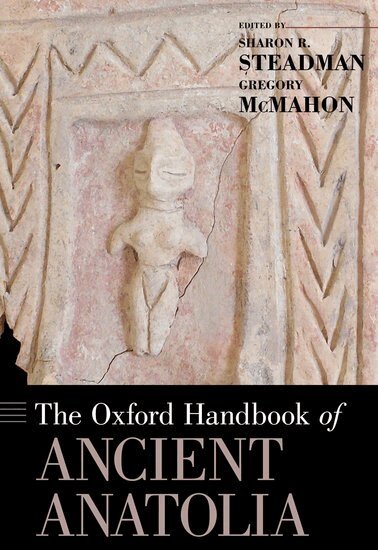
    The Oxford Handbook of Ancient Anatolia

    (10,000-323 BCE)

    AvSTEADMAN,Sharon R. Steadman

    Inbunden, Engelska, 2011

    Del i serien Oxford Handbooks

    4 174 kr

    Beställningsvara. Skickas inom 5-8 vardagar. Fri frakt över 249 kr.

    Beskrivning

    The Oxford Handbook of Ancient Anatolia is a unique blend of comprehensive overviews on archaeological, philological, linguistic, and historical issues at the forefront of Anatolian scholarship in the 21st century. Anatolia is home to early complex societies and great empires, and was the destination of many migrants, visitors, and invaders. The offerings in this volume bring this reality to life as the chapters unfold nearly ten thousand years (ca. 10,000-323 B.C.E.) of peoples, languages, and diverse cultures who lived in or traversed Anatolia over these millennia. The contributors combine descriptions of current scholarship on important discussion and debates in Anatolian studies with new and cutting edge research for future directions of study. The fifty-four chapters are presented in five separate sections that range in topic from chronological and geographical overviews to anthropologically based issues of culture contact and imperial structures, and from historical settings of entire millennia to crucial data from key sites across the region. The contributors to the volume represent the best scholars in the field from North America, Europe, Turkey, and Asia. The appearance of this volume offers the very latest collection of studies on the fascinating peninsula known as Anatolia.

    Produktinformation

    • Utgivningsdatum:2011-09-15
    • Mått:251 x 185 x 61 mm
    • Vikt:2 285 g
    • Format:Inbunden
    • Språk:Engelska
    • Serie:Oxford Handbooks
    • Antal sidor:1 200
    • Förlag:OUP USA
    • ISBN:9780195376142

    Utforska kategorier

    • Forntidens historia inom Historia och arkeologi
    • Språkvetenskap och lingvistik inom Språk och ordböcker
    • Arkeologi inom Historia och arkeologi

    Mer om författaren

    Sharon R. Steadman is Associate Professor of Anthropology, SUNY Cortland; Director of the Brooks Museum at SUNY Cortland.Gregory McMahon is Associate Professor of History and Humanities, University of New Hampshire.

    Recensioner i media

    The Oxford Handbook of Ancient Anatolia has much to recommend it. Most of its chapters are well written, researched, and presented, and will serve their purpose of introducing readers to ancient Anatolia admirably. The project was an ambitious one, involving the co-ordination of fifty-six scholars based in more than ten different countries, and the finished volume represents a rich resource for students and established scholars alike.

    Innehållsförteckning

    • 1. Introduction: The Handbook of Ancient Anatolia PART I: The Archaeology of Anatolia: Background and Definitions2. The Land and Peoples of Anatolia Through Ancient Eyes3. A History of the Pre-Classical Archaeology of Anatolia4. Anatolian Chronology and Terminology PART II: Chronology and Geography 5. The Neolithic on the Plateau6. The Neolithic in Southeastern Anatolia7. The Chalcolithic on the Plateau8. The Chalcolithic in Southeastern Anatolia9. The Chalcolithic in Eastern Anatolia The Early Bronze Age10. The Early Bronze Age on the Plateau11. The Early Bronze Age in Southeastern Anatolia12. Eastern Anatolia in the Early Bronze Age The Middle Bronze Age13. The Karum Period on the Plateau14. Southeastern and Eastern Anatolia in the Middle Bronze Age The Late Bronze Age15. The Late Bronze Age in the West and the Aegean16. The Hittites on the Plateau17. Southern and Southeastern Anatolia in the Late Bronze Age The Iron Age19. The Iron Age of Southeastern Anatolia20. The Iron Age in Eastern Anatolia21. The Greeks in Western Anatolia PART III: Philological and Historical Topics 23. Luwian and the Luwians24. Urartian and the Urartians25. Phrygian and the Phrygians26. A Political History of Hittite Anatolia27. Anatolia:The First Millennium in Historical Context28. Monuments and Memory: Architecture and Visual Culture in Ancient Anatolian History PART IV: Thematic and Specific Topics 29. Eastern Thrace: The Contact Zone Between Anatolia and the Balkans30. Anatolia and the Transcaucasus: Themes and Variations ca. 6400-1500 BCE31. Indo-European and Indo-Europeans in Anatolia32. Troy in Regional and International Context33. Assyrians and Urartians34. The Greeks in Anatolia: From the Migrations to Alexander From Pastoralists to Empires: Critical Issues35. The Halaf Tradition36. Millennia in the Middle? Reconsidering the Chalcolithic of Asia Minor37. Interaction of Uruk and Northern Late Chalcolithic Societies in Anatolia38. Ancient Landscapes in Southeastern Anatolia39. Metals and Metallurgy40. The Hittite State and Empire from Archaeological Evidence41. The Hittite Empire from Textual Evidence PART V: Key Sites 43. Çatal Höyük: A Prehistoric Settlement on the Konya Plain44. Ilipinar: A Neolithic Settlement in the Eastern Marmara Region45. Arslantepe-Malatya: A Prehistoric and Early Historic Center in Eastern Anatolia46. Titris Höyük: The Nature and Context of Third Millennium B.C.E. Urbanism in the Upper Euphrates Basin47. Kültepe-Kanes: A Second Millennium Trading Center on the Central Plateau48. Key Sites of the Hittite Empire49. Ayanis: An Iron Age Site in the East50. Gordion: The Changing Political and Economic Roles of a First Millennium City51. The Stratigraphy of Kaman-Kalehöyük in Central Anatolia52. Sardis: A First Millennium Capital in Western Anatolia