• Fri frakt över 249 kr
  • •
  • Snabba leveranser
  • •
  • Billiga böcker
Kundservice

Du är på sajten för privatpersoner.

Företag, bibliotek eller offentlig verksamhet?

Du handlar på classic.bokus.com, där alla dina funktioner finns intakta.
Till classic.bokus.com
Bokus logotyp. Gå till startsidan.
  • Erbjudanden
  • Nyheter
  • Student
  • Topplistor
  • Barn & ungdom
  • Bokus Play
  • E-böcker
  • Pocketböcker
  • Spel & pussel

10% studentrabatt med kod TERM26

Sidfot

Mina sidor

    Hjälp

    • Kundservice
    • Vanliga frågor och svar
    • Frakt och leverans
    • Retur vid ångerrätt
    • Reklamera vara
    • Betalning
    • Köpvillkor
    • Allmänna villkor
    • Information om webbplatsens tillgänglighet

    Om Bokus

    • Om oss
    • Pressrum
    • För studenter
    • För företag
    • För bibliotek och offentlig verksamhet
    • För leverantörer
    • Hållbarhet

    Populärt

    • Aktuella erbjudanden
    • Presentkort
    • Studentlitteratur
    • Nya böcker
    • Topplistor
    • Signerade böcker
    • Engelska böcker

    Inspiration

    • Boktips
    • BookTok
    • Populära bokserier
    • Barnbokskaraktärer
    • Populära författare
    Logotyp för Bokus
    Följ oss på Facebook (extern länk)Följ oss på Instagram (extern länk)Följ oss på YouTube (extern länk)Följ oss på TikTok (extern länk)
    bokus @ CookiesAnpassa cookiesIntegritetspolicyKöpvillkor
    Till Citymail hemsida (extern länk)Till Budbee hemsida (extern länk)Till Postnord hemsida (extern länk)Till Schenker hemsida (extern länk)Till Early Bird hemsida (extern länk)Till Walleys hemsida (extern länk)
    1. Medicin
    2. Andra medicinska specialiteter
    3. Klinisk psykologi

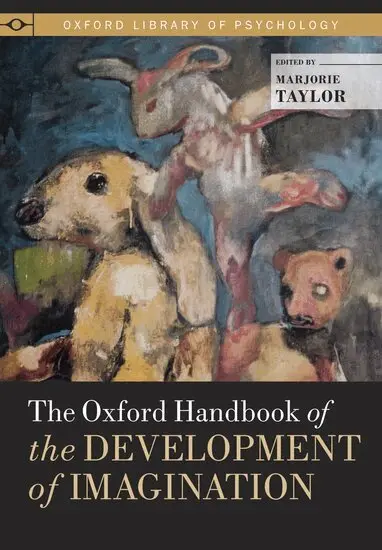
    The Oxford Handbook of the Development of Imagination

    AvMarjorie Taylor

    Inbunden, Engelska, 2013

    Del i serien Oxford Library of Psychology

    3 785 kr

    Beställningsvara. Skickas inom 7-10 vardagar. Fri frakt över 249 kr.

    Beskrivning

    Children are widely celebrated for their imaginations, but developmental research on this topic has often been fragmented or narrowly focused on fantasy. However, there is growing appreciation for the role that imagination plays in cognitive and emotional development, as well as its link with children's understanding of the real world. With their imaginations, children mentally transcend time, place, and/or circumstance to think about what might have been, plan and anticipate the future, create fictional relationships and worlds, and consider alternatives to the actual experiences of their lives. The Oxford Handbook of the Development of Imagination provides a comprehensive overview of this broad new perspective by bringing together leading researchers whose findings are moving the study of imagination from the margins of mainstream psychology to a central role in current efforts to understand human thought. The topics covered include fantasy-reality distinctions, pretend play, magical thinking, narrative, anthropomorphism, counterfactual reasoning, mental time travel, creativity, paracosms, imaginary companions, imagination in non-human animals, the evolution of imagination, autism, dissociation, and the capacity to derive real life resilience from imaginative experiences. Many of the chapters include discussions of the educational, clinical, and legal implications of the research findings and special attention is given to suggestions for future research.

    Produktinformation

    • Utgivningsdatum:2013-05-02
    • Mått:257 x 188 x 38 mm
    • Vikt:1 202 g
    • Format:Inbunden
    • Språk:Engelska
    • Serie:Oxford Library of Psychology
    • Antal sidor:608
    • Förlag:OUP USA
    • ISBN:9780195395761

    Utforska kategorier

    • Klinisk psykologi inom Medicin
    • Socialpsykologi och gruppsykologi inom Psykologi och pedagogik
    • Barnpsykologi och utvecklingspsykologi inom Psykologi och pedagogik

    Mer om författaren

    Marjorie Taylor, Ph.D., is Professor of Psychology in the Department of Psychology at the University of Oregon.

    Recensioner i media

    This book should be in the libraries of clinicians and researchers who are interested in cognition and the fantasy world of children.

    Innehållsförteckning

    • Part One: Introduction ; 1. Transcending Time, Place, and Circumstance: An Introduction to This Volume ; Marjorie Taylor ; 2. Historical Overview of Research on Imagination in Children ; Jerome L. Singer and Dorothy G. Singer ; Part Two: Fantasy-Reality Distinctions ; 3. Fairy Tales, History, and Religion ; Paul L. Harris ; 4. Magical Thinking ; Karl S. Rosengren and Jason French ; 5. Beliefs in Magical Beings and Cultural Myths ; Jacqueline D. Woolley and Chelsea A. Cornelius ; 6. Distinguishing Imagination From Reality ; Deena Skolnick Weisberg ; 7. Children's Source Monitoring of Memories for Imagination ; Mary Ann Foley ; 8. Suggestibility and Imagination in Early Childhood ; Nathalie Carrick, Elizabeth Rush, and Jodi A. Quas ; 9. Child witnesses and imagination: Lying, Hypothetical Reasoning, and Referential Ambiguity ; Thomas D. Lyon ; 10. Fictional Worlds, the Neuroscience of the Imagination, and Childhood Education ; Angeline S. Lillard ; Part Three: Pretend Play and Narrative ; 11. Executive Function, Pretend Play, and Imagination ; Stephanie M. Carlson and Rachel E. White ; 12. The Distinction between Role Play and Object Substitution in Pretend Play ; Alison B. Shawber-Sachet and Candice M. Mottweiler ; 13. How Do Children Represent Pretense? ; Ori Friedman ; 14. Culture, Narrative, and Imagination ; Elaine Reese ; 15. Flux and Flow in Children's Narratives ; Susan Engel ; 16. Pretend Play as Culturally Constructed Activity ; Suzanne Gaskins ; Part Four: Imagining the Self and Other ; 17. Imaginary Relationships ; Tracy R. Gleason ; 18. Imagining Other Minds: Anthropomorphism is Hair Triggered but not Hare Brained ; Adam Waytz, Nadav Klein, and Nicholas Epley ; 19. Imagination and the Self ; Chris Moore and John Barresi ; Part Five: Mental Time Travel, Counterfactual Thinking, and Causality ; 20. Future Thinking in Young Children ; Cristina M. Atance and Jennifer L. Metcalf ; 21. Counterfactuals and Reality ; Sarah R. Beck and Kevin J. Riggs ; 22. Causality and Imagination ; Caren M. Walker and Alison Gopnik ; 23. What Children Understand about the Flow of Mental Life ; Anne O. Eisbach ; Part Six: Creativity ; 24. Imagination and Personal Creativity ; Mark A. Runco and Jeremy Pina ; 25. Individual Differences in the Development of Social Creativity ; Christophe Mouchiroud and Franck Zenasni ; 26. The Relationship between Pretend Play and Creativity ; Eva V. Hoff ; 27. The Creation of Imaginary Worlds ; Michele M. Root-Bernstein ; 28. The Influence of Television, Video Games, and the Internet on Children's Creativity ; Sandra L. Calvert and Patti M. Valkenburg ; Part Seven: Comparative Issues ; 29. On the Evolution of Imagination and Design ; Thomas Suddendorf and Andy Dong ; 30. The Comparative Study of Imagination ; Robert W. Mitchell ; Part Eight: Clinical Issues ; 31. Imagination and Dissociation Across the Lifespan ; Kathryn A. Becker-Blease ; 32. The Development of Imagination in Children with Autism ; Fiona J. Scott ; 33. The Role of Pretend Play in Child Psychotherapy ; Sandra W. Russ and Karla K. Fehr ; 34. Imagination-based Interventions with Children ; Jana Porat and Avi Sadeh ; 35. Telling stories: Accessing Narrative Imagination for use in Assessment with Clinical and Typical Populations ; Miriam Steele ; 36. Imagination and Coping with Chronic Illness ; Cindy Dell Clark ; Part Nine: Conclusion ; 37. Looking ahead: Some Thoughts about Future Directions ; Marjorie Taylor