• Fri frakt över 249 kr
  • •
  • Snabba leveranser
  • •
  • Billiga böcker
Kundservice

Du är på sajten för privatpersoner.

Företag, bibliotek eller offentlig verksamhet?

Du handlar på classic.bokus.com, där alla dina funktioner finns intakta.
Till classic.bokus.com
Bokus logotyp. Gå till startsidan.
  • Erbjudanden
  • Nyheter
  • Student
  • Topplistor
  • Barn & ungdom
  • Bokus Play
  • E-böcker
  • Pocketböcker
  • Spel & pussel

10% rabatt på allt med kod NYSTART10 →

Sidfot

Mina sidor

    Hjälp

    • Kundservice
    • Vanliga frågor och svar
    • Frakt och leverans
    • Retur vid ångerrätt
    • Reklamera vara
    • Betalning
    • Köpvillkor
    • Allmänna villkor
    • Information om webbplatsens tillgänglighet

    Om Bokus

    • Om oss
    • Pressrum
    • För studenter
    • För företag
    • För bibliotek och offentlig verksamhet
    • För leverantörer
    • Hållbarhet

    Populärt

    • Aktuella erbjudanden
    • Presentkort
    • Studentlitteratur
    • Nya böcker
    • Topplistor
    • Signerade böcker
    • Engelska böcker

    Inspiration

    • Boktips
    • BookTok
    • Populära bokserier
    • Barnbokskaraktärer
    • Populära författare
    Logotyp för Bokus
    Följ oss på Facebook (extern länk)Följ oss på Instagram (extern länk)Följ oss på YouTube (extern länk)Följ oss på TikTok (extern länk)
    bokus @ CookiesAnpassa cookiesIntegritetspolicyKöpvillkor
    Till Citymail hemsida (extern länk)Till Budbee hemsida (extern länk)Till Postnord hemsida (extern länk)Till Schenker hemsida (extern länk)Till Early Bird hemsida (extern länk)Till Walleys hemsida (extern länk)
    1. Kultur
    2. Musikböcker
    3. Musikvetenskap

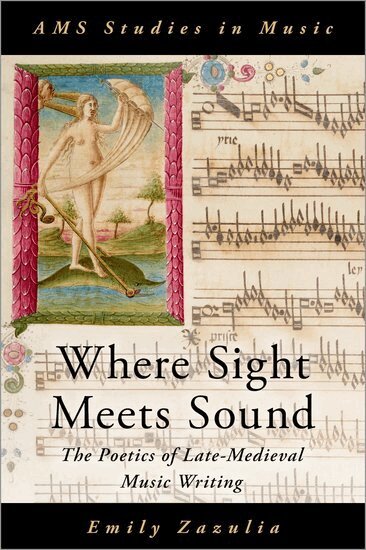
    Where Sight Meets Sound

    The Poetics of Late-Medieval Music Writing

    AvEmily Zazulia

    Inbunden, Engelska, 2022

    Del i serien AMS Studies in Music

    856 kr

    Beställningsvara. Skickas inom 5-8 vardagar. Fri frakt över 249 kr.

    Fler format och utgåvor

    E-bok

    567 kr

    E-bok

    567 kr

    Beskrivning

    The main function of western musical notation is incidental: it prescribes and records sound. But during the fourteenth and fifteenth centuries, notation began to take on an aesthetic life all its own. In the early fifteenth century, a musician might be asked to sing a line slower, faster, or starting on a different pitch than what is written. By the end of the century composers had begun tasking singers with solving elaborate puzzles to produce sounds whose relationship to the written notes is anything but obvious. These instructions, which appear by turns unnecessary and confounding, challenge traditional conceptions of music writing that understand notation as an incidental consequence of the desire to record sound. This book explores innovations in late-medieval music writing as well as how modern scholarship on notation has informed—sometimes erroneously—ideas about the premodern era. Drawing on both musical and music-theoretical evidence, this book reframes our understanding of late-medieval musical notation as a system that was innovative, cutting-edge, and dynamic—one that could be used to generate music, not just preserve it.

    Produktinformation

    • Utgivningsdatum:2022-03-24
    • Mått:164 x 239 x 20 mm
    • Vikt:708 g
    • Format:Inbunden
    • Språk:Engelska
    • Serie:AMS Studies in Music
    • Antal sidor:340
    • Förlag:OUP USA
    • ISBN:9780197551912
    • Utmärkelser:Winner, Early Music Award for outstanding scholarship on music before 1550, American Musicological Society Co-Winner, SMT - The Emerging Scholar Award (Book) from the Society for Music Theory

    Utforska kategorier

    • Musikvetenskap inom Kultur
    • Klassisk musik, konstmusik och orkestermusik inom Kultur

    Mer om författaren

    Emily Zazulia is Assistant Professor at the University of California, Berkeley, where she holds the Shirley Shenker Chair in the Arts and Humanities. She has published widely on medieval and Renaissance music, particularly concerning the intersection of complex notation, musical style, and intellectual history. Her research has received support from the National Endowment for the Humanities, the American Council of Learned Societies, the American Musicological Society, the Renaissance Society of America, and the Hellman Foundation.

    Recensioner i media

    One of the great strengths of this book is the way in which it contextualizes these individual pieces-which are often thought of as isolated notational curiosities-in a coherent history extending from the 13th to the 16th century.

    Innehållsförteckning

    • List of Figures List of Musical Examples List of Tables Abbreviations Sigla of Manuscripts and Early Printed Music Acknowledgments Introduction Metaphors of Music Writing Chapter 1: Shrinking Songs: Condensing Motet Tenors Chapter 2: Before There Was Rhythm Chapter 3: The Danger of False Exceptionalism Chapter 4: Signs and Metasigns Chapter 5: The Same, but Different Chapter 6: Small Songs Made Big Chapter 7: The Aesthetics of Transformation Conclusion Appendix 1 1 Kings 6, New King James Version (NKJV) Appendix 2 Masses with Notationally Fixed Tenors Bibliography Index