• Fri frakt över 249 kr
  • •
  • Snabba leveranser
  • •
  • Billiga böcker
Kundservice

Du är på sajten för privatpersoner.

Företag, bibliotek eller offentlig verksamhet?

Du handlar på classic.bokus.com, där alla dina funktioner finns intakta.
Till classic.bokus.com
Bokus logotyp. Gå till startsidan.
  • Erbjudanden
  • Nyheter
  • Student
  • Topplistor
  • Barn & ungdom
  • Bokus Play
  • E-böcker
  • Pocketböcker
  • Spel & pussel

10% rabatt på allt med kod: NYSTART10 →

Sidfot

Mina sidor

    Hjälp

    • Kundservice
    • Vanliga frågor och svar
    • Frakt och leverans
    • Retur vid ångerrätt
    • Reklamera vara
    • Betalning
    • Köpvillkor
    • Allmänna villkor
    • Information om webbplatsens tillgänglighet

    Om Bokus

    • Om oss
    • Pressrum
    • För studenter
    • För företag
    • För bibliotek och offentlig verksamhet
    • För leverantörer
    • Hållbarhet

    Populärt

    • Aktuella erbjudanden
    • Presentkort
    • Studentlitteratur
    • Nya böcker
    • Topplistor
    • Signerade böcker
    • Engelska böcker

    Inspiration

    • Boktips
    • BookTok
    • Populära bokserier
    • Barnbokskaraktärer
    • Populära författare
    Logotyp för Bokus
    Följ oss på Facebook (extern länk)Följ oss på Instagram (extern länk)Följ oss på YouTube (extern länk)Följ oss på TikTok (extern länk)
    bokus @ CookiesAnpassa cookiesIntegritetspolicyKöpvillkor
    Till Citymail hemsida (extern länk)Till Budbee hemsida (extern länk)Till Postnord hemsida (extern länk)Till Schenker hemsida (extern länk)Till Early Bird hemsida (extern länk)Till Walleys hemsida (extern länk)
    1. Filosofi och religion
    2. Filosofi
    3. Filosofiska discipliner

    Overfitting and Heuristics in Philosophy

    AvTimothy Williamson

    Inbunden, Engelska, 2024

    Del i serien The Rutgers Lectures in Philosophy

    303 kr

    Skickas . Fri frakt över 249 kr.

    Fler format och utgåvor

    E-bok

    269 kr

    E-bok

    269 kr

    Beskrivning

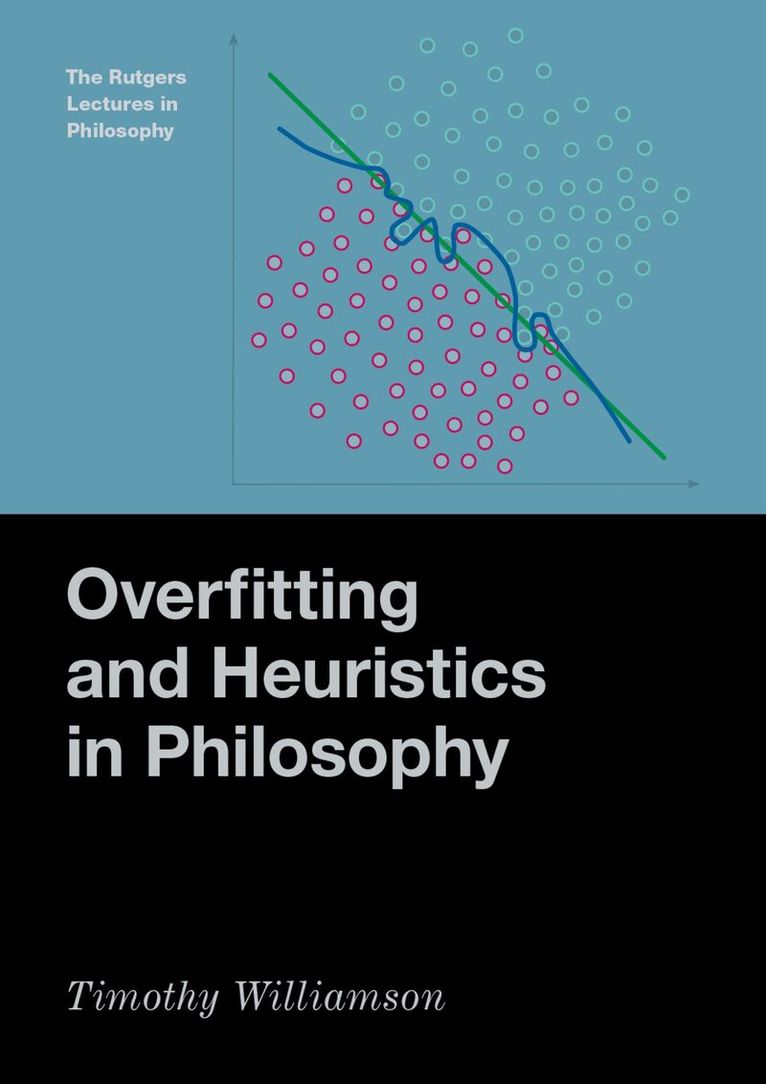
    In his Rutgers Lectures, Timothy Williamson explains how contemporary philosophy suffers from a widespread pathology known as overfitting to natural and social scientists, but little understood by most philosophers. Overfitting involves an insufficiently critical attitude towards data, which leads to over-complicated theories designed to fit what are in fact errors in the data. In philosophy, the data typically comprise verdicts on hypothetical or actual cases. Errors in such data can result from our reliance on heuristics, efficient cognitive shortcuts, simple to use but not fully reliable. Just as heuristics embedded in our visual system produce visual illusions, so heuristics embedded in our general cognitive systems produce philosophical paradoxes. Williamson explains the heuristics responsible for paradoxes of vagueness and identity over time, paradoxes of conditionals, paradoxes in ascribing beliefs and other mental states to others, paradoxes of truth and falsity, and paradoxes of weighing reasons and intersectionality. As a case study, Williamson shows how illusions of hyperintensionality can result from a heuristic that projects cognitively significant differences in how explanations are presented onto supposed differences in the non-linguistic world, which then form the starting point for metaphysicians' theorizing. In each case, Williamson provides independent evidence that we commonly use the heuristic, and that it sometimes leads us astray. In short, we are being suckered by our own heuristics, and the result is overfitting. Williamson also discusses how philosophers can best avoid these problems. Williamson's important diagnosis and prescription will be of interest to a wide range of philosophers.

    Produktinformation

    • Utgivningsdatum:2024-11-13
    • Mått:137 x 198 x 33 mm
    • Vikt:431 g
    • Format:Inbunden
    • Språk:Engelska
    • Serie:The Rutgers Lectures in Philosophy
    • Antal sidor:280
    • Förlag:OUP USA
    • ISBN:9780197779217

    Utforska kategorier

    • Filosofiska discipliner inom Filosofi och religion
    • Språkvetenskap och lingvistik inom Språk och ordböcker
    • Matematikens filosofi inom Naturvetenskap och teknik

    Mer om författaren

    Timothy Williamson is Wykeham Professor of Logic Emeritus at the University of Oxford and Whitney Griswold Visiting Professor at Yale University. He has also taught at MIT, Princeton, Edinburgh, Trinity College Dublin, Chinese University of Hong Kong, and elsewhere. He works on logic, philosophy of language, epistemology, metaphysics, and metaphilosophy. His books include Doing Philosophy, Tetralogue, Knowledge and its Limits, Vagueness, The Philosophy of Philosophy, and Suppose and Tell. He is a Fellow of the British Academy, Foreign Honorary Member of the American Academy of Arts and Sciences, and Member of the Academia Europaea.

    Innehållsförteckning

    • Preface Chapter 1. Heuristics1.1 Counterexamples1.2 What are heuristics?1.3 The persistence heuristic1.4 The suppositional heuristic for conditionals1.5 Disquotation and heuristics for belief ascription1.6 The weighing heuristic for reasons1.7 Implications for philosophical methodology Chapter 2. Overfitting and Degrees of Freedom2.1 Error-fragility2.2 Data fitting2.3 Overfitting in philosophical analysis2.4 Overfitting in semantics2.5 Overfitting in logic2.6 Overfitting in philosophical model-building2.7 Summing up Chapter 3. Case Study: Hyperintensionalism3.1 Two revolutions?3.2 Extensional, intensional, hyperintensional3.3 Hyperintensional semantics: impossible worlds3.4 Hyperintensional semantics: truthmakers3.5 Hyperintensional semantics: Russellian propositions3.6 The 'why?' heuristic Chapter 4. Frege puzzles4.1 Representational hyperintensionality4.2 The Fregean consensus4.3 The failure of the Fregean consensus4.4 Frege puzzles and synonymy4.5 Frege puzzles from the inside4.6 The necessary a posteriori and the contingent a priori4.7 Heuristics for belief ascription4.8 Heuristics for knowledge ascription4.9 Evidence4.10 Probability4.11 Epistemic and doxastic logic4.12 Drawing the threads together Chapter 5. Intensional metametaphysics5.1 Semantic challenges to metaphysics5.2 The coarse-grained challenge to metaphysics5.3 Generalizing the problem5.4 The metalinguistic strategy5.5 Reconceiving the problem5.6 In brief BibliographyIndex