• Fri frakt över 249 kr
  • •
  • Snabba leveranser
  • •
  • Billiga böcker
Kundservice

Du är på sajten för privatpersoner.

Företag, bibliotek eller offentlig verksamhet?

Du handlar på classic.bokus.com, där alla dina funktioner finns intakta.
Till classic.bokus.com
Bokus logotyp. Gå till startsidan.
  • Erbjudanden
  • Student
  • Topplistor
  • Barn & ungdom
  • Bokus Play
  • E-böcker
  • Ljudböcker
  • Pocketböcker
  • Spel & pussel

Upp till 25% på utvalda nyheter →

Sidfot

Mina sidor

    Hjälp

    • Kundservice
    • Vanliga frågor och svar
    • Frakt och leverans
    • Retur vid ångerrätt
    • Reklamera vara
    • Betalning
    • Köpvillkor
    • Allmänna villkor
    • Information om webbplatsens tillgänglighet

    Om Bokus

    • Om oss
    • Pressrum
    • För studenter
    • För företag
    • För bibliotek och offentlig verksamhet
    • För leverantörer
    • Hållbarhet

    Populärt

    • Aktuella erbjudanden
    • Presentkort
    • Studentlitteratur
    • Nya böcker
    • Topplistor
    • Signerade böcker
    • Engelska böcker

    Inspiration

    • Boktips
    • BookTok
    • Populära bokserier
    • Barnbokskaraktärer
    • Populära författare
    Logotyp för Bokus
    Följ oss på Facebook (extern länk)Följ oss på Instagram (extern länk)Följ oss på YouTube (extern länk)Följ oss på TikTok (extern länk)
    bokus @ CookiesAnpassa cookiesIntegritetspolicyKöpvillkor
    Till Citymail hemsida (extern länk)Till Budbee hemsida (extern länk)Till Postnord hemsida (extern länk)Till Schenker hemsida (extern länk)Till Early Bird hemsida (extern länk)Till Walleys hemsida (extern länk)
    1. Samhälle och politik
    2. Samhälle och kultur
    3. Sociala och etiska frågor
    4. Diskriminering och rättvisa

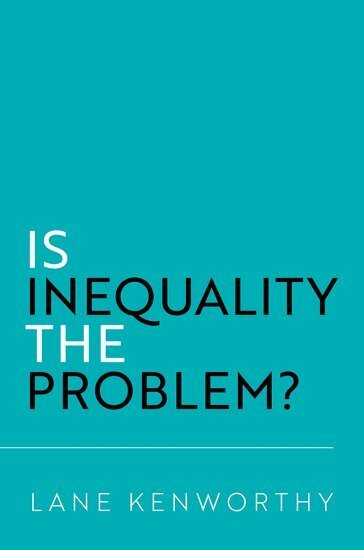
    Is Inequality the Problem?

    AvLane Kenworthy

    Inbunden, Engelska, 2025

    1 616 kr

    Beställningsvara. Skickas inom 3-6 vardagar. Fri frakt över 249 kr.

    Fler format och utgåvor

    Häftad

    269 kr

    E-bok

    282 kr

    E-bok

    281 kr

    Beskrivning

    A data-rich analysis that will reshape our understanding of how rising income inequality has actually affected societies in the industrialized world.Increasing economic inequality is now one of the most studied subjects in the social sciences. The general view is that while its increase represents a bad social outcome in and of itself, its negative impact extends into numerous other realms of social life: declines in living standards for those in the lower deciles of the income ladder, worse health outcomes, reductions in happiness, and less opportunity for most.In Is Inequality the Problem?, Lane Kenworthy draws from a vast trove of research on the rich democracies to argue that while inequality is normatively a problem and we should therefore work to reduce it, the evidence from wealthier countries does not show that income inequality has contributed much at all to the other social ills it is associated with, like poor health outcomes. The effects vary from society to society, but typically the key contributors to negative trends like this one are factors other than inequality. Instead of trying to improve living standards, democracy, opportunity, health, and happiness indirectly via reduction in income inequality or wealth inequality, policy makers are more likely to make progress by pursuing these goals directly.This contrarian yet balanced account of one of the main social problems of our era will reshape our understanding of how rising economic inequality has affected societies in the industrialized world.

    Produktinformation

    • Utgivningsdatum:2025-10-01
    • Mått:156 x 234 x 14 mm
    • Vikt:426 g
    • Format:Inbunden
    • Språk:Engelska
    • Antal sidor:176
    • Förlag:OUP USA
    • ISBN:9780197817094

    Utforska kategorier

    • Diskriminering och rättvisa inom Samhälle och politik
    • Statsvetenskap och politisk teori inom Samhälle och politik
    • Ekonomisk politik inom Ekonomi och Ledarskap

    Mer om författaren

    Lane Kenworthy is Distinguished Professor of Sociology and Yankelovich Chair in Social Thought at the University of California-San Diego. He studies the causes and consequences of living standards, capabilities, poverty, inequality, mobility, employment, economic growth, social policy, taxes, public opinion, politics, and more in the United States and other rich longstanding-democratic countries. He is also the author of The Good Society, Would Democratic Socialism Be Better? (Oxford, 2022), Social Democratic Capitalism (Oxford, 2020), How Big Should Our Government Be? (2016), Social Democratic America (Oxford, 2014), Progress for the Poor (Oxford, 2011), Jobs with Equality (Oxford, 2008), Egalitarian Capitalism (2004), and In Search of National Economic Success (1995). His essays and shorter pieces have appeared at Foreign Affairs, the Washington Post, The Guardian, Boston Review, Consider the Evidence (his blog), and elsewhere.

    Recensioner i media

    This is one of those rare, must-read books. It is a tour-de-force which compels us to rethink which policy formulae promote more equality of opportunity embedded in the socioeconomic order. Analyses of an impressive amount of data lead Kenworthy to conclude that this will depend less on income redistribution, and more on a welfare state that invests in its citizens' human capital and life chances via high-quality and universal social services.

    Innehållsförteckning

    • Chapter 1: Inequality Isn't the ProblemChapter 2: Is Income Inequality Bad for Living Standards?Chapter 3: Does Income Inequality Degrade Democracy?Chapter 4: Does Income Inequality Obstruct Opportunity?Chapter 5: Does Income Inequality Lessen Longevity?Chapter 6: Does Income Inequality Hinder Happiness?Chapter 7: Is Income Inequality Harmful?Chapter 8: People Want Less Inequality, But It's Not a Priority for ThemChapter 9: Inequality Reduction in Rich Nations May Impede Reduction of Worldwide InequalityChapter 10: What About Wealth?Chapter 11: Inequality Reduction Should Be a Secondary GoalChapter 12: How to Reduce InequalityAcknowledgmentsAppendixNotesReferencesIndex