• Fri frakt över 249 kr
  • •
  • Snabba leveranser
  • •
  • Billiga böcker
Kundservice

Du är på sajten för privatpersoner.

Företag, bibliotek eller offentlig verksamhet?

Du handlar på classic.bokus.com, där alla dina funktioner finns intakta.
Till classic.bokus.com
Bokus logotyp. Gå till startsidan.
  • Erbjudanden
  • Nyheter
  • Student
  • Topplistor
  • Barn & ungdom
  • Bokus Play
  • E-böcker
  • Pocketböcker
  • Spel & pussel

10% rabatt på allt med kod: NYSTART10 →

Sidfot

Mina sidor

    Hjälp

    • Kundservice
    • Vanliga frågor och svar
    • Frakt och leverans
    • Retur vid ångerrätt
    • Reklamera vara
    • Betalning
    • Köpvillkor
    • Allmänna villkor
    • Information om webbplatsens tillgänglighet

    Om Bokus

    • Om oss
    • Pressrum
    • För studenter
    • För företag
    • För bibliotek och offentlig verksamhet
    • För leverantörer
    • Hållbarhet

    Populärt

    • Aktuella erbjudanden
    • Presentkort
    • Studentlitteratur
    • Nya böcker
    • Topplistor
    • Signerade böcker
    • Engelska böcker

    Inspiration

    • Boktips
    • BookTok
    • Populära bokserier
    • Barnbokskaraktärer
    • Populära författare
    Logotyp för Bokus
    Följ oss på Facebook (extern länk)Följ oss på Instagram (extern länk)Följ oss på YouTube (extern länk)Följ oss på TikTok (extern länk)
    bokus @ CookiesAnpassa cookiesIntegritetspolicyKöpvillkor
    Till Citymail hemsida (extern länk)Till Budbee hemsida (extern länk)Till Postnord hemsida (extern länk)Till Schenker hemsida (extern länk)Till Early Bird hemsida (extern länk)Till Walleys hemsida (extern länk)
    1. Historia och arkeologi
    2. Historia
    3. Historia: särskilda händelser och ämnen
    4. Socialhistoria och kulturhistoria

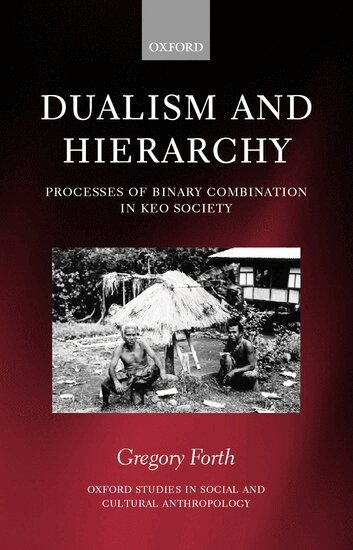
    Dualism and Hierarchy C

    Processes of Binary Combination in Keo Society

    AvGregory Forth

    Inbunden, Engelska, 2001

    Del i serien Oxford Studies in Social and Cultural Anthropology

    2 404 kr

    Beställningsvara. Skickas inom 7-10 vardagar. Fri frakt över 249 kr.

    Beskrivning

    Society in the Keo region of the eastern Indonesian island of Flores reveals a pervasive pairing of villages, clans, and other groups. Apart from introducing a hitherto undescribed population, this study, deriving from fieldwork conducted by the author over a period of 15 years, analyses a form of society that has occupied anthropologists since the inception of their discipline: morphological dualism, or dual organization. Drawing on a notion of encompassment inspired by Dumont's theory of 'hierarchy', the author interprets dualistic social forms as products of a continuous process of combination and a tendency to create binary wholes through the partial assimilation of junior by senior partners. While Keo exemplifies a variant of a widespread eastern Indonesian pattern of binary classification and asymmetric marriage alliance, the analysis shows how Keo morphological dualism cannot be reduced to the categories of a dual classification nor to unique or exclusive forms of reciprocity or functional complementarity. Exploring these issues through original ethnographic studies of numerous Keo domains and settlements, the book is of critical relevance not just to dualism, but to a variety of continuing concerns in contemporary social anthropology, including the concept of 'descent', the social construction of inequality, and connections between ritual practice (especially animal sacrifice), and social order.

    Produktinformation

    • Utgivningsdatum:2001-05-03
    • Mått:165 x 243 x 24 mm
    • Vikt:775 g
    • Format:Inbunden
    • Språk:Engelska
    • Serie:Oxford Studies in Social and Cultural Anthropology
    • Antal sidor:360
    • Förlag:OUP OXFORD
    • ISBN:9780198234241

    Utforska kategorier

    • Socialhistoria och kulturhistoria inom Historia och arkeologi
    • Antropologi inom Samhälle och politik

    Recensioner i media

    Excellent ... incorporates a massive quantity of original ethnographic detail about a hitherto virtually unknown people. Theoretical formulations aside, this book would warrant appreciation simply as a work of descriptive ethnography. No significant detail of Keo social forms seems to have eluded the ethnographer's discerning eye.