• Fri frakt över 249 kr
  • •
  • Snabba leveranser
  • •
  • Billiga böcker
Kundservice

Du är på sajten för privatpersoner.

Företag, bibliotek eller offentlig verksamhet?

Du handlar på classic.bokus.com, där alla dina funktioner finns intakta.
Till classic.bokus.com
Bokus logotyp. Gå till startsidan.
  • Erbjudanden
  • Nyheter
  • Student
  • Topplistor
  • Barn & ungdom
  • Bokus Play
  • E-böcker
  • Pocketböcker
  • Spel & pussel

Må bättre, för mindre! Upp till 50% rabatt på hälsoböcker

Sidfot

Mina sidor

    Hjälp

    • Kundservice
    • Vanliga frågor och svar
    • Frakt och leverans
    • Retur vid ångerrätt
    • Reklamera vara
    • Betalning
    • Köpvillkor
    • Allmänna villkor
    • Information om webbplatsens tillgänglighet

    Om Bokus

    • Om oss
    • Pressrum
    • För studenter
    • För företag
    • För bibliotek och offentlig verksamhet
    • För leverantörer
    • Hållbarhet

    Populärt

    • Aktuella erbjudanden
    • Presentkort
    • Studentlitteratur
    • Nya böcker
    • Topplistor
    • Signerade böcker
    • Engelska böcker

    Inspiration

    • Boktips
    • BookTok
    • Populära bokserier
    • Barnbokskaraktärer
    • Populära författare
    Logotyp för Bokus
    Följ oss på Facebook (extern länk)Följ oss på Instagram (extern länk)Följ oss på YouTube (extern länk)Följ oss på TikTok (extern länk)
    bokus @ CookiesAnpassa cookiesIntegritetspolicyKöpvillkor
    Till Citymail hemsida (extern länk)Till Budbee hemsida (extern länk)Till Postnord hemsida (extern länk)Till Schenker hemsida (extern länk)Till Early Bird hemsida (extern länk)Till Walleys hemsida (extern länk)
    1. Samhälle och politik
    2. Samhälle och kultur
    3. Sociala grupper och identitet
    4. Genusvetenskap

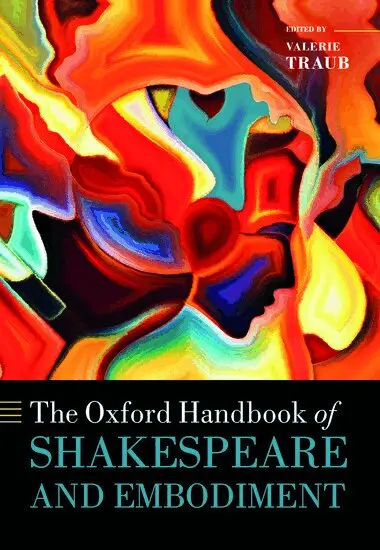
    The Oxford Handbook of Shakespeare and Embodiment

    Gender, Sexuality, and Race

    AvValerie Traub

    Häftad, Engelska, 2018

    Del i serien Oxford Handbooks

    958 kr

    Beställningsvara. Skickas inom 5-8 vardagar. Fri frakt över 249 kr.

    Beskrivning

    The Oxford Handbook of Shakespeare and Embodiment brings together 42 of the most important scholars and writing on the subject today. Extending the purview of feminist criticism, it offers an intersectional paradigm for considering representations of gender in the context of race, ethnicity, sexuality, disability, and religion. In addition to sophisticated textual analysis drawing on the methods of historicism, psychoanalysis, queer theory, and posthumanism, a team of international experts discuss Shakespeare's life, contemporary editing practices, and performance of his plays on stage, on screen, and in the classroom. This theoretically sophisticated yet elegantly written Handbook includes an editor's Introduction that provides a comprehensive overview of current debates.

    Produktinformation

    • Utgivningsdatum:2018-02-08
    • Mått:169 x 244 x 41 mm
    • Vikt:1 350 g
    • Format:Häftad
    • Språk:Engelska
    • Serie:Oxford Handbooks
    • Antal sidor:816
    • Förlag:OUP OXFORD
    • ISBN:9780198820406

    Utforska kategorier

    • Genusvetenskap inom Samhälle och politik
    • Litteraturvetenskap inom Skönlitteratur
    • Dramatik inom Skönlitteratur

    Mer om författaren

    Valerie Traub is the Frederick G. L. Huetwell Professor of English and Women's Studies at the University of Michigan and an award winning author and teacher. She is the author of The Renaissance of Lesbianism in Early Modern England (Cambridge University Press, 2002), Desire & Anxiety: Circulations of Sexuality in Shakespearean Drama (Routledge, 1992; rpt 2014), and most recently Thinking Sex with the Early Moderns (Pennsylvania University Press, 2015). She co-edited Gay Shame (University of Chicago Press, 2009) and Feminist Readings of Early Modern Culture: Emerging Subjects (Cambridge University Press, 1996). Her current project is Mapping Embodiment in the Early Modern West: A Prehistory of Normality.

    Recensioner i media

    the volume's forty-three contributors can trace a feminism whose theoretical and historical concerns intersect with other identity-based critical approaches such as queer theory, critical race theory, disability studies, animal studies, and postcolonial studies, as well as historical phenomenology and the new materialism. As this suggests, the volume makes a particularly urgent and timely contribution to our field.

    Innehållsförteckning

    • 1: Valerie Traub: Introduction: Feminist Shakespeare Studies: Cross Currents, Border Crossings, Conflicts, and Contradictions Part I: The Lives of William Shakespeare 2: Lena Cowen Orlin: Shakespeare's Marriage 3: Alan Stewart: The Undocumented Lives of William Shakespeare Part II: Early Modern Women's Lives 4: Bernadette Andrea: Amazons, Turks, and Tartars in the Gesta Grayorum and The Comedy of Errors 5: Stephen Spiess: Puzzling Embodiment: Proclamation, La Pucelle, and The first Part of Henry VI' 6: Susan Frye: Spectres of Female Sovereignty in Shakespeare's Plays 7: Wendy Wall: All's Well That Ends Well and Recipe Cultures of Knowledge Part III: Race and Ethnicity in Local and Transnational Contexts 8: M. Lindsay Kaplan: Constructing the Inferior Body: Medieval Theology in The Merchant of Venice 9: Ian Smith: The Textile Black Body: Race and 'shadowed livery' in The Merchant of Venice 10: Patricia Akhimie: Bruised with Adversity: Reading Race in The Comedy of Errors 11: Emily C. Bartels: Identifying 'the Dane': Gender and Race in Hamlet 12: Jean E. Feerick: The Imperial Graft: Horticulture, Hybridity, and the Art of Mingling Races in Henry V and Cymbeline 13: Ania Loomba: Identities and Bodies in Early Modern Studies Part IV: Sexualities 14: Julie Crawford: Shakespeare. Same Sex. Marriage 15: Kathryn Schwarz: Comedies End in Marriage 16: Will Stockton: The Fierce Urgency of Now: Queer Theory, Presentism, and Romeo and Juliet 17: Melissa E. Sanchez: Impure Resistance: Heteroeroticism, Feminism, and Shakespearean Tragedy 18: Carol Thomas Neely: 'Strange Things in Hand': Perverse Pleasures and Erotic Triangles in The Merry Wives of Windsor 19: William Fisher: 'Stray[ing] lower where the pleasant fountains lie': Cunnilingus in Venus and Adonis and in English Culture, c.1600-1700 20: Karen Raber: Equeer: Human-Equine Erotics in 1 Henry IV Part V: Embodied Worlds, Reconfigured Agencies 21: Elizabeth D. Harvey: Passionate Spirits: Animism and Embodiment in Cymbeline and The Tempest 22: Mario DiGangi: Entangled Agency: The Assassin's Conscience in Richard III and King John 23: Amanda Bailey: Personification and the Political Imagination of A Midsummer Night's Dream 24: Gina Bloom: Time to Cheat: Chess and The Tempest's Performative History of Dynastic Marriage 25: Tobin Siebers: Shakespeare Differently Disabled 26: Vin Nardizzi: Disability Figures in Shakespeare 27: Marjorie Rubright: Incorporating Kate: The Myth of Monolingualism in Shakespeare's Henry the Fifth 28: Ari Friedlander: Roguery and Reproduction in The Winter's Tale 29: Maureen Quilligan: Exit Pursued by a Bear: Staging Animal Bodies in A Winter's Tale Part VI: Textual Production and Reproduction 30: Laurie Maguire: Typographical Embodiment: The Case of etcetera 31: Valerie Wayne: The Gendered Text and Its Labour 32: Jeffrey Masten: Glossing and T*pping: Editing Sexuality, Race, and Gender in Othello Part VII: Cultural Performances Past and Present 33: Kathleen E. McLuskie: A Time for The Merry Wives of Windsor 34: Jennifer Waldron: Dead Likenesses and Sex Machines: Shakespearean Media Theory 35: Evelyn Tribble: Pretty and Apt: Boy Actors, Skill, and Embodiment 36: Holly Dugan: Double Falsehood: Cardenio and the Lost History of Rape 37: Jean E. Howard: Interrupting the Lucrece Effect? The Performance of Rape on the Early Modern Stage 38: Diana E. Henderson: Magic in the Chains: Othello, Omkara, and the Materiality of Gender Across Time and Media 39: Susan Bennett: Precarious Bodies: Romeo and Juliet in Baghdad at the World Shakespeare Festival 40: Lauren Eriks Cline: Becoming Caliban: Monster Methods and Performance Theories 41: Ayanna Thompson and Laura Turchi: Embodiment and the Classroom Performance 42: Denise Albanese: Feeling Shakespeare