• Fri frakt över 249 kr
  • •
  • Snabba leveranser
  • •
  • Billiga böcker
Kundservice

Du är på sajten för privatpersoner.

Företag, bibliotek eller offentlig verksamhet?

Du handlar på classic.bokus.com, där alla dina funktioner finns intakta.
Till classic.bokus.com
Bokus logotyp. Gå till startsidan.
  • Erbjudanden
  • Student
  • Topplistor
  • Barn & ungdom
  • Bokus Play
  • E-böcker
  • Ljudböcker
  • Pocketböcker
  • Spel och pussel

Pocketfynda! Hundratals böcker för 49 kr/st →

Sidfot

Mina sidor

    Hjälp

    • Kundservice
    • Vanliga frågor och svar
    • Frakt och leverans
    • Retur vid ångerrätt
    • Reklamera vara
    • Betalning
    • Köpvillkor
    • Allmänna villkor
    • Information om webbplatsens tillgänglighet

    Om Bokus

    • Om oss
    • Pressrum
    • För studenter
    • För företag
    • För bibliotek och offentlig verksamhet
    • För leverantörer
    • Hållbarhet

    Populärt

    • Aktuella erbjudanden
    • Presentkort
    • Studentlitteratur
    • Nya böcker
    • Topplistor
    • Signerade böcker
    • Engelska böcker

    Inspiration

    • Boktips
    • BookTok
    • Barnbokskaraktärer
    • Populära författare
    Logotyp för Bokus
    Följ oss på Facebook (extern länk)Följ oss på Instagram (extern länk)Följ oss på YouTube (extern länk)Följ oss på TikTok (extern länk)
    bokus @ CookiesAnpassa cookiesIntegritetspolicyKöpvillkor
    Till Citymail hemsida (extern länk)Till Budbee hemsida (extern länk)Till Postnord hemsida (extern länk)Till Schenker hemsida (extern länk)Till Early Bird hemsida (extern länk)Till Walleys hemsida (extern länk)
    1. Ekonomi och Ledarskap
    2. Nationalekonomi
    3. Mikroekonomi

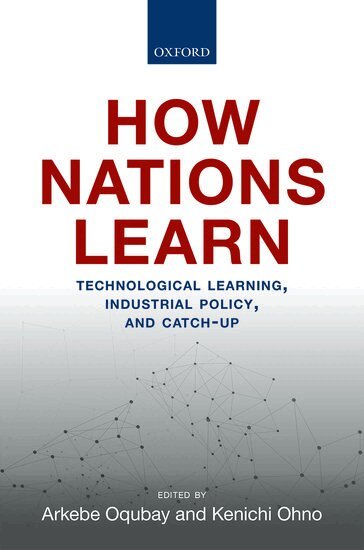
    How Nations Learn

    Technological Learning, Industrial Policy, and Catch-up

    AvArkebe Oqubay,Arkebe Oqubay

    Inbunden, Engelska, 2019

    1 985 kr

    Beställningsvara. Skickas inom 3-6 vardagar. Fri frakt över 249 kr.

    Beskrivning

    This is an open access title available under the terms of a CC BY-NC-ND 4.0 International licence. It is free to read at Oxford Scholarship Online and offered as a free PDF download from OUP and selected open access locations.What are the prospects for successful learning and catch-up for nations in the twenty-first century? Why have some nations succeeded while others failed? The World Bank states that out of over one hundred middle-income economies in 1960, only thirteen became high income by 2008. How Nations Learn: Technological Learning, Industrial Policy, and Catch-up examines how nations learn by reviewing key structural and contingent factors that contribute to dynamic learning and catch-up. Rejecting both the 'one-size-fits-all' approach and the agnosticism that all nations are unique and different, it uses historical as well as firm-, industry-, and country-level evidence and experiences to identify the sources and drivers of successful learning and catch-up and the lessons for late-latecomer countries. Authored by eminent scholars, the volume aims to generate interest and debate among policy makers, practitioners, and researchers on the complexity of learning and catch-up. It explores technological learning at the firm level, policy learning by the state, and the cumulative and multifaceted nature of the learning process, which encompasses learning by doing, by experiment, emulation, innovation, and leapfrogging.

    Produktinformation

    • Utgivningsdatum:2019-06-19
    • Mått:162 x 239 x 26 mm
    • Vikt:700 g
    • Format:Inbunden
    • Språk:Engelska
    • Antal sidor:368
    • Förlag:OUP OXFORD
    • ISBN:9780198841760

    Utforska kategorier

    • Mikroekonomi inom Ekonomi och Ledarskap
    • Internationell ekonomi inom Ekonomi och Ledarskap
    • Ekonomisk politik inom Ekonomi och Ledarskap

    Mer om författaren

    Arkebe Oqubay is a Senior Minister and Special Adviser to the Prime Minister of Ethiopia and has been at the centre of policymaking for over twenty-five years. He is a research associate at the Centre of African Studies in the University of London, and holds a PhD in development studies from SOAS, University of London. He is the former mayor of Addis Ababa and winner of the ABN Best African Mayor of 2006, and finalist for the World Mayor Award 2006. He is a recipient of the Order of the Rising Sun, Gold and Silver Star and serves as board chair of several leading public organizations and international advisory boards. His work includes Made in Africa: Industrial Policy in Ethiopia (OUP, 2015); African Economic Development: Evidence, Theory, and Policy (OUP, 2019); and China-Africa and an Economic Transformation (2019, OUP). He was recognized as one of the 100 Most Influential Africans of 2016, and a 'leading thinker on Africa's strategic development' by the New African.Kenichi Ohno is a Professor at the National Graduate Institute for Policy Studies, Tokyo. He has previously worked at the International Monetary Fund and taught at the University of Tsukuba and Saitama University. He works closely with the Japanese government in designing international cooperation strategy. He has advised the Vietnamese government since 1995 and has done policy research in over twenty countries in Asia and Africa focusing on industrialization, policy learning for catch-up, the development experiences of Japan latecomers, and international comparison of industrial policy quality. His books include The History of Japanese Economic Development (Routledge, 2018), Learning to Industrialize (Routledge, 2013), and Eastern and Western Ideas for African Growth (Routledge, 2013). He received the Presidential Medal for Friendship from the Vietnamese government and the Japanese Foreign Minister Award for contributing to Japan-Vietnam economic relationship.

    Recensioner i media

    How Nations Learn is a book based on big ideas. Why do some nations grow faster than others? How does the process of economic catch-up work? What does the technological learning of firms have in common with the policy lessons of governments? How do the answers to these questions vary across countries and regions of the world? The book provides answers to these queries from a distinguished interdisciplinary and international set of scholars, who draw on an impressive reservoir of both contemporary and historical experiences. How Nations Learn is an essential guide to how to navigate the key dilemmas of 21st century development, which should be particularly useful to latecomer countries and those grappling with the pitfalls of uneven development.

    Innehållsförteckning

    • Deepak Nayyar: Foreword 1: Kenichi Ohno and Arkebe Oqubay: Technological Learning, Industrial Policy, and Catch-up: Introduction Part I: Context and Perspectives 2: Robert Wade: Catch-up and Constraints in the Twentieth and Twenty-First Centuries 3: Daniel Poon and Richard Kozul-Wright: Learning from East Asia: Catch-up and the Making of China's Developmental State 4: Mariana Mazzucato: Catch-up and Mission-Oriented Innovation Part II: Empirical Perspectives 5: Ohno Kenichi: Meiji Japan: Progressive Learning of Western Technology 6: Wan-Wen Chu: Catch-up and Learning in Taiwan: The Role of Industrial Policy 7: Keun Lee: The Origin of Absorptive Capacity in Korea: How Korean Industry Learnt 8: Justin Lin and Jun Zhang: China: Learning To Catch-up in a Globalized World 9: George Yeo, Tan Khee Giap and Tan Kong Yam: Learning and Catch-up in Singapore : Lessons for Developing Countries Part III: Pathways to Late-late Development 10: Wilson Peres and Annalisa Primi: Catch-up and Learning in Latin America 11: Arkebe Oqubay and Tafferre Tesfachew: Technological Learning in Africa: Catch-up in the Aviation Industry 12: Vu Minh Khuong and Kris Hartley: Learning to Catch-up in South-East Asia 13: Arkebe Oqubay and Tafferre Tesfachew: Learning to Catch-up in Africa 14: Kenichi Ohno and Arkebe Oqubay: How Nations Learn: Implications for Latecomers and Pathways to the Future