• Fri frakt över 249 kr
  • •
  • Snabba leveranser
  • •
  • Billiga böcker
Kundservice

Du är på sajten för privatpersoner.

Företag, bibliotek eller offentlig verksamhet?

Du handlar på classic.bokus.com, där alla dina funktioner finns intakta.
Till classic.bokus.com
Bokus logotyp. Gå till startsidan.
  • Erbjudanden
  • Nyheter
  • Student
  • Topplistor
  • Barn & ungdom
  • Bokus Play
  • E-böcker
  • Pocketböcker
  • Spel & pussel

10% rabatt på allt med kod: NYSTART10 →

Sidfot

Mina sidor

    Hjälp

    • Kundservice
    • Vanliga frågor och svar
    • Frakt och leverans
    • Retur vid ångerrätt
    • Reklamera vara
    • Betalning
    • Köpvillkor
    • Allmänna villkor
    • Information om webbplatsens tillgänglighet

    Om Bokus

    • Om oss
    • Pressrum
    • För studenter
    • För företag
    • För bibliotek och offentlig verksamhet
    • För leverantörer
    • Hållbarhet

    Populärt

    • Aktuella erbjudanden
    • Presentkort
    • Studentlitteratur
    • Nya böcker
    • Topplistor
    • Signerade böcker
    • Engelska böcker

    Inspiration

    • Boktips
    • BookTok
    • Populära bokserier
    • Barnbokskaraktärer
    • Populära författare
    Logotyp för Bokus
    Följ oss på Facebook (extern länk)Följ oss på Instagram (extern länk)Följ oss på YouTube (extern länk)Följ oss på TikTok (extern länk)
    bokus @ CookiesAnpassa cookiesIntegritetspolicyKöpvillkor
    Till Citymail hemsida (extern länk)Till Budbee hemsida (extern länk)Till Postnord hemsida (extern länk)Till Schenker hemsida (extern länk)Till Early Bird hemsida (extern länk)Till Walleys hemsida (extern länk)
    1. Historia och arkeologi
    2. Arkeologi
    3. Arkeologiska perioder och områden

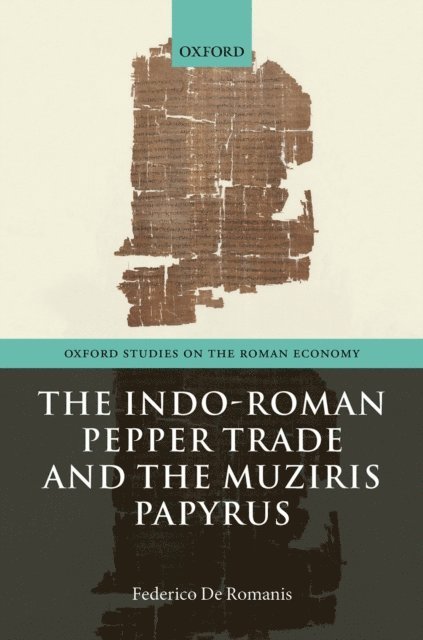
    The Indo-Roman Pepper Trade and the Muziris Papyrus

    AvFederico De Romanis

    Inbunden, Engelska, 2020

    Del i serien Oxford Studies on the Roman Economy

    2 527 kr

    Beställningsvara. Skickas inom 3-6 vardagar. Fri frakt över 249 kr.

    Beskrivning

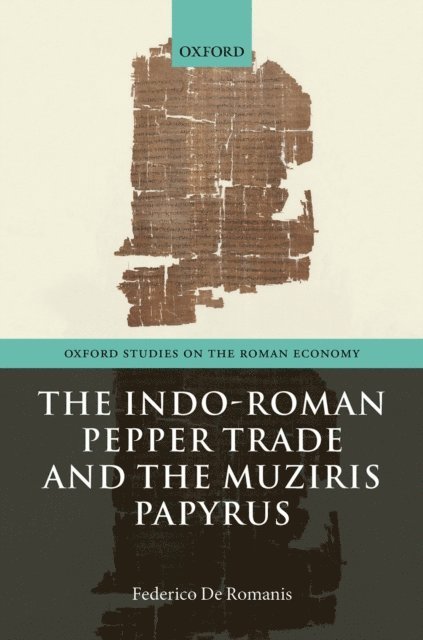
    This volume presents a systematic and fresh interpretation of a mid-second-century AD papyrus - the so-called Muziris papyrus - which preserves on its two sides fragments of a unique pair of documents: on one side, a loan agreement to finance a commercial enterprise to South India and, on the other, an assessment of the fiscal value of a South Indian cargo imported on a ship named the Hermapollon. The two texts, whose informative potential has long been underexploited, clarify several aspects of the early Roman Empire's trade with South India, including transport logistics, financial and legal elements in the loan agreement funding the commercial enterprise, the trade goods included in the South Indian cargo, and the technicalities of calculating and collecting Roman customs duties on the Indian imports. This study also considers imperial fiscal policy as it related to the South Indian trade, the overall evolution of Rome's trade relations with South India, the structure and organization of South Indian trade stakeholders, and the role played by private tax-collectors. The in-depth analysis sheds new light on this important sector of the Roman economy during the first two centuries AD in two innovative ways: through a balanced consideration of South Indian sources and data, and by drawing comparisons with the pepper trade from late antiquity, the Middle Ages, and early modernity, resulting in a longue durée perspective on the western trade in South Indian pepper.

    Produktinformation

    • Utgivningsdatum:2020-04-15
    • Mått:163 x 241 x 27 mm
    • Vikt:778 g
    • Format:Inbunden
    • Språk:Engelska
    • Serie:Oxford Studies on the Roman Economy
    • Antal sidor:408
    • Förlag:OUP OXFORD
    • ISBN:9780198842347

    Utforska kategorier

    • Arkeologiska perioder och områden inom Historia och arkeologi
    • Ekonomisk historia inom Ekonomi och Ledarskap
    • Forntidens historia inom Historia och arkeologi

    Mer om författaren

    Federico De Romanis is Associate Professor in Roman History at the Università di Roma "Tor Vergata" in Rome, Italy. He received his doctorate in historical sciences from the Università della Repubblica di S. Marino in 1992 and has taught at the Università di Catania and at the Università della Tuscia, as well as holding fellowships at the Istituto Italiano per gli Studi Storici in Naples (1987-8) and at the Italian Academy for Advanced Studies in America, Columbia University (2012-3). His previous publications include Cassia, cinnamomo, ossidiana: Uomini e merci tra Oceano Indiano e Mediterraneo (L'Erma Di Bretschneider, 1996).

    Recensioner i media

    In sum, this is an impressive scholarly effort that greatly enhances our under-standing of intercontinental trade in antiquity and (proto-)globalisation. It will be the standard reference on Indo-Roman trade for years to come. Moreover, due to its multidisciplinary approach it will be an indispensable work for all students of the longue durée history of the Indian Ocean trade, whether they deal with Arab, Persian, Indian or Portuguese trade of the Medieval and Early Modern periods.

    Innehållsförteckning

    • Frontmatter List of Figures List of Tables List of Abbreviations 0: Introduction 0.1. Synopsis P. Vindob. G 40822: Text and Translation Part I. Contextualizing the Muziris Papyrus 1: Bridging Disconnected Seas 1.1. Challenges 1.2. The Northern Passages 1.3. The Southern Passages 1.4. Multifaceted Complementarity 2: Riding the Monsoons 2.1. Direct Sea Routes 2.2. Multi-Stage Sea Routes 2.3. Heading for India 2.4. The Pleiades in the Middle of the Yard 3: Pepper Lands 3.1. Kottanarike, the Southern Pepper-Producing Land 3.2. Male, the Northern Pepper-Producing Land 3.3. Early Modern Quantitative Dimensions 3.4. Ancient Prices 4: South Indian Perspectives 4.1. Gatherers 4.2. Traders 4.3. Kings 4.4. The Pepper Pendulum 5: Supporting Sources 5.1. Strabo: The Customs Duties on Indian Commodities 5.2. The Periplus: The Ships and Cargoes of the South India Trade 5.3. Pliny: The Schedule of the Commercial Enterprises to South India 5.4. Ptolemy: The Evolution of the South Indian Context Part II. Let Him Look to his Bond: A Loan Contract for Muziris (P. Vindob. G 40822 Recto) 6: Deadline and Whereabouts 6.1. A Debated Contract 6.2. Time and Maritime Loans 6.3. The Deadline for Repayment of the Muziris Loan Contracts 6.4. In the Beginning Was the Loan Contract 7: Selling and Repaying 7.1. Repaying a Maritime Loan in Fourth-Century BC Athens 7.2. Under the Lender's Power and Seal 7.3. Earnings and Benefit of Assumption 7.4. Outstanding Loans 8: Loan and Logistics 8.1. What the Loan Was All About 8.2. Prudent Loans for Maritime Trade 8.3. Caravans from Berenice 8.4. The Coptos Ships 8.5. Late Medieval Comparanda Part III. The Muziris Cargo of a Roman Indiaman (P. Vindob. G 40822 Verso) 9: Three Minor Cargoes and How They Were Assessed 9.1. Three Quarters of an Indiaman's Cargo 9.2. Gangetic Nard 9.3. Schidai 9.4. Straightforward and Circuitous Evaluations 9.5. Cargoes, Quarters, and the Arabarchs' Additional Shares 10: The Other Cargoes 10.1. Col. ii, ll. 14-30: An Overview 10.2. Pepper: Col. ii, ll. 20-30 (and ll. 1-3) 10.3. Tortoise Shell (?) and Malabathron: Col. ii, ll. 14-19 11: Contrasts 11.1. Ancient and Early Modern Pepper Carriers 11.2. Another Pepper Trade 11.3. Conspicuous Absences 11.4. Indian and African Tusks Part IV. The Red Sea Tax and the Muziris Papyrus 12: Maris Rubri Vectigal 12.1. Payments in Kind and Payments in Money 12.2. Double Customs Duties on Different Tax Bases 12.3. Rates 12.4. Fiscal Values 12.5. Weight Standards 13: Dramatis Personae 13.1. Arabarchs, Paralemptai, and Grammateis 13.2. A Lender/Customs Collector 13.3. A Borrower/Ship Owner 13.4. The Imperial Administration 14: Epilogue Appendices 1. Exchanging Coins at Barygaza 2. Axum and Silis in the Kephalaia: Trade and Powers in the Late Antique Indian Ocean Endmatter References Index