• Fri frakt över 249 kr
  • •
  • Snabba leveranser
  • •
  • Billiga böcker
Kundservice

Du är på sajten för privatpersoner.

Företag, bibliotek eller offentlig verksamhet?

Du handlar på classic.bokus.com, där alla dina funktioner finns intakta.
Till classic.bokus.com
Bokus logotyp. Gå till startsidan.
  • Erbjudanden
  • Nyheter
  • Student
  • Topplistor
  • Barn & ungdom
  • Bokus Play
  • E-böcker
  • Pocketböcker
  • Spel & pussel

10% rabatt på allt med kod NYSTART10 →

Sidfot

Mina sidor

    Hjälp

    • Kundservice
    • Vanliga frågor och svar
    • Frakt och leverans
    • Retur vid ångerrätt
    • Reklamera vara
    • Betalning
    • Köpvillkor
    • Allmänna villkor
    • Information om webbplatsens tillgänglighet

    Om Bokus

    • Om oss
    • Pressrum
    • För studenter
    • För företag
    • För bibliotek och offentlig verksamhet
    • För leverantörer
    • Hållbarhet

    Populärt

    • Aktuella erbjudanden
    • Presentkort
    • Studentlitteratur
    • Nya böcker
    • Topplistor
    • Signerade böcker
    • Engelska böcker

    Inspiration

    • Boktips
    • BookTok
    • Populära bokserier
    • Barnbokskaraktärer
    • Populära författare
    Logotyp för Bokus
    Följ oss på Facebook (extern länk)Följ oss på Instagram (extern länk)Följ oss på YouTube (extern länk)Följ oss på TikTok (extern länk)
    bokus @ CookiesAnpassa cookiesIntegritetspolicyKöpvillkor
    Till Citymail hemsida (extern länk)Till Budbee hemsida (extern länk)Till Postnord hemsida (extern länk)Till Schenker hemsida (extern länk)Till Early Bird hemsida (extern länk)Till Walleys hemsida (extern länk)
    1. Juridik
    2. Internationell rätt
    3. Folkrätt

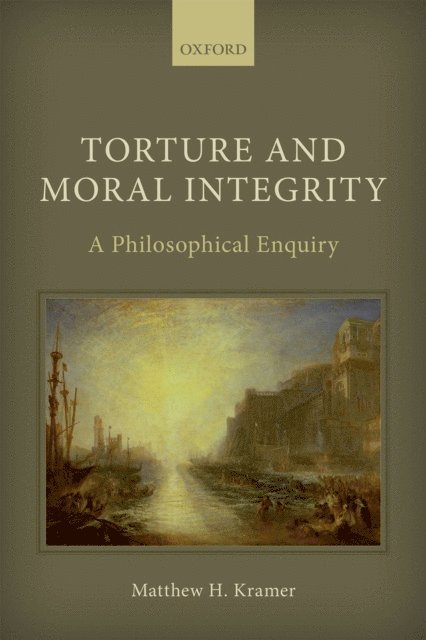
    Torture and Moral Integrity

    A Philosophical Enquiry

    AvMatthew H. Kramer

    Häftad, Engelska, 2019

    615 kr

    Beställningsvara. Skickas inom 7-10 vardagar. Fri frakt över 249 kr.

    Fler format och utgåvor

    E-bok

    551 kr

    E-bok

    551 kr

    Inbunden

    2 100 kr

    Beskrivning

    Torture and Moral Integrity tackles a concrete moral problem that has been hotly debated by governments, scholars, and the media: the morality of interrogational torture. It discusses multiple types of torture with great philosophical acuity and seeks to explain why interrogational torture and other types of torture are always and everywhere morally wrong. At the same time, it rigorously plumbs the general structure of morality and the intricacies of moral conflicts and probes some of the chief grounds for the moral illegitimacy of various modes of conduct. It defends a deontological conception of morality against the subtle critiques that have been mounted over the past few decades by proponents of consequentialism. Kramer's recommendations concerning the legal consequences of the perpetration of torture by public officials or private individuals, for example, are based squarely on his more abstract accounts of the nature of torture and the nature of morality. His philosophical reflections on the structure of morality are a vital background for his approach to torture, and his approach to torture is a natural outgrowth of those philosophical reflections.

    Produktinformation

    • Utgivningsdatum:2019-02-14
    • Mått:163 x 234 x 19 mm
    • Vikt:538 g
    • Format:Häftad
    • Språk:Engelska
    • Antal sidor:368
    • Förlag:OUP OXFORD
    • ISBN:9780198842590

    Utforska kategorier

    • Folkrätt inom Juridik
    • Filosofiska discipliner inom Filosofi och religion
    • Juridik: metod och teori inom Juridik

    Mer om författaren

    Matthew H. Kramer is Professor of Legal and Political Philosophy at the University of Cambridge; Fellow of Churchill College, Cambridge; and Director of the Cambridge Forum for Legal & Political Philosophy. He is the author of thirteen previous books and the co-editor of four other books.

    Recensioner i media

    The book under review is one of the most comprehensive intellectual efforts to address the thorny issue of torture that I have seen... Putting the discussion of torture in the broader perspective of torture in general and of the nature of morality is not the only merit of this book; Kramer also zooms in on the particularities that come with interrogational torture. He discusses and analyses in great detail competing interpretations of the wrongfulness of torture by drawing on a wealth of cases. As a result, Kramers book provides us with an extensive overview of the recent discussion on (interrogational) torture. The manner in which he dissects these interpretations and cases is often illuminating... Even if one is not convinced by Kramers distinction between moral permissibility and moral optimality, the book still provides a comprehensive treatment of the literature on torture.